
Category Archives: Health and Fitness

Best Turmeric Supplement – Why I love this Organic Turmeric Powder

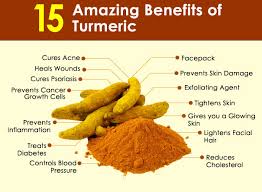
If you’re a believer in the health benefits of turmeric and looking for the best turmeric supplement, this article can help you. We’ll talk about what turmeric is, why turmeric is healthy, how to use turmeric for weight loss, I’ll give you 3 recipes for Turmeric Smoothies, and recommend what I think is the best turmeric supplement.

If you’re in a hurry and just want to know which product I’m recommending that’s cool too. It’s FGO’s Raw Organic Turmeric Root Powder. Here’s a link to it on Amazon…

[amazon box = “B01CRXAYKS”]


Mike, That Helpful Dad

Editor’s Note: I’m Mike, AKA “That Helpful Dad” and this website is all about providing practical solutions to real life problems. I hope you enjoy today’s wisdom – if you do be sure to visit my home page and sign up for my free weekly emails. You can also follow me on YouTubeTwitterFacebook, and Pinterest. I’d love to hear from you so drop me a comment and let’s chat.


What is Turmeric?

WebMD provides us with a succinct and informative defintion for what is turmeric…

In the U.S., turmeric is best known as a spice. It’s one of the main components of curry powder. In India and other parts of Asia, turmeric is used to treat many health conditions. It is believed to have anti-inflammatory, antioxidant, and perhaps even anticancer properties.

WebMD

Why Add a Turmeric Supplement to Your Diet?

The health benefits of turmeric have been written about in detail by numerous trusted websites, including:

Potential Benefits of Turmeric

Turmeric is also believed to be good for helping with weight loss. Here are some articles on that too.


RECIPES: How I use Turmeric Supplements in my Diet

I’m not a complicated guy and I like to keep it simple. Personally I just use the Turmeric Supplement powder in my daily smoothies.
Here are 3 easy Turmeric Smoothie Recipes:

  1. Turmeric Shot – 1 TBSP FGO Turmeric Powder + 1 Oz Raw Honey + 1/3 Cup Almond Milk (I like Kirkland’s Organic Unsweetened Vanilla Almond Milk for this – you can get a 6 pack of it on Amazon or Costco for pretty cheap)
  2. Turmeric Berry Smoothie – 1 TBSP FGO Turmeric Powder + 1/4 cup Lifeway Original Kefir + 1 TB FGO Organic Acai Powder + 1 Oz Raw Honey + 1/4 cup fresh berries of your choice + 1-2 cups of Almond or Organic Whole Milk (your preference)
  3. Turmeric Peanut Butter Banana Smoothie – 1 TBSP FGO Turmeric Powder + 1 TSBP All Natural Peanut Butter (I like HomePlate’s Non-GMO Peanut Butter – it tastes awesome!) + 1 Organic Banana + 1/4 cup Lifeway Original Kefir + 1 Scoop Optimum Nutrition Whey Protein Powder (Double Chocolate flavor works great for this) + 1-2 cups of Almond or Organic Whole Milk (your preference)

If you have a turmeric smoothie recipe to share, please drop it in the comments below so I can try it too!


Why Do I Love FGO’s Turmeric Powder Supplement?

  • It’s 100% Raw;
  • It’s USDA-Certified Organic;
  • It actually tastes pretty mild (not overpowering) in my smoothies;
  • the amount you get is very reasonable for the price;
  • it comes with 100% money-back guarantee on Amazon;
  • I can add it to my Amazon Prime Subscribe & Save to save even more;
  • I’ve used other FGO products and have always been happy with their quality;

Pick up a packet of FGO’s Turmeric Powder today…

amzn_assoc_tracking_id = “thathelpfulda-20”; amzn_assoc_ad_mode = “manual”; amzn_assoc_ad_type = “smart”; amzn_assoc_marketplace = “amazon”; amzn_assoc_region = “US”; amzn_assoc_design = “enhanced_links”; amzn_assoc_asins = “B01CRXAYKS”; amzn_assoc_placement = “adunit”; amzn_assoc_linkid = “1b45539f0c3b3753cb008b37d7207733”; //z-na.amazon-adsystem.com/widgets/onejs?MarketPlace=US

Your Shopping List

In addition to the FGO Turmeric Root Powder, here are some quick links to the other products I talked about in this article:

amzn_assoc_tracking_id = “thathelpfulda-20”; amzn_assoc_ad_mode = “manual”; amzn_assoc_ad_type = “smart”; amzn_assoc_marketplace = “amazon”; amzn_assoc_region = “US”; amzn_assoc_design = “enhanced_links”; amzn_assoc_asins = “B07HL1NRGQ”; amzn_assoc_placement = “adunit”; amzn_assoc_linkid = “218a339fafef0064af2cfec109496ecc”; //z-na.amazon-adsystem.com/widgets/onejs?MarketPlace=US amzn_assoc_tracking_id = “thathelpfulda-20”; amzn_assoc_ad_mode = “manual”; amzn_assoc_ad_type = “smart”; amzn_assoc_marketplace = “amazon”; amzn_assoc_region = “US”; amzn_assoc_design = “enhanced_links”; amzn_assoc_asins = “B01BCCYJHE”; amzn_assoc_placement = “adunit”; amzn_assoc_linkid = “88714202e1f59447e2df1b5ecbb396c3”; //z-na.amazon-adsystem.com/widgets/onejs?MarketPlace=US amzn_assoc_tracking_id = “thathelpfulda-20”; amzn_assoc_ad_mode = “manual”; amzn_assoc_ad_type = “smart”; amzn_assoc_marketplace = “amazon”; amzn_assoc_region = “US”; amzn_assoc_design = “enhanced_links”; amzn_assoc_asins = “B07834YDRN”; amzn_assoc_placement = “adunit”; amzn_assoc_linkid = “679778e67a23224ece00f2fd227cb1dc”; //z-na.amazon-adsystem.com/widgets/onejs?MarketPlace=US amzn_assoc_tracking_id = “thathelpfulda-20”; amzn_assoc_ad_mode = “manual”; amzn_assoc_ad_type = “smart”; amzn_assoc_marketplace = “amazon”; amzn_assoc_region = “US”; amzn_assoc_design = “enhanced_links”; amzn_assoc_asins = “B00CMQD282”; amzn_assoc_placement = “adunit”; amzn_assoc_linkid = “a92d52b43ee04941a355ae34acbf6d14”; //z-na.amazon-adsystem.com/widgets/onejs?MarketPlace=US amzn_assoc_tracking_id = “thathelpfulda-20”; amzn_assoc_ad_mode = “manual”; amzn_assoc_ad_type = “smart”; amzn_assoc_marketplace = “amazon”; amzn_assoc_region = “US”; amzn_assoc_design = “enhanced_links”; amzn_assoc_asins = “B000QJ7CRE”; amzn_assoc_placement = “adunit”; amzn_assoc_linkid = “4292a8bcf427b0057eca3d904cc40a11”; //z-na.amazon-adsystem.com/widgets/onejs?MarketPlace=US amzn_assoc_tracking_id = “thathelpfulda-20”; amzn_assoc_ad_mode = “manual”; amzn_assoc_ad_type = “smart”; amzn_assoc_marketplace = “amazon”; amzn_assoc_region = “US”; amzn_assoc_design = “enhanced_links”; amzn_assoc_asins = “B000QSNYGI”; amzn_assoc_placement = “adunit”; amzn_assoc_linkid = “822b171f0d75a57bb3ae95c706ccc65b”; //z-na.amazon-adsystem.com/widgets/onejs?MarketPlace=US

Never Miss a Tip

Let’s stay in touch…


What to Read Next

Intermittent Fasting
Best Tents for Families

Best Tents for Family Camping

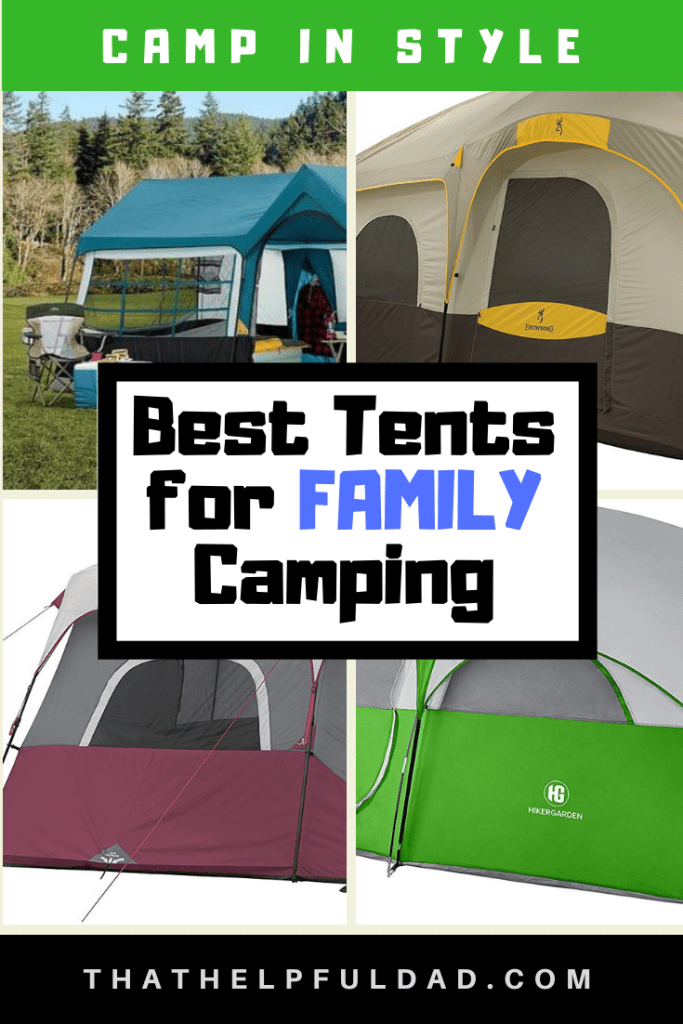
Best Tents for Family Camping – Cub Scout camping, family camping trips, and even backyards camp outs are always fun, and having the right tent makes things a whole heck of a lot easier. In this article, we’ll give you our recommendations for the best tents for family camping so your camping trips will be a blast.


Best Tents for Family Camping

Editor’s Note: Our recommended tents in this article are specifically focused on FAMILY Camping and similar situations where you’re basically driving to the camp grounds and you don’t care how heavy the tent is/isn’t because you’re not backpacking with it. It goes without saying then that the tents discussed here would not be ideal for backpackers and solo campers who are looking to pack light and streamline their list – if you’re looking to keep it super simple, check out this article instead.


What is a Family Tent? Why does it matter?

Having kids in Cub Scouts, I’ve been on a number of family camping trips and the biggest mistake I see people make when they are new to family camping is not buying a big enough tent.

Every year I inevitably see a family new to camping who brings a ‘4-person tent’ to the campsite for their 4-person family – only to discover that their tent is way too small!

Tent too Small
Courtesy SWNS.com

Don’t let this happen to you. Instead read this article and learn why you’ll want AND need a larger tent if you want to be comfortable in a family camping situation.

So what is a “Family” Tent?

Simply put a Family Tent is one that is big enough to be able to:

  • house all your family AND your camping gear (to include ‘space eating’ items like air mattresses/cots/etc);
  • give you room to spread out inside the tent and be comfortable (not cramped!) – that means being able to STAND UP inside, have room to change clothes, etc;
  • if the budget allows provide multiple ‘rooms’ in the tent for kids vs adults.
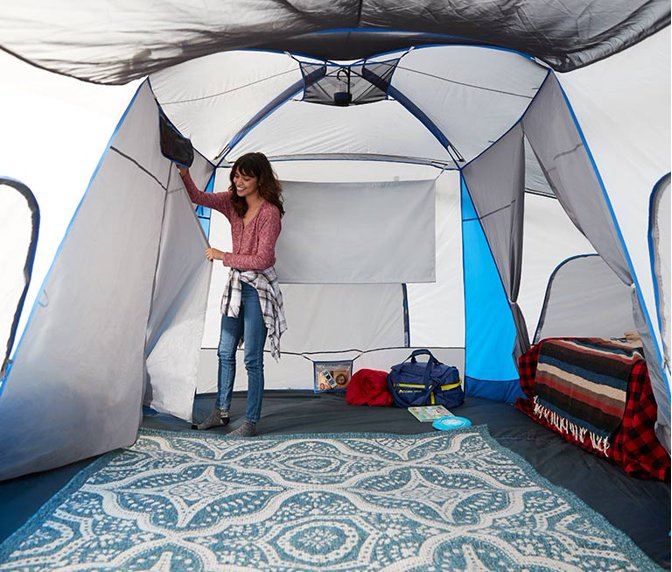
Lots of room INSIDE this tent – that’s what YOU want too!

Remember, this is NOT backpacking in the high country where you need a small, lightweight tent you can easily carry on hikes. Instead we’re talking about FAMILY camping where you can drive to the campsite – that means go BIG.

And when in doubt, go bigger!

Don’t underestimate how much stuff you camp with in family camping situations – this is especially true if you plan to…

  • sleep on air mattress or cots (these items take up a LOT of space);
  • there are going to be 4+ people in your tent (that’s a lot of gear, clothes, etc);
  • camp for 2 days or more;

Did you know?

If there are 4 people in our family, a 4-person tent will probably NOT be big enough for you and all your stuff.


Family Tents – How Big is Big Enough?

A simple rule of thumb I use it to buy a tent that is 1.5 to 2 times the size of the number of people that are camping.

So if you have 4 people, you should at least be getting a 6 person tent (4 x 1.5 = 6), 8 person tent (4 x 2 = 8), or larger if you have more gear.

ACTION ITEM – do the math on your family size to determine the basics of how big a tent you’ll need. Then do a quick inventory of the overall space requirements of the camping gear you want to store inside the tent. Once you have an idea of how much space you’ll need, you’re ready to shop for a family tent for camping!


Best Tents for Family Camping

As you’ve seen from our discussion above, it can be confusing to shop for family sized tents until you understand how much space you really need.

Now that you know what to expect, let’s review my top rated tents for family camping.

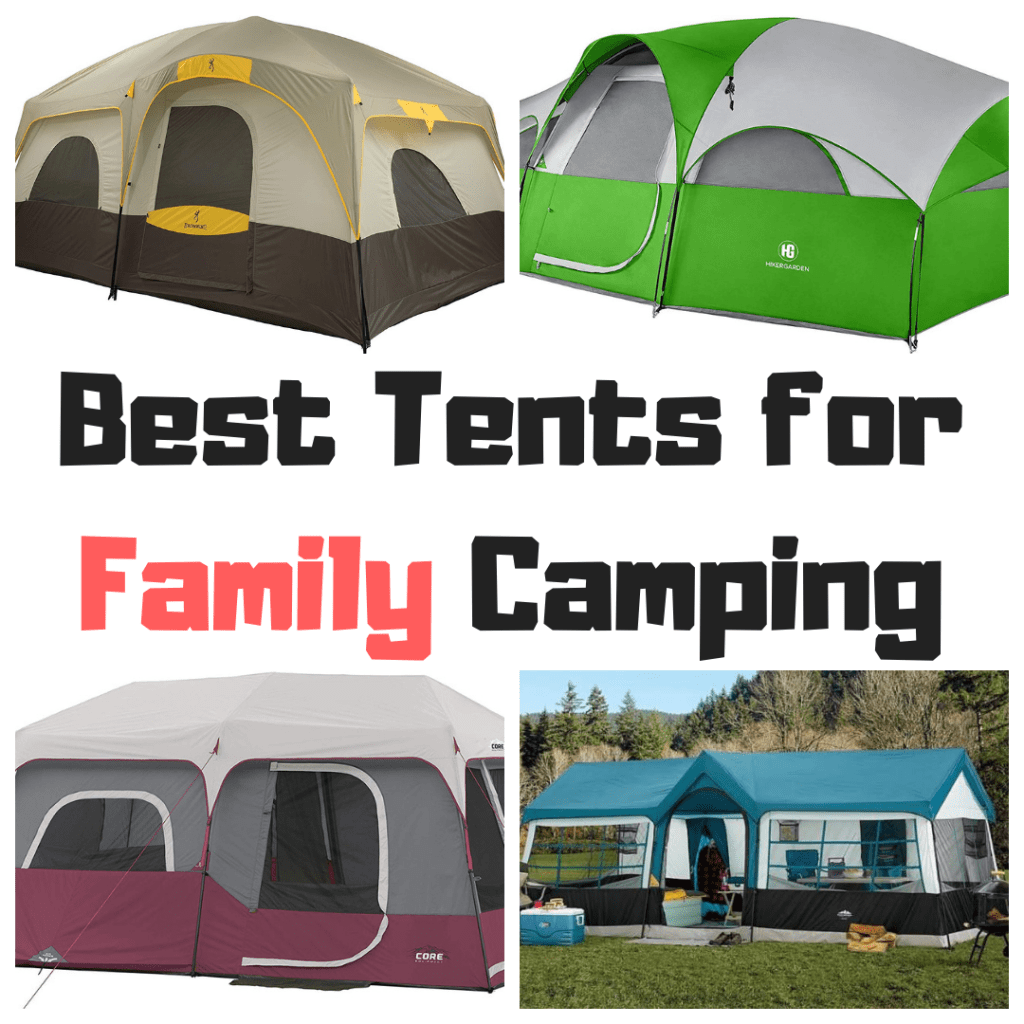
First off, here is the list in text format:

Next, I’ll provide more info about each family camping tent along with direct links to Amazon so you can review at your leisure…

[amazon box = “B00BPZCIL8”]

As a side note I have the Browning Big Horn and we’ve been using it for 4+ years – it’s awesome and provides more than enough space for my family and all our gear.

[amazon box = “B00VFH1RQS”]

[amazon box = “B07N87ZZCK”]

[amazon box = “B00NOA1X36”]

[amazon box = “B07WJWMM49”]

[amazon box = “B06W9KHS1J”]

What about Ozark Trail or Coleman Family Tents?

If you are looking to save some money or you’re not sure if family camping is going to be something you do very often, then you might consider going with a tent from Ozark Trail (a brand popular at Walmart) or the classic brand Coleman family tents.

amzn_assoc_placement = “adunit0”; amzn_assoc_search_bar = “true”; amzn_assoc_tracking_id = “thathelpfulda-20”; amzn_assoc_search_bar_position = “bottom”; amzn_assoc_ad_mode = “search”; amzn_assoc_ad_type = “smart”; amzn_assoc_marketplace = “amazon”; amzn_assoc_region = “US”; amzn_assoc_title = “Ozark Trail Family Tents”; amzn_assoc_default_search_phrase = “Ozark Trail Family Tent”; amzn_assoc_default_category = “All”; amzn_assoc_linkid = “68fa6c0b7983784e6afafc30e18e4bbb”; //z-na.amazon-adsystem.com/widgets/onejs?MarketPlace=US amzn_assoc_placement = “adunit0”; amzn_assoc_search_bar = “true”; amzn_assoc_tracking_id = “thathelpfulda-20”; amzn_assoc_search_bar_position = “bottom”; amzn_assoc_ad_mode = “search”; amzn_assoc_ad_type = “smart”; amzn_assoc_marketplace = “amazon”; amzn_assoc_region = “US”; amzn_assoc_title = “Coleman Family Tents”; amzn_assoc_default_search_phrase = “Coleman Family Tent”; amzn_assoc_default_category = “All”; amzn_assoc_linkid = “68fa6c0b7983784e6afafc30e18e4bbb”; //z-na.amazon-adsystem.com/widgets/onejs?MarketPlace=US

Best Family Tents Summary

I hope you enjoyed this article and that it will prove helpful to you in finding the best tent for family camping for YOUR family.

If you enjoyed the article, be sure to share it with a friend – here is a social-media friendly image to share….

Best Tents for Family Camping

What to Read Next

Best Streaming TV Providers
Best Foosball Tables
Best Chromebooks

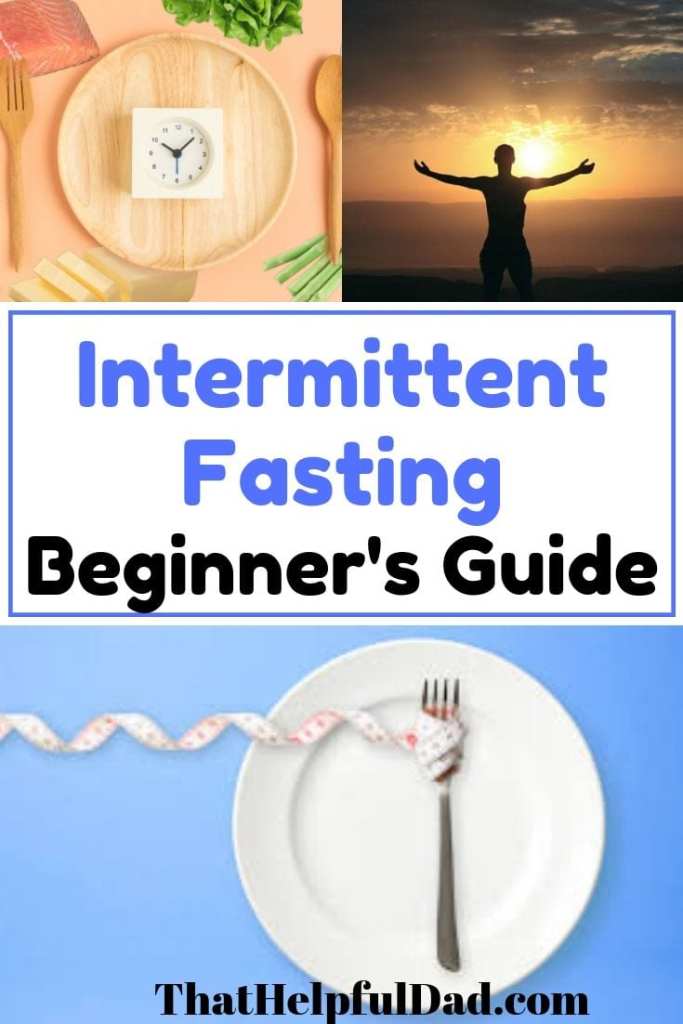
Intermittent Fasting – The Beginner’s Guide

Intermittent Fasting is a popular lifestyle diet and many people have discovered that intermittent fasting for weight loss really works, but did you know that IF has other benefits benefits besides just it’s effectiveness for helping you lose weight? On this page, we’ll discuss what intermittent fasting is, how it works, the various types of intermittent fasting schedules, tips on how to succeed with intermittent fasting, and much more. In addition, I’ll also share my own personal results with intermittent fasting – a lifestyle I’ve been living now for nearly 2 years.

Intermittent Fasting Frequently Asked Questions (FAQ) – That Helpful Dad { “@context”: “https://schema.org”, “@type”: “FAQPage”, “mainEntity”: [ { “@type”: “Question”, “name”: “What is intermittent fasting?”, “acceptedAnswer”: { “@type”: “Answer”, “text”:”Intermittent fasting is a catch-all term for lifestyle diets in which someone doesn’t eat for a preset period of time (the fasting state) and does eat during a preset period of time (the fed state). At its most basic level it amounts to not eating after dinner and possibly delaying breakfast.”} }] }

Editor’s Note: This article is part of a series on Intermittent Fasting and this is the MAIN PAGE of that series. This article has been updated numerous times to reflect what I’ve learned about IF along the way. You’ll find links to the other articles in the IF series below.

Mike, That Helpful Dad

Hi, I’m Mike, That Helpful Dad. It’s been nearly 2 years since I began this journey and I’m excited to share what I’ve learned along the way so that, if YOU try intermittent fasting, you’ll be set up for success!

Meanwhile I should point out that this article is NOT a ‘scientific’ review of Intermittent Fasting; instead it’s a personal experience story from one man’s POV. I don’t pretend to know everything about Intermittent Fasting. I’m writing to hopefully inspire you with ideas for a technique that perhaps can help you make your life better in the same way Intermittent Fasting helped me. Good luck.

So what have I learned after nearly two years of Intermittent Fasting?

Overall I learned that Intermittent Fasting is surprisingly easy and it gives me lots of energy. It’s also a very forgiving diet that helps you overcome the inevitable times when you ‘fall off the wagon.’

Intermittent Fasting has become my new ‘lifestyle’ and I can’t see myself going back anytime soon. HOWEVER Intermittent Fasting is NOT a magic cure-all and there are a few important tips to keep in mind if you want to try it – I’ll detail them for you here. 


Intermittent Fasting Table of Contents

[lwptoc]


I. What is Intermittent Fasting?

Intermittent fasting is a catch-all term for lifestyle diets in which someone doesn’t eat for a preset period of time (the fasting state) and does eat during a preset period of time (the fed state).

At it’s most basic level it amounts to not eating after dinner and possibly delaying breakfast. And if you are a beginner looking to try IF this is where you may want to start.

Personally I use the 16/8 Intermittent Fasting schedule (see more below) where I don’t eat for 16 hours and eat all my food within an 8 hour window. It looks like this: stop eating around 6pm and start eating again around 10am the next day.

Why would someone want to try intermittent fasting?

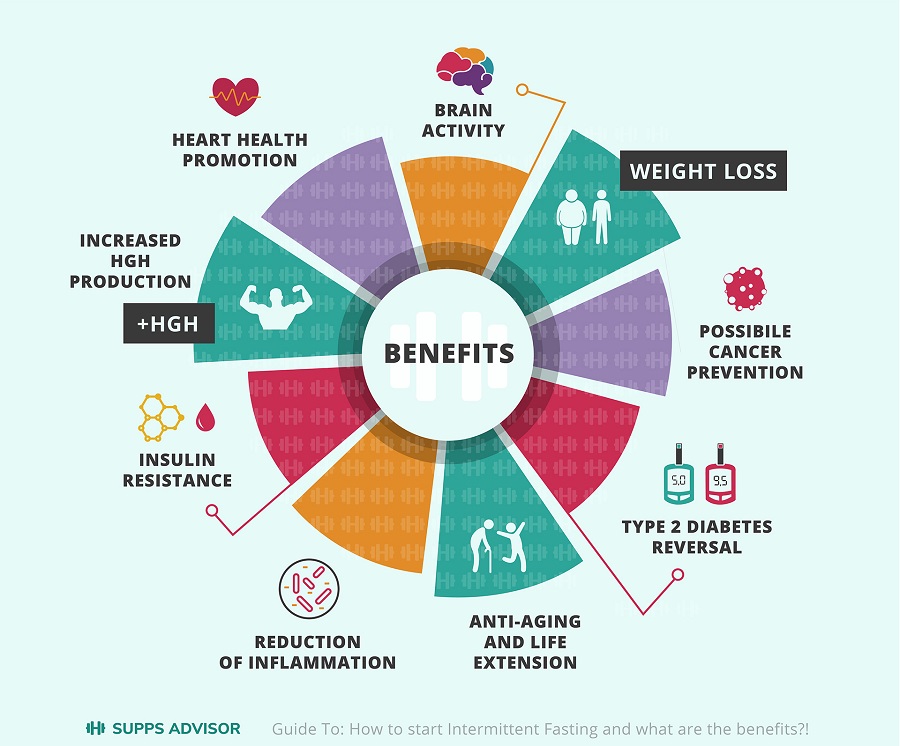
Most people choose to try intermittent fasting because it helps with weight loss. However there are are a number of benefits to Intermittent Fasting too – including potentially increased energy, more mental clarity, loads of time (and money) saved on not preparing the meals you skipped, and much more. (Read my personal journey as well as the references below to learn more about this).

Benefits of Intermittent Fasting from our friends at Supps Advisor

There are many types of intermittent fasting diet plans and eating schedules and I’ll detail them below but first let’s talk about what most people use IF for…


II. Intermittent Fasting for Weight Loss

By far the number one reason why I hear most people try intermittent fasting is because they are attracted to the possibility of using intermittent fasting for weight loss.

But does intermittent fasting for weight loss really work?

For our purposes, the reason why Intermittent Fasting seems to work for weight loss is basically common sense…

If you are restricting or eliminating calories consistently over time, then you’ll tend to lose weight. It’s not rocket science.

Remember, with intermittent fasting you are not eating for a predefined period of time (for example with 16/8 Intermittent Fasting you don’t eat for 16 hours). Now when you put yourself into this ‘fasting’ state and because you are not eating, you’re by definition restricting calories (at this during this time period) — and if you do that consistently over time you’ll lose weight.

So that’s it? Intermittent Fasting is just caloric restriction?

Not quite.

There’s a lot of more to the story about intermittent fasting for weight loss, so I wrote a separate article about it. You can read it here…(click the pick)

Article: Intermittent Fasting for Weight Loss

If you are interested in using intermittent fasting for weigh loss my article also include a plan for success as well as links to books on the topic.


III. Intermittent Fasting Schedules

What are the most popular types of intermittent fasting eating schedules?

There are many different versions of intermittent fasting. Here are the most popular types are…

  • Time Restricted Feeding (16/8, 14/10, 12/12) – where you don’t eat for 16 hours and eat all your food within the remaining 8 hours. I personally live the 16/8 Intermittent Fasting lifestyle and love it!
  • Eat, Stop, Eat (OMAD, 24-hour fasting, Whole Day Fasting) – as the name implies, you’re basically fasting for 23 hours and then eating One Meal a Day (OMAD) or going for a full 24 hours before eating.
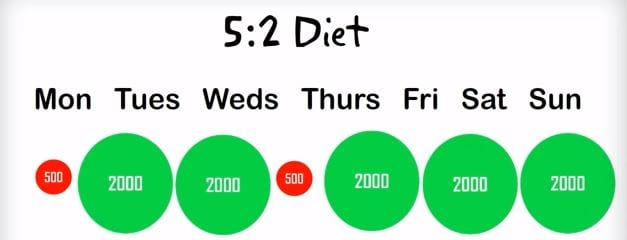
  • 5:2 Intermittent Fasting – With 5/2 Fasting you’ll be trying to limit your total daily calorie intake to only 500 calories for TWO DAYS during the week. The other 5 days you’ll be eating your typical (hopefully healthy) diet.
  • Warrior Diet – a type of Time Restricted feeding in which you do a version o 20/4 Intermittent Fasting where you eat little to no food for 20 hours and then eat one large meal at night during a 4-hour window.
  • Extended Day Fasting – 36 Hour Fasting, 48 Hour Fasting, and even 3-7 Day Fasting. I.E. the king of fasting. Yikes!

Because this is another in-depth topic, I wrote a separate article further detailing the types of intermittent fasting, you can read that by clicking this pic…

Article: Intermittent Fasting Eating Schedules

IV. Intermittent Fasting Results

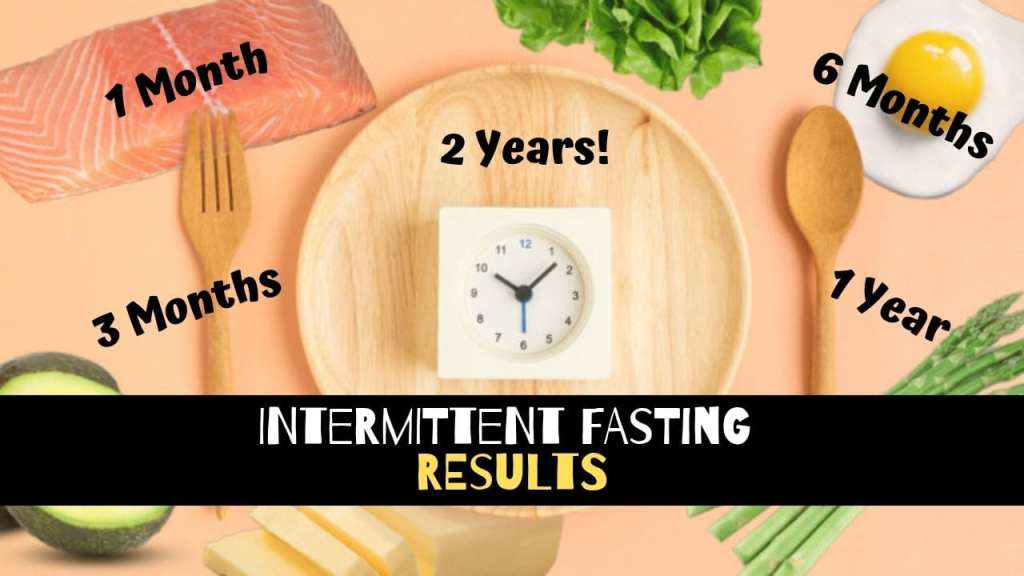
As I mentioned, I’ve been a practitioner of the Intermittent Fasting lifestyle for about 2 years now and I can honestly say that this ‘diet’ has changed my life in many positive ways. I’ve written about the benefits of Intermittent Fasting on this blog numerous times in the past and today I’d like to share more of my Intermittent Fasting Results with you – providing transparency of results for 1 month, 3 months, 6 months, 1 year, and even now out to 2 years. 

You can read my full story here – it includes why I started intermittent fasting as a beginner, what my initial fears were about intermittent fasting, what my results were from 1 month through to 2 years, and what I learned along the way.

Read my intermittent fasting results article here…

Article: Intermittent Fasting Results

V. So What CAN You Eat During a Fast?

During the period while you are fasting (on most of the intermittent fasting schedules) pretty much all you can have is black coffee or simple tea. Some research suggests you can add some cinnamon (for blood sugar control) to the coffee (and I do this).

What about Butter or Coconut Oil?
There is also a LOT of debate (see references below for a sample) about whether you can also add in ‘good fats’ like grass-fed butter and/or coconut oil to your morning tea or coffee and that this won’t break the fast because apparently these good fats…

  1. Keep you in the ketosis (fat-burning state).
  2. They don’t spike an insulin response like eating carbs would.
  3. They provide your brain-food (the fat is used by your brain for energy).
  4. So long as you keep it under 50 calories from these good-fats you are supposedly still fasting.

Look, I’m not scientist here and I can’t tell you with medical research certainty if any of this is this is true or not, all I can tell you in that my experiments have shown and for me, using 1/2 TBSP of grass-fed butter in my coffee works (and has generated the results you’ll read in my personal story about intermittent fasting).

As a side note, I love the coffee + cinnamon + butter combo so much I developed a recipe for it. Check it out here…

My coffee + butter recipe

For further reading about what you can eat DURING a fast see the references below.


VI. Intermittent Fasting Tips – The Video

Here’s a video I made at the 6 month mark of Intermittent Fasting.

https://youtu.be/mv6VvwM81pY


VII. Intermittent Fasting Tips

These are the tips I collected after practicing Intermittent Fasting for a full year.  If you’re planning to try Intermittent Fasting for beginners I’d recommend you consider using some or all of the following:

  1. Skipped Days = Lethargy: you can skip a day or two if you like but I discovered that when I skipped an Intermittent Fasting day, I felt poor physically – specifically, I felt lethargic, unmotivated, and bloated. As a result I rarely skip a day of fasting and usually get in at least 14 hours. 
  2. Fasting Cardio vs HITT: the combo of Intermittent Fasting and Fasted Cardio (AKA Cardio before Breakfast) did increase my energy level but I still think longer HITT later in the day is more effective because you can burn more calories overall. I think an alternating combo of the two is best.
  3. Workouts Burn Even More Fat: CrossFit and other constant movement workouts worked particularly well from an energy standpoint. There is also the theory that working out larger muscle groups (legs, chest, back, etc) and building up those muscles will continue the post-workout fat-burning process longer (see topic #6 of this post and many others).
  4. Fluids are a Must: Drinking 1 glass of water immediately upon waking and then my Cinnabun Coffee Cup was more than enough to take me through to 10-11am for the 16-hour fast cycle to work its magic. I also like adding in some turmeric to my coffee as well. Additionally a nice cup of green or moringa tea is also good if you want something more to drink too
  5. Eating Schedule is Flexible: When I am ready to break my fast (at 10-11am) I load up on protein – yogurt, milk, eggs, bacon, etc. I then eat lunch around 1.5-3 hours later, then have some fruit/snack around 330-4, and then dinner at 6ish. Many people say to avoid fruits because they are high in sugar and that impedes the fat loss – that may be true but I like fruits and believe their overall health benefits outweigh the negatives for long-term health.
  6. Strict DIET is NOT a must : At no time did I focus on any particular diet. I tried not to eat a bunch of junk but I wasn’t strict. So long as I was in the ‘eating window’ I ate what I wanted — for me that’s mostly protein and good fats but I still a fair amount of carbs too. I pretty much ate my normal pre fasting diet. That meant I didn’t eat a set menu of restricted foods – perhaps if I did do those things then Intermittent Fasting would be even more effective but as I said I’m just an Average Joe and I like keeping things simple.
  7. Eat Dinner Early: The key with Intermittent Fasting (at least for me) is to eat dinner early and avoid those late night snacks. DO that and you can cruise thru to 16 hours around 10 am with ease.
  8. Alcohol is a bit of a Problem: Alcohol appears to play a key role in the process. I love beer but unfortunately, so many of the beers I like (IPAs) are ‘heavy’ from a calorie standpoint and when I have a beer I usually want to have a snack too. All those calories add up – fast. My results were negatively impacted when I had more beers per month then when I didn’t. It’s not rocket science. I’m not willing to give up my beer and chicken wings completely so I realize that’s going to decrease some of the effectiveness of my Intermittent Fasting, but at the same time I look at it from a different POV: Intermittent Fasting helps me limit the negative impact of the beer so I can still enjoy it with less guilt. (The Power of Perspective is pretty cool, huh?)
  9. Caloric Restriction takes you to the next Level: I don’t like to count calories, but after 9 months of intermittent fasting I felt like I was hitting a plateau. At that point I decided to pay marginal attention to my calories and tried to make a conscious effort to stay in a net caloric deficit (basically consuming less calories than my body required which for me was approx 2,000 calories a day). I didn’t go crazy with this and I relied on basically just reading food labels and doing some simple math in my head to add up approximately what I was consuming throughout the day calorie-wise. When I added this into the mix it took my results to the next level – during the final 3 months I went from 154 lbs to 149 lbs and dropped 2 more inches from my waist. I realize this tip is not rocket science but it’s important to point out. I didn’t count calories religiously and I didn’t necessarily limit what I ate (I just ate less of it) and it worked for me. I suppose if you want to be more hard core on this, you’ll get even better results than I did, but as I’ve said all along, I want to use a method that is easy and is something I can live with over the long run. Here’s a link to calculate the calories YOU need to lose weight
  10. SMART Goals are ideal – Looking back now I can see that my 3-month goal to lose 4 inches off my belly was a bit unrealistic – especially when I didn’t stick to the original plan or change my diet much. Set yourself up for success by setting a reasonable goal. Looking ahead (since I still don’t plan to change my diet completely and I still want to drink beer, I’m giving myself more time  to reach my 32/32 belly/waist goal — I’ll keep you posted on my progress and you can subscribe to my blog for updates).

Meanwhile, I’ve since collected more key insights about intermittent fasting and you can read those in my personal journey with IF article.


VIII. Intermittent Fasting Resources

I’m just one guy and as I wrote already I don’t know everything there is to know about intermittent fasting. There are a lot of great references and books about Intermittent Fasting. Here are some of the resources I’ve found helpful, along with an assortment of top-rated books that you might find helpful if you practice intermittent fasting for beginners….

Intermittent Fasting References Overall:

Fasting Cardio References

Coffee + Butter References

Food vs Fasting References

Time Restricted Eating References:

Eat-Stop-Eat Fasting References:

5:2 Intermittent Fasting References:

Warrior Diet References:

Extending Day Intermittent Fasting References:


Intermittent Fasting – Have YOU Tried it?

If you’ve tried Intermittent Fasting, Fasting Cardio, have some killer Morning Ritual, or any related wisdom to share, please do so. I’m eager to learn your tips so we can help each other improve.

If this post helped you feel free to share it with a friend.

When you do these things we all win.

Enjoyed This Article?

Share it with a friend using this social media friendly images – perfect to pin, post, and pass along…

Intermittent Fasting – The Beginner’s Guide

What to Read Next?

    Intermittent Fasting for Weight Loss

    If you’re looking for a diet program that can provide real results to help you lose weight, then you might want to consider Intermittent Fasting. In this article, we’ll discuss the benefits of intermittent fasting specifically from a weight loss perspective so you can decide if this lifestyle is right for you.


    Editor’s Note: This article is part of a series on Intermittent Fasting.

    That Helpful Dad

    Hi, I’m Mike, That Helpful Dad. I’ve been living the Intermittent Fasting lifestyle for about 2 years now and it’s changed my life for the better. I hope it can help you too.


    What is Intermittent Fasting?

    Since this article is focused specifically on Intermittent Fasting for Weight Loss, we won’t spend a lot of time on definitions. We have other articles that dive deeper into the science behind Intermittent Fasting and all the various Intermittent Fasting schedules you can use to tailor an IF lifestyle that works best for you.

    But, to ensure we’re on the same page, let’s give a simple definition for Intermittent Fasting as follows…

    Intermittent Fasting is “a diet plan that cycle between a period of fasting and non-fasting over a defined period.”

    A popular schedule for Intermittent Fasting is 16/8 for men or 14/10 for women. What that means is fasting for 16 hours and eating within an 8 hour window (or) fasting for 14 hours and eating within a 10 hour window. But other intermittent fasting schedules are options too – there is basically something for everybody with intermittent fasting.


    Intermittent Fasting for Weight Loss

    Will intermittent fasting help you lose weight? If so, how does intermittent fasting for weight loss work? Great questions, I’m glad you asked!

    Since most of my readers are Average Joe’s like me this is not a high science blog, I won’t bore you with the pathophysiology behind how Intermittent Fasting works at the metabolic level, (however there are some great articles on this I’ll link to in the references section below).

    For our purposes, the reason why Intermittent Fasting seems to work for weight loss is basically common sense…

    If you are restricting or eliminating calories consistently over time, then you’ll tend to lose weight. It’s not rocket science.

    Remember, with intermittent fasting you are not eating for a predefined period of time (for example 16 hours) – during this window you’ll be consuming little to no calories. Now when you put yourself into this ‘fasting’ state, a lot of potentially positive effects are occurring within your body that may benefit you beyond just the weight loss effect of IF, but given our focus on weight loss, the key here is that because you are not eating, you’re by definition restricting calories (at this during this time period) — and if you do that consistently over time you’ll lose weight.

    So that’s it? Intermittent Fasting is just caloric restriction?

    Not quite.

    Myself and other proponents of IF would argue that Intermittent Fasting is much more than just restricting calories – after all history has shown us that diets solely focused on calorie counting, calorie restriction, and other ‘starvation’ diets tend to not be effective over a long period because people can’t (and frankly don’t want to) maintain that type of diet for every long – and when they come off of that type of diet there is a high rebound rate where people tend to put back the weight the lost (and possibly even gain more).

    So what’s different with IF?

    Intermittent Fasting vs Calorie Restriction Diets.

    Will you likely restrict calories when you practice intermittent fasting?

    Probably.

    Does intermittent fasting REQUIRE you to restrict calories?

    No.

    Remember, intermittent fasting is basically a preset period not eating (the fasting state ) followed by a preset period of eating (the fed state; not to be confused with the feasting state). There’s nothing in the definition of IF or even in most of the various schedules associated with IF that specifically talk about calorie restriction.

    It’s important to understand the difference between IF and basic calorie restriction diets because if you don’t then you may not have success with Intermittent Fasting.

    Why?

    Because if you gorge yourself on junk food during the time of you eat with IF and you consume more calories then you need each day, then you will GAIN WEIGHT with intermittent fasting.

    Intermittent Fasting is NOT a Guaranteed Slam Dunk

    Oops!

    When I talk to people who are new to Intermittent Fasting I basically tell them that I stop eating around 6pm, skip breakfast and just have black coffee (or coffee with butter), and then start eating again at 10am. (I follow the 16/8 Intermittent Fasting version). Then, between 10am and 6pm I basically eat whatever I want.

    While that’s true, there is an important caveat – when I say I eat whatever I want, I don’t eat lots of junk food. Don’t get me wrong, I love chicken wings, beer, nuts, and I can crush a whole bag of Doritos if you give it to me. I DO still eat all those things. HOWEVER I don’t do that every day because, first off I don’t want to, and secondly, I know that Intermittent Fasting isn’t going to overcome poor eating habits.

    So I’ll say again, if you eat more calories than you need each day, then Intermittent Fasting isn’t going to be a weight loss solution for you and, more likely than not, you’ll probably gain weight with IF.

    That would be disappointing. I don’t want to see that happen to you.


    Intermittent Fasting for Weight Loss – a Plan for Success

    If you really want to succeed with using intermittent fasting for weight loss, then you do yourself a favor and find out how many calories you need per day to maintain your weight. To do this, use a caloric calculator (Healthline has one that’s free and easy to use here).

    As Healthline notes “an average woman needs to eat about 2000 calories per day to maintain, and 1500 calories to lose one pound of weight per week. An average man needs 2500 calories to maintain, and 2000 to lose one pound of weight per week.”

    So if you are looking to lose a pound a week, shoot for the daily calorie target associated with your personal situation. For me, the goal is APPROXIMATELY 2000 calories a day.

    I say ‘approximately’ because I don’t actually count calories, I just estimate them roughly throughout the day. In that sense, Intermittent Fasting is a fairly forgiving diet plan (so long as your estimates are not way off!).

    OK, I know my daily calorie goal, so now what?

    Once you know your daily calorie goal, then use Intermittent Fasting to help you achieve it.

    This is the real beauty of Intermittent Fasting – it makes is a LOT easier to achieve a daily calorie goal because you’re limiting the time period in which you are eating and from there it’s simple math.

    The less time you spend eating, the greater your chances of consuming less calories. This is the real key behind using Intermittent Fasting for Weight Loss.

    STOP RIGHT THERE – so basically you’re saying you still want me to starve myself? , Mike, this sounds even worse than a starvation diet because now I have to starve myself for longer periods of time. That sucks. No way!

    Intermittent Fasting = Starvation?

    WRONG!

    While it’s true that you won’t be eating for extended periods of time, you’re definitely NOT starving yourself. So long as you’re not eating a bunch of junk food, and you follow your normal healthy diet, you can eat whatever you want.

    Look, here’s the bottom line with IF – if you simply skip the after dinner snacks and skip breakfast, you’ll probably have a pretty easy time with Intermittent Fasting for weight loss.

    Seriously, is it really that hard to stop eating around 6pm and then not eat the next day till 8am (14 hour fast) or 10am (16 hour fast)? It’s not hard. I can do it and so can you.

    Eat what you want (within reason), but just eat that food during the intermittent fasting schedule that works for you. Do it consistently over time and watch the pounds (and your waist line) melt away.


    Intermittent Fasting for Weight Loss Resources

    One of the goals of our site is to curate quality content from other sites and share it with you. The following articles on intermittent fasting for weight loss may be helpful to you:

    Intermittent Fasting for Weight Loss Books


    What to Read Next?

    Live a Legacy Life
    How to Live a Legacy Life
    Best Foosball Tables

    Intermittent Fasting Schedules – Most Popular Types of Intermittent Fasting

    Intermittent Fasting is all the rage these days, but what many people don’t realize is that Intermittent Fasting diet plans are not one size fits all – and that’s a GOOD thing. In this article, we’ll discuss the most popular types of intermittent fasting schedules. Hopefully you’ll find an intermittent fasting eating plan that works for you so you can benefit from this amazing lifestyle.


    Editor’s Note: This article is part of a series on Intermittent Fasting.

    Mike, That Helpful Dad

    Hi, I’m Mike, That Helpful Dad. I’ve been living the Intermittent Fasting lifestyle for about 2 years now and it’s changed my life for the better. I hope it can help you too.


    What is Intermittent Fasting?

    Intermittent fasting is a catch-all term for lifestyle diets in which someone doesn’t eat for a preset period of time (the fasting state) and does eat during a preset period of time (the fed state).

    Why would someone want to do that?

    Most people choose to try intermittent fasting because it helps with weight loss. However there are are a number of benefits to Intermittent Fasting too.

    For the purposes of THIS article, we’re going to assume you’ve already bought in to the benefits of intermittent fasting and are really just looking to better understand what the options are for intermittent fasting eating schedules.


    Most Popular Intermittent Fasting Schedules

    Depending on who you ask, if you research the types of intermittent fasting, you’re likely to see anywhere from 4 types of intermittent fasting, to 6 intermittent fasting diets, to 7 ways to try intermittent fasting, to even 15 different variations of intermittent fasting. Wow, who knew?

    I’m not here to judge what is and what isn’t really intermittent fasting – maybe there are really 15 different types or maybe there’s even more. After all the definition of Intermittent Fasting is pretty wide open to interpretation (a period of fasting vs a period of fed) so perhaps some of the lesser known types of intermittent fasting like Circadian Rhythm Fasting, Dry Fasting, and Fat Fasting qualify. But for our goals today, I’m going to draw your attention to the most popular types of intermittent fasting schedules since I’m assuming you’re likely to be pretty new to the concept. If that’s the case, then you’ll want to set yourself up for success by trying some of the tried and true methods of intermittent fasting eating plans that have been proven to work for many people (myself included).

    I. Time Restricted Feeding (16/8, 14/10, 12/12)

    Although I have no concrete evidence on this, I’m going to say that time restricted feeding is the most popular type of intermittent fasting eating schedule. I say this because it’s the most common type of intermittent fasting I hear people talking about in the real world. It’s also the version of IF that I follow and I’d like to be in the popular crowd so there’s that too. 🙂

    Here are the most popular variations of time restricted intermittent fasting.

    • 16/8 Intermittent Fasting means you don’t eat for 16 hours, and you eat all your food within an 8 hour window (fed). (This is the version most recommended for men).
    • 14/10 intermittent fasting means you don’t eat for 14 hours, and you eat all your food within a 10 hour window. (This is the version most recommended for women).
    • 12/12 intermittent fasting means you don’t eat for 12 hours, and you eat all your food within a 12 hour window. (This is more of a starting version to build from).

    Time restricted feeding is a really easy way to start intermittent fasting. Basically you don’t eat snacks after dinner and/or you skip breakfast. Consider what this looks like:

    16/8 Intermittent Fasting from our Friends at Supps Advisor
    • I practice 16/8 intermittent fasting so I try to stop eating around 6pm and then I don’t start eating until around 10am the next day.
    • If you do 14/8 IF and stop eating around 6pm, you can start again the next day at 8am. That’s easy.
    • And 12/12 IF is even easier. Stop eating around 7pm and start again at 7am. Easy-peesie. (Note: 12/12 IF is also called “Overnight Fasting”).

    I’ve been practicing 16/8 intermittent fasting for around 2 years – read my results in this article.

    What I love about 16/8 IF is that it’s a diet you can easily do every day, without feeling like you’re missing out or starving yourself. And because it’s so easy, it becomes a lifestyle you WANT to live.

    You can learn more about Time Restricted Eating here:


    II. Eat, Stop, Eat Fasting (OMAD, 24 Hours, etc)

    Moving on to a bit more advanced fasting. Within the Eat-Stop-Eat Fasting, you typically hear people talk about the following:

    • OMAD – This means “One Meal a Day” – most people define this as fasting for 23 hours and eating all your food in a 1 hour period. So this could also be called 23/1 Fasting.
    • 24 Hour Fasting – basically you eat normally (as you define it) one day, fast an entire day, and then eat normally again. Then repeat.
    • Also called “Whole Day Fasting”

    Those I know who practice this type of Eat-Stop-Eat Fasting love it. HOWEVER I don’t know anyone who does this consistently ever day. Usually I’ll hear people say they do this 2-3 times a week.

    That said, people who practice this type of fasting often proclaim the cleansing benefits of this lifestyle.

    You can learn more about Eat-Stop-Eat Fasting here:


    III. The 5-2 Method of Intermittent Fasting

    Not to be confused with Eat-Stop-Eat fasting, 5:2 Intermittent Fasting is a different animal. With 5/2 Fasting you’ll be trying to limit your total daily calorie intake to only 500 calories for TWO DAYS during the week. The other 5 days you’ll be eating your typical (hopefully healthy) diet.

    Most people who do 5:2 Intermittent Fasting will eat a 200 calorie meal and a 300 calorie meal and they’ll try to eat high-fiber, high-protein foods.

    5:2 Fasting is also called Twice a Week Fasting.

    A variation of 5/2 Fasting is Alternate Day Fasting (500 calories every other day) but the latter, while successful for losing weight, has proven to be hard to stick with over the long term for some people.

    To learn more about 5:2 Intermittent Fasting or Alternate Day Fasting, check out these links:


    IV. The Warrior Diet

    Whether it’s good marketing or something more, the Warrior Diet version of Intermittent Fasting has gained lots of popularity recently. As noted on Medical News Today, “supporters of the Warrior Diet claim that humans are natural nocturnal eaters and that eating at night allows the body to gain nutrients in line with its circadian rhythms.”

    Although it sounds hard – it’s proclaimed as a 20/4 Intermittent Fasting where you eat little to no food for 20 hours and then eat one large meal at night during a 4-hour window.

    That said, the Warrior Diet isn’t really a time restricted diet (if we define time restricted fasting as a period of NOT eating followed by a period of eating), because during the 20-hour ‘fasting’ window of the Warrior Diet you’re allowed to eat minimal amounts of raw fruits and vegetables.

    While I am not here to say if the Warrior Diet is a true version of Intermittent Fasting, the fact is that most people do define it as an Intermittent Fasting Schedule so we’ll include it here too.

    More importantly though, if you choose to follow the Warrior Diet Fasting plan, you may want to read more about the science behind Intermittent Fasting in general – especially if your goal is to use intermittent fasting for weight loss because if you eat more than 50 calories during the 20 hour ‘fasting’ window you MAY not stay in the ‘fasting state’ as effectively as you do with other forms of intermittent fasting (see the science behind the fasting state benefits of intermittent fasting here).

    To learn more about the Warrior Diet, check out these links:


    V. Extended Fasting (Multiple Day Intermittent Fasting)

    Not for the feint of heart (and not for beginners of IF), Extended Day Fasting is pretty much what the name implies:

    • 36 Hour Fasting
    • 48 Hour Fasting
    • 3-7 Day Fasting

    All these forms of intermittent fasting schedules are more extreme versions of the IF diet. There’s a boatload of evidence that people point to as the cleansing benefits of these types of intermittent fasting variations but you’ll need to graduate to this level of fasting if you want to set yourself up for success.

    To learn more about Extending Day Intermittent Fasting, read these articles:


    Intermittent Fasting Schedules – The Bottom Line

    There really is something for everybody when it comes to Intermittent Fasting Eating Schedules.

    If you’re looking to get started, try one of the easier versions like 12/12 IF or 14/10 IF. All you really need to do is skip that after dinner snack.

    Give it a try and let me know how it works.


    What to Read Next

    Intermittent Fasting for Weight Loss
    The Best of Series

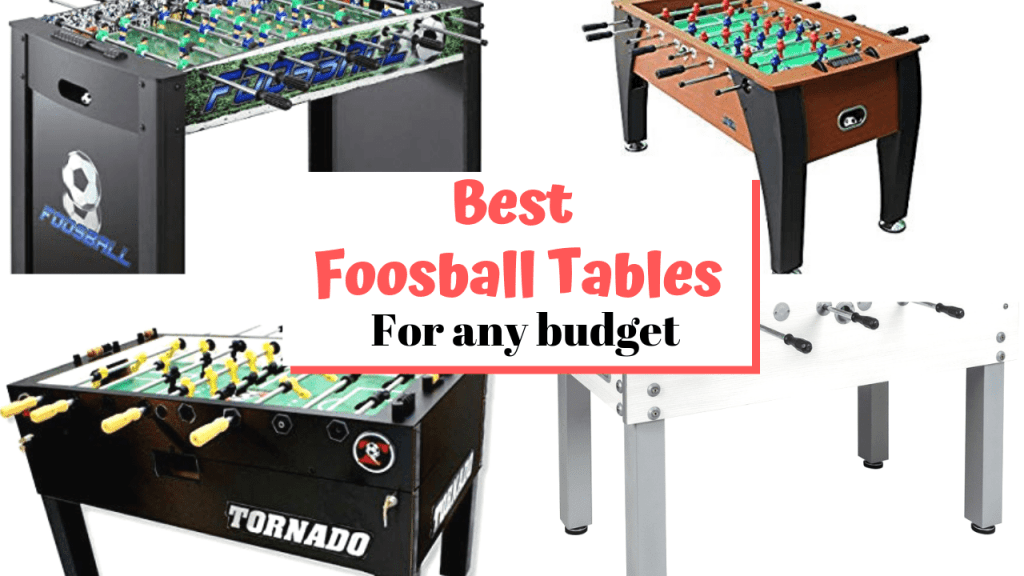
    Best Foosball Tables for any budget – from family-friendly to man-cave to competition certified!

    Best Foosball Tables

    Foosball is a game that hooks you as a fan from the first time you play it. Do you remember your first time? Was it playing foosball at a local sports bar, or perhaps with your buddies in college, or maybe it was way back when you were still a kid and you got lucky enough to find an open table while you’re grandpop was up at the bar getting ‘one for the road’ (if you grew up in the 70’s you know what I mean). Somehow, somewhere, you found foosball and you’ve been loving it ever since.

    “Friends” Season 1, Episode 12 – Monica Rules!

    So now you want to get your own foosball table and share the experience with your friends and family. The problem is that there are so many options and you don’t know where to start, right? That where we can help. At ThatHelpfulDad we provide honest reviews about family friendly products.

    What you’ll find here are our recommendations for the best foosball tables for any budget: from first time foosball starter tables perfect for kids, through classic looking models designed for that game room you’re designing, all the way to more rugged commercial grade models, outdoor models that can withstand the elements, and even a semi-pro model.

    We’ve got a pick that’s perfect for YOU. So let’s go.


    In a Hurry? A Summary of Top Picks

    If you don’t have time to read this entire article and just want to know the models we’re recommending, this list will help. Each of these selections are either well-known brands, consistently highly recommended models, and/or highly rated (4+ stars) on Amazon – many of these picks meet ALL 3 of those requirements. As always, we want to be disclose that we are an official Amazon Affiliate and you can learn more about this on our Trust Guarantee Page.

    [amazon table=”9407″]

    [amazon table=”9409″]


    Best overall value for the money for MOST people/situations

    KICK 55″ Legend Foosball Table. This model is great for most situations – it’s durable, has a classic wood style, comes from a well-known brand, is consistently highly rated, offers counterbalanced men, the ability to change player configuration (including using just 1 goalie), and even comes with a lifetime warranty (at last check). For the price you can’t go wrong here – click here to see the Kick on Amazon now.


    Best Foosball Tables for Any Budget – Full Article

    For the Noobs – What is Foosball?

    Foosball is essentially a table top version of what the rest of the world called ‘Football” and the US “Soccer.” The goal is to get a small round ball into the net (i.e. the ‘goal’) of your opponent, thus scoring a point for your side. You move the ball by using a series of knobs attached to long tubes which run are inserted into the small game players that ‘kick’ the ball across the table. Whichever side scores the most goals wins. Here’s a popular YouTube video so you can see for yourself…

    How to Play Foosball Vido

    Why is the game called “Foosball?”

    A quick history lesson – the game of foosball was invented in Spain in the 1890s (at least according to Wiki) and first patented by an enterprising Brit name Harold Thornton in 1921. 

    So why is it called “Foosball” – because pretty much everyone else in the world calls the game the US knows as ‘soccer’ by the name of “Football.” To capitalize on the popularity of this sport, the story goes that Thornton simply morphed the name of his game by 1 letter – by replacing that ‘t’ with an ‘s’ a new legend in arcade and bar gaming was born!

    How to Shop for a Foosball Table

    Before you spend any money on a new foosball table you’ll want to answer these questions:

    1-What’s your budget?

    • There’s no sense even looking at high priced models with all the bells and whistles if you’re budget is less than $1,000. HOWEVER, that doesn’t mean you still can’t get a great table.
    • Let’s keep this simple (assuming you are playing indoors, don’t have many requirements in terms of special features, and have the space to fit the following tables) then…
    • IF YOUR BUDGET IT…
      • Less than $150 and…
        • You want a tabletop model, get the Roar and Rally foosball table.
        • You want a traditional standalone model at this price point, get the Hathaway Playoff 4′ Foosball Table. BTW this model is awesome for kids and adults just starting out. It’s well made, fun to play, and has held up well for my kids over the years. 
      • Less than $600 and…
      • If you have more than $600 to spend, then keep reading because other factors will matter. 

    2-How big is your space? Are you playing outdoors? Etc.

    WHO are you buying for and what’s the expected level of usage? 

    • If you’re buying this for your kids and/or it’s your starter table, why spend a bunch of money, just go with the Hathaway 48″ if money is tight or the Kick 55″ Legend Foosball if you want a bit more in terms of durability, features, and overall appearance.  
    • If you’re buying for a man cave or game room set up, then appearance and budget will matter. In this case, you’ll need to answer the other question on this list to decide.
    Foosball Tables are a must for your ‘well-equipped’ Game Room

    Do materials & design matter to you?

    Features related to materials of the cabinet, playing surface, and overall design/appearance may or may not matter to you and will likely be directly related to your intended use, the room you’re putting it in, and your budget. Here’s some things to consider:

    • Cabinet Materials – you’re looking at solid wood or steel for the high end tables, MDF/composite for mid-range models (which is most models), or particle board (think IKEA) for lower end tables. For most people, it will be MDF/composite which is a fiberboard that is highly common in mid-range furniture and sports equipment and gets coated on the outside to be transformed into the desired appearance. It’s not rocket science here and I wouldn’t get hung-up on this too much…
      • Just accept that cabinet material it’s basically budget-dependent and spend your decision-analysis time on other factors. 
    • Playing surface – unless you’re looking for a semi-pro or competitive level of foosball table, most people don’t need to worry about this either. Common surfaces for playing on are melamine or laminate. Both are smooth and fast and will meet the intended use of most players. Laminate over solid wood is a higher end option and unlikely to be needed by the general public. That said, if it’s on one of the tables you’re looking at, go for it. 
    • Rods & Grips – This one does matter.
      • Don’t buy a table with plastic rods and tiny grips unless your budget won’t budge.
      • Ideally you can get steel rods with grips that fit adult hands (assuming you’re buying for adults) and with grips that don’t keep popping off (read Amazon reviews to see if this is a complaint). This shouldn’t be a problem for the tables on our recommended list but if you deviate pay attention to rods and grips.
      • Most tables will have steel rods with decent grips and you’ll be fine.
      • If you’re looking for competition play or higher end models, look for hollow rods – the lighter weight vs traditional steel will give slightly faster spin which equals more power on your shots. Hollow rods may offer slightly more durability too – assuming you are not overly rough with them. 
    • Design – if you’re going for a certain ‘look’ then obviously this will quickly narrow your choices.
    Garlando G-5000

    Are you looking for certain ‘Special Features?”

    Now we’re getting into minute details that will mostly only apply to higher end users. 

    • Do the # of Goalies matter to you?
      • Many of the basic tables will have 2 or 3 goals on the back line – that’s fine for most people
      • But if you want more of a challenge, or you’re playing for certain tournaments you’ll likely want a table with 1 goalie or a table that allows you to change the configuration.
      • Perhaps the most popular 1-goalie table on the market today is the Tornado Tournament 3000.
    Tornado Tournament 3000 with 1 Goalie
    • Do you want Telescoping Rods?
      • For most players this may seem ‘duh, that’s obvoius’ but if you’re buying a table for kids or families pay attention.
      • What we’re talking about here is how the rod extends through the cabinet – specifically into the OPPONENT’s side. As you play the game, you’ll be pushing and pulling on the rods on your side and if you don’t have telescoping rods, then for every action you take on your side to push/pull, it will cause that same reaction into your opponents area (i.e. your rods will push into or be pulled out of the opposite side). If you have younger kids near the table and they don’t know to be aware of their opponent’s rods coming at them, this could lead to a dangerous poke. 
      • Telescoping rods will slide into a casing on the opposite side so the rod doesn’t extend into the opponent area – poking problem solved. 
      • The Garlando G-500 Indoor model has telescoping rods and numerous color options.
    Garlando G-500 with Telescoping Rods
    • Do you want the ability to Change Players/Configurations?
      • Basically do you want to be able to remove the rods to change out the players/teams to something different (say the Manchester United Team or the national team of your choice) and/or change configuration/placement of players on the rods?
      • This is a cool ‘nice to have’ feature and will really help to make the table your own personal masterpiece if that’s something you’re in to.
      • Here are some examples of what’s available by way of player type or team customization….
    amzn_assoc_placement = “adunit0”; amzn_assoc_search_bar = “true”; amzn_assoc_tracking_id = “thathelpfulda-20”; amzn_assoc_search_bar_position = “bottom”; amzn_assoc_ad_mode = “search”; amzn_assoc_ad_type = “smart”; amzn_assoc_marketplace = “amazon”; amzn_assoc_region = “US”; amzn_assoc_title = “Foosball Men”; amzn_assoc_default_search_phrase = “Foosball Men”; amzn_assoc_default_category = “SportingGoods”; amzn_assoc_linkid = “3ea9355fb7dc97d7becca59e5a9841d5”; amzn_assoc_default_browse_node = “3375251”;
    • Do you want Leg Levelers?
      • i.e ‘table levelers’.
      • This one is kind of obvious – you need to have a level surface on which to put your foosball table. If it’s not level, you’ll want to be able to level it out.
      • Most tables give you some type of level levelers so I wouldn’t spend a lot of time here. Just confirm your table has this feature – again most do. 
    • Do you want a specific kind of Ball Return?
      • Does it matter to you where does the ball go after a goal is scored? This feature is is ‘ball return.’
      • Your options for ball return are back end return, single side return, or dual side return.
      • Most tables will have back end return (basically when a ball goes through the net it will end up on the back of the table in front of the player who just gave up the goal. That’s fine for most people’s needs.
      • More competitive players will want SIDE RETURN.
        • This is especially useful for people that practice by themselves (after all you don’t want to keep walking around the table to the other side to get the ball do you?)
        • That’s why higher end and top of the line tables have side return – some even have DUAL side return. 
    • Do you want Specific Dimensions?
      • if you have restrictions on size, you’ll want a certain size so pay attention to the dimensions when you shop.
      • if you’re looking for tourney play, you’ll need to pay closer attention to dimensions of the table (again look for 56L x 30W x 36H).
      • For most people, it will simply be a matter of making sure the table will fit AND that you have enough room on EACH SIDE for the rods to be pulled all the way out. 
    • Do you want Counterbalanced Players?
      • this may also be referred to as ‘counter-weighted’ players.
      • Most people won’t need to worry about this feature but serious foosballers will care about it.
      • Basically this situation occurs when the head AND the foot of the foosball player is balanced with equal weights – the benefit of this is that you can set your normally VERTICAL players into a STABLE HORIZONTAL position to open up pathways for passes and shots. If you play a lot, you’ll know the importance of this because it allows you to keep your front lines open WITHOUT having to hold onto the handle – the result is faster passing without obstruction, and more goooooooaaaaaals!
      • It looks like this…
    Counterbalanced Foosball Men
    Coffee Table Foosball Tables offer nice appeal to any room for casual play

    Get your own foosball table, practice your skills, and before you know it, this could be you…

    An unstoppable Foosball Shot?

    Best Foosball Tables for every budget – The Tables

    Here’s a final recap of our best foosball tables for every budget, every situation….

    [amazon table=”9407″]

    [amazon table=”9409″]


    Best Foosball Tables – Conclusion

    Well, friends, that was our list of the best foosball tables. Did we miss a foosball table or brand that you really like? Do you have one of these tables and want to share your thoughts? Let us know what you think in the comments below.

    Now let’s FOOS!


    What to Read Next

    if you enjoyed this article you may also like…

    Best Chromebooks
    10 Questions about Stranger Things Season 3

    Best Snorkel Masks for Kids and Families

    If you’re looking for honest reviews about the best snorkel masks for kids and families this article and video can help you. We’ll demo three different types of snorkel mask sets and give you our reviews and recommendations on the best snorkel mask sets for kids and families.

    Share this pic with a friend so they can read this article too

    Whether you live in Florida like us and can go swimming all year round or whether you’re looking for a snorkel mask set because you’ve got a beach vacation, cruise trip, or just planning to spend time in the backyard pool, this review can help you. In our video we’ll demo and review a snorkel mask with fins, a full face mask snorkel mask, and even a snorkel mask set for toddlers too.

    Best Snorkel Mask Demo and Reviews

    In this video you’ll see demos of 3 different kinds of snorkel masks. You’ll also get the perspective of Jax (9 years old), JeeHo (4 years old), and me (let’s just say 40+ years old – haha).

    Video Table of Contents

    Use these links to skip ahead in the vid

    1. Jax Demo of Full Face Snorkel Mask: 0:40
    2. Jax Demo of Toddlers Snorkel 01:40
    3. Jax Demo of Snorkel Set with Flippers 02:20
    4. Toddler Demo of Kids Snorkel mask 03:23
    5. Dad’s Demo of Full Snorkel Set with Fins 03:58
    6. Dad’s Demo of Full Face Snorkel Mask 05:00
    7. Dad’s choice of products and WHY 5:35
    8. Jax’s choice of products and WHY 06:40
    9. Dad’s further thoughts on the Full Face Mask 07:51

    What Makes a Good Snorkel Mask?

    Here’s what we looked for in deciding what type of snorkel mask to buy:

    1. Is it easy to breathe? One of the things I love about the US Divers Full Face Snorkel Mask is that you can breathe through your nose AND your mouth. This provides awesome flexibility and makes it more comfortable to snorkel underwater without coming up for a break longer. That means more underwater sights to see!
    2. Is it comfortable? If the snorkel mask straps are too tight or don’t feel right, or if the snorkel mask itself rubs your face the wrong way then you won’t want to wear it very long.
    3. Is it easy to adjust? Let’s face it, you WILL have to fiddle with strap on your snorkel mask. Knowing that, you’ll want to pick a snorkel mask whose straps are easy to move. This is especially true on snorkel masks for kids.
    4. Can you see good under water? Kind of important, right? I mean obviously you want a snorkel mask that allows you to see good – but that’s easier said than done. If you choose a mask that fogs up too easily or has a limited view, then you won’t see much. That’s another reason why I am a fan of the full face snorkel masks. You can see so much so clear!
    5. Is it a good value for the money? When we’re trying to find the best snorkel masks for kids and families, we’re clearly NOT looking for ‘professional’ models. With that in mind, we want something that is easy on the pocketbook. Pretty much everything you see on the page should be in the $25-50 price range.

    Products seen in the video (or similar products)

    1-Full Face Snorkel Mask

    US Divers AirGo Full Face Snorkel System

    Features:

    • 180° Panoramic Visibility
    • Easy Breathing – a dual chamber system that separates inhaled fresh air from exhaled CO2 and helps you only breathe the fresh air around you
    • Fog Free.
    • Silicone Skirt and Straps.

    Did you know?

    We used our US Divers Full Face snorkel masks on our Disney Cruise and had an awesome time with them!


    2-Standard Snorkel Mask with FINS

    U.S. Divers Cozumel Snorkeling Set. Adult Snorkel Mask, Snorkel, Fins, and Travel Bag

    Features:

    • 2-window mask
    • 3-Way Adjust straps
    • Fins with full foot pocket

    3-Toddlers Snorkel Mask Set

    U.S. Divers Youth Flare Jr Silicone Snorkeling Set Fun Blue Small 1-3

    Features:

    • Silicone straps for maximum comfort
    • 3-way buckles for easy adjustments
    • Shaped for youth and small adults

    Other Snorkel Masks to consider

    We chose the US Divers Brand and we are really pleased with this brand. In my opinion the US Divers Brand offers some of the best snorkels masks for kids and family, however let’s face it, there are other options.

    Here are some lists of highly rated snorkel sets currently selling on Amazon for you to check out.

    amzn_assoc_placement = “adunit0”; amzn_assoc_tracking_id = “thathelpfulda-20”; amzn_assoc_ad_mode = “search”; amzn_assoc_ad_type = “smart”; amzn_assoc_marketplace = “amazon”; amzn_assoc_region = “US”; amzn_assoc_default_search_phrase = “Best Full Face Snorkel Masks”; amzn_assoc_default_category = “All”; amzn_assoc_linkid = “7844460e3b005d07798c291b9ad051ab”; amzn_assoc_search_bar = “true”; amzn_assoc_search_bar_position = “top”; amzn_assoc_title = “4-Star Rated Full Face Snorkel Masks”; //z-na.amazon-adsystem.com/widgets/onejs?MarketPlace=US amzn_assoc_placement = “adunit0”; amzn_assoc_tracking_id = “thathelpfulda-20”; amzn_assoc_ad_mode = “search”; amzn_assoc_ad_type = “smart”; amzn_assoc_marketplace = “amazon”; amzn_assoc_region = “US”; amzn_assoc_default_search_phrase = “Snorkel Sets with Fins for Adults”; amzn_assoc_default_category = “SportingGoods”; amzn_assoc_linkid = “7844460e3b005d07798c291b9ad051ab”; amzn_assoc_search_bar = “true”; amzn_assoc_search_bar_position = “bottom”; amzn_assoc_title = “Snorkels Sets with Fins”; amzn_assoc_default_browse_node = “3375251”; //z-na.amazon-adsystem.com/widgets/onejs?MarketPlace=US amzn_assoc_placement = “adunit0”; amzn_assoc_tracking_id = “thathelpfulda-20”; amzn_assoc_ad_mode = “search”; amzn_assoc_ad_type = “smart”; amzn_assoc_marketplace = “amazon”; amzn_assoc_region = “US”; amzn_assoc_default_search_phrase = “Snorkel Sets for toddlers”; amzn_assoc_default_category = “SportingGoods”; amzn_assoc_linkid = “7844460e3b005d07798c291b9ad051ab”; amzn_assoc_search_bar = “true”; amzn_assoc_search_bar_position = “bottom”; amzn_assoc_title = “Snorkels Sets for Little Kids”; amzn_assoc_default_browse_node = “3375251”; //z-na.amazon-adsystem.com/widgets/onejs?MarketPlace=US

    Best Snorkel Masks – YOU Decide

    Well, what’s it gonna be? Did you make a choice on the best snorkel masks for YOUR family? If so, let us know in the comments below – especially if there is a set you really liked.


    What to Read Next?

    Best Telescopes for Families
    Best Chromebooks

    How 1 Pat of Butter Helped Me Lose 10 Lbs and 3 Inches from My Belly!

    Butter – The Magic Bullet of Weight Loss?

    What you are about to read is a true story. Nobody’s names have been changed and there are no witnesses to protect. In fact there isn’t even mystery to solve. The fact is, if you want to achieve the same results as me, then all you need to do is mimic what I did and use a single pat of butter to lose weight. It really works!

    Share this article with this Pin-Friendly Image 🙂

    If you are in a rush, here’s a TLDR Summary of this article…

    Put a pat of grass-fed butter in your morning coffee and skip breakfast as part of an Intermittent Fasting Routine and watch the weight fly off and your waistline go down!

    If you want to know more to my story, get a great recipe for your morning coffee, and understand WHY using butter to lose weight really works, then keep reading.


    The Backstory

    I’m in my mid-40’s and for the last few years I was getting more and more horrified to see my waistline expand (it got up to 37.5 inches!) and my energy decrease. So about 6 months ago I read Tim Ferris’ Tools of Titans book and heard about the benefits of Intermittent Fasting. Since I gained like 100+ useful tips from Tim’s book I decided to try his recommendation for Intermittent Fasting too — boy am I glad I did!

    That said, this is not an article about Intermittent Fasting — I’ve already done that and you can read it here…

    https://thathelpfuldad.com/intermittent-fasting/

    Butter for Weight Loss – This Story

    This IS an article about how I used grass-fed butter to lose weight as one of the key pillars of my success with Intermittent Fasting.

    And the best thing about this idea is that it’s so freakin’ simple!

    The basic premise is that you put 1/2 Tablespoon of Grassfed Butter in your black coffee in the morning. Then you skip breakfast, complete your 14–16 hour fast period, and happily move on with your day. Honestly it doesn’t get any easier than that.

    Using this technique I lost 10 pounds (and counting) and more than 3 inches off my belly!

    Butter for Weight Loss and YOU

    If you try what I am suggesting, it’s very possible YOUR results could exceed mine.

    After all, I started at a relatively healthy 5’8″, 166 pounds at baseline so there wasn’t a lot of weight for me to drop.

    My main goal was to decrease my waistline — and that’s exactly what I did. Using a loose tape measure I am now at 34.5 inches around my belly, but from a practical standpoint I can now comfortably wear 32 inch waist pants again — Woo Hoo!


    Common Questions about Butter for Weight Loss

    1. Why Butter? How does this work?
      Because butter is a fat and while we are in the Fasting State our bodies are burning fat for energy— we want this to continue as long as possible so we can lose weight, lower our waistline, and experience all the benefits of Intermittent Fasting. Butter essentially becomes an energy source (read: brain food) that we can use for fuel during the Fasting State. What we don’t want is to trigger an insulin response by eating carbs or protein during our fast — if we do that we move out of the Fasting State and into the Fed State.
    2. Why GrassFed Butter?
      Because we want to feed our body with healthy fats. My favorite options here are Kerrygold Irish Butter (no salt) and Vital Farms, but there are lots of choices here.
    3. Why just 1/2 Tablespoon? 
      Because a full Tablespoon of butter has about 100 calories and, while there is a LOT of debate about this (which I compiled in my Intermittent Fasting article), many sources seem to agree that if you can stay under 50 calories while eating only healthy fats, then you’ll increase your odds of staying in the Fasting State.
    4. What about Ghee, Coconut, or MCT Oil like Tim Ferris talked about?
      Those may all work too, assuming you are choosing healthy, organic options. Last I read Tim actually uses some of these in his now famous Titanium Tea. As for me, while I’ve tried other options here, from a taste perspective, I just like the grassfed butter choice.
    5. Why Black Coffee?
      Because black coffee has no calories and won’t break your fast. Additionally, the caffeine is a source of energy that can compliment the healthy fat energy source from the butter.
    6. Is this just the same thing as “Bulletproof Coffee?”
      Definitely NOT. Bulletproof coffee does use ‘good fats’ in it’s recipes but it is full of so much fat calories that many suspect it breaks your fast. It’s a bit like overkill in my opinion but I guess it depends on your goals. If you are not practicing intermittent fasting and not trying to lose weight and therefore don’t care about all the calories in bulletproof coffee and just want the energy from it (as part of your Ketogenic Diet for example), then bulletproof coffee is potentially a great option for you. BUT for what we are trying to accomplish here (I.E. using butter for weight loss via intermittent fasting), bulletproof coffee is not a good choice for us.
    7. Do you have a recipe for your version?
      As a matter of fact I do! I call it my CinnaBUTTER Coffee Cup and you can read it here…

    https://thathelpfuldad.com/cinnabutter-coffee-recipe/


    Butter for Weight Loss – The Bottom Line?

    Look, I’m not scientist here and I can’t tell you with medical research certainty why grass-fed butter in your coffee is so beneficial (or not). All I can tell you is that I tried one of Tim Ferris’ ‘self guinea pig’ experiments and put the idea to the test on myself — and in my experiment consistently using 1/2 TBSP of grass-fed butter in my morning coffee helped me achieve results that I am super stoked about.

    I’m grateful that Tim shared his ideas in his book. I’m hopeful that by sharing my ideas with you it will inspire you to consider this lifestyle change. After all, I’m just an Average Joe and if I can do it, so can you.


    What to Read Next?

    https://thathelpfuldad.com/product/tim-ferris-tools-of-titans-book-review/

    Want More Tips Like This?

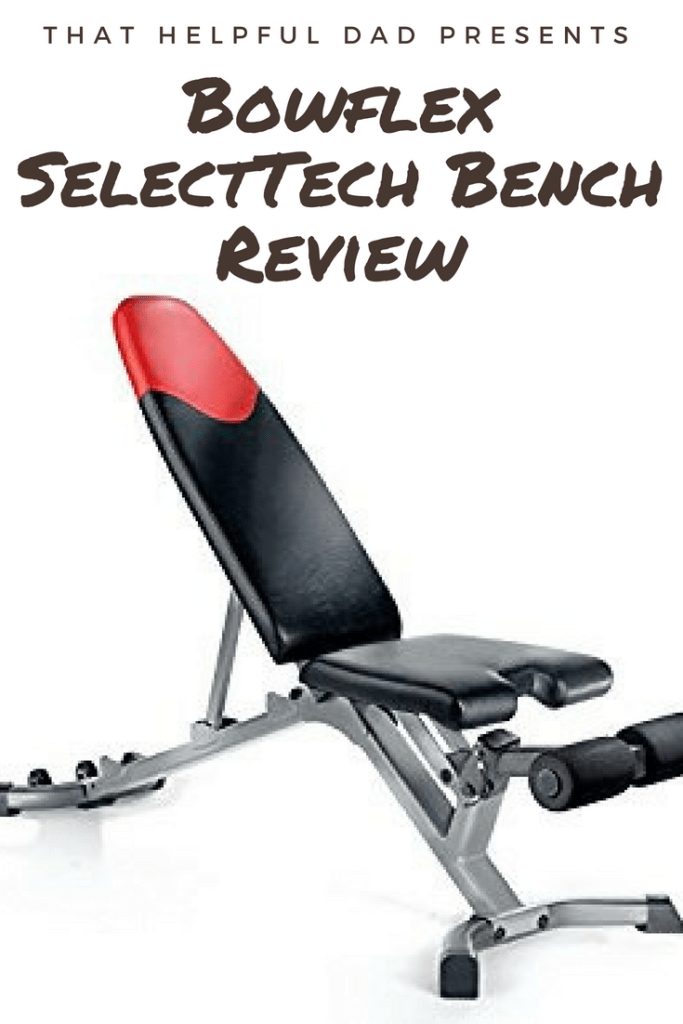
    Bowflex SelectTech Bench – Honest Review by Actual User (with video)

    Bowflex SelectTech Bench – Overview

    Are you in the market for the Bowflex SelectTech Bench? If so this video may help you.

    Hi, I’m Mike, That Helpful Dad and in this video I’ll show you all the ins and outs of the Bowflex SelectTech 3.1 Adjustable Bench. I’ll demonstrate how the bench adjusts, how easy it is to use, show you the bench ‘in action’, and also show you how you can take off the leg attachment.

    Bowflex Bench Review
    Share This Review by Sharing This Image – It’s a Facebook Friendly and Ideal Pinterest Image. Thanks!

    Notes:

    1. This is an honest product review of the Bowflex SelectTech 3.1 Adjustable Bench by an actual user. I paid for this product myself and I am not being compensated by Bowflex for this review.
    2. In this video is the Bowflex SelectTech 3.1 Adjustable Bench.
    3. There is also other options. Here are all the versions on Amazon:

    What’s The Bottom Line?
    The Bowflex SelectTech 3.1 Adjustable Bench is a quality piece of fitness equipment for a good price. Even though there are newer options, personally I still think the 3.1 version is the best combination of price to value. BTW I also own the Bowflex 552 Dumbbells too and those are even more awesome!


    Want more Honest Reviews?

    Want to see other products are on our “Most Recommended” List?


    Bed of Nails – From Pain Comes Pleasure But Its Not What You Think

    Bed of Nails – What The Heck Is it?

    OK, OK, I know what you’re thinking – “Bed of Nails?” Is that some sort of yogi fetish? Do visions of somebody laying on a board of spikes go through your head?

    I’m not quite talking about that. Instead, The Bed of Nails I’m referring to is a product that’s basically an acupressure mat. Here’s what mine looks like…

    Bed of Nails

    As you can see, there’s a bunch of little ‘golf spike’ looking things that provide the ‘nails’ for you to lay on.

    Now before you dismiss this as a cockamamie idea, let me just tell you that this acupressure mat is freakin’ awesome – I use my ‘Bed of Nails’ almost every day and it really works!

    Bed of Nails – Why should YOU want one?

    Lay on this thing (skin to mat) and you’ll experience a gamut of sensations.

    Is there pain? Yes. It hurts — especially if you lay on the mat without a shirt and with a hard floor underneath – but seriously if you are gonna do it you gotta go ‘all in’ if you wanna get the highest ROI, right?

    However, if you can get through the first 5 minutes then you’ll be over the hump – on your way to a state of pure bliss.

    After 20-30 minutes, you’ll reach a state of ‘gelatinous euphoria’ where the cares of the world melt away.

    I love my mat so much I have a small travel size I take with me.

    Bed of Nails – HD’s Pro Tip

    Combo your Bed of Nails with your favorite meditation and it’s an out of body experience.

    Trust me, if you give this product a chance you will be thanking me – it’s that incredible.

    Bed of Nails – How do I get one?

    I use one called Spoonk but there are tons of others on Amazon and other locations. Here’s a link to the one I have…
    Spoonk – Back pain and sleep aid relief in cotton regular size acupressure mat with bag Eco USA foam

    A Note on Product Recommendations: I only recommend products I actually pay for and/or use. See my Trust Guarantee for more info.

    Did you Know?

    This product was featured in my popular E-Book “The Essential Guide to Awesomeness 2018 Edition.”

    The Awesome Guide provides 50+ tips to help you live a better life.

    Visit this page and download your FREE copy of The Essential Guide to Awesomeness today!

    Bed of Nails – Do YOU already have it?

    Let the HD Community know which one you have and how it’s working for you.