Category Archives: Healthy Eating

Intermittent Fasting Results – 1 month, 3 months, 1 year, 3 years, 5 years and counting… (With Pics)

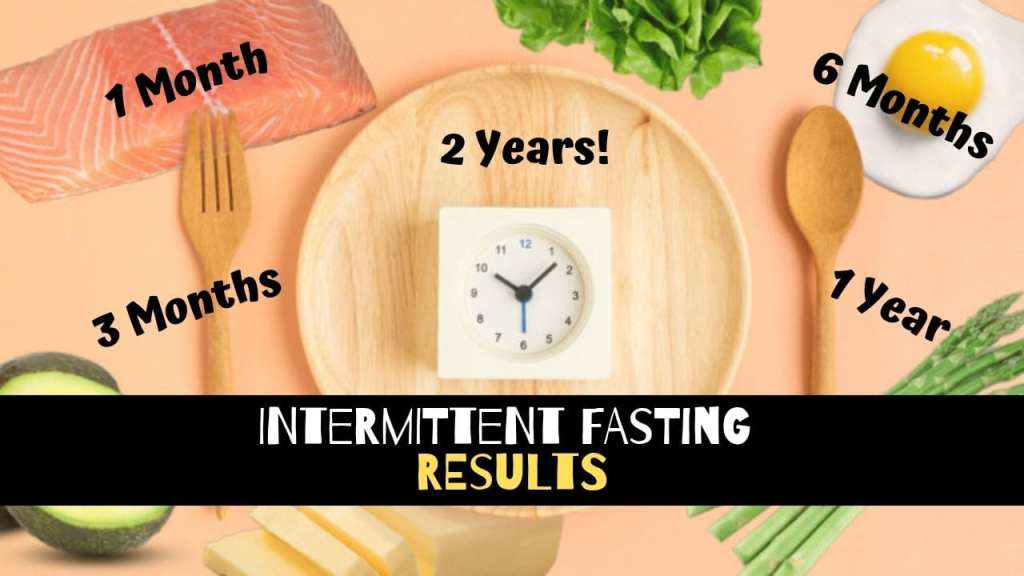
I’ve been a practitioner of the Intermittent Fasting lifestyle for about 7 years now and I can honestly say that this ‘diet’ has changed my life in many positive ways. I’ve written about the benefits of Intermittent Fasting on this blog numerous times in the past and today I’d like to share more of my Intermittent Fasting Results with you – providing transparency of results for 1 month, 3 months, 6 months, 1 year, 2 years, 3 years and now even 5 Years! After that I stopped counting because it’s just my normal lifestyle now.

(Article originally published 2017, updated Dec 2022 to post 5 years results)


Editor’s Note: This article is part of a series on Intermittent Fasting.


Intermittent Fasting – How Did I Get Started?

Back in 2017 I realized I had a problem – a ‘growing’ problem: I’m my mid 40’s and for the last few years my waistline has been getting bigger while I’ve been getting tired a lot more. I kind of felt like this…

King of Queens tv show

At first I thought maybe it was Low-T but blood tests confirmed that wasn’t the issue.

Next I turned to my diet – being honest with myself I knew my diet could be improved, so I experimented with various lifestyle changes (vegetarian, paleo, low-carb diet, etc) – unfortunately, nothing felt right.

That’s when I heard about Intermittent Fasting for weight loss and decided to look into it.

Now, as we’ve discussed before, there are many different types of intermittent fasting diets. Here’s a link to an article I wrote about the various IF diet plans…
For my part I just wanted to do the EASIEST kind of intermittent fasting because, to be brutally honest with you, I didn’t really believe that IF would work for me so I was mostly doing it just to say I tried it but not really expecting to stick with it.

Boy am I glad I was wrong!

I chose the 14/10 Intermittent Fasting schedule to get started – basically what that means is that I didn’t eat for 14 hours and then ate all my food in a 10 hour window.

What does that look like in real life?

Basically my plan was to stop eating around 6pm (dinner) and then not eat again until 8am the next day. That boils down to simply skipping late night snacks.

Now while that may not sound that hard to you, I didn’t think I could do it. After all, I love having some snacks and a beer or two while watching a ball game with friends or Netflix with my wife.

Furthermore the idea of not eating anything for 10 hours was really scary!

As someone who’s battled low blood sugar and ‘hanger’ issues all my life, I thought there was absolutely no way I’d be able to go that long without eating.

  • Late night snacks while watching tv? No!
  • Breakfast in the morning? No!
  • Can I at least get an egg or something? How about a power bar? A glass of OJ? No, no, and no!

Although I am a big believer in the power of positive thinking and I love the saying ‘The man who thinks he can and the man who thinks he can’t are both right’, quite frankly I gave myself little chance of success on making Intermittent Fasting work. My mind quickly thought of all the things that could go wrong…

I’m going to die!
Without food I’ll be even more tired.
Without my protein I’ll lose muscle.

But in spite of my fears, I decided to give Intermittent Fasting for weight loss a try. After all, if it didn’t work it would just be another failed experiment to throw in the fad pile. No big deal. Been there, done that.


Intermittent Fasting – My Initial Goals

I believe in transparency with my reader so in this article I will clearly describe my goals and results.

My goal was to use Intermittent Fasting for weight loss to get down to 155 lbs and reduce my waist/belly measurements to 32 inches. I gave myself 3 months to accomplish this goal. I knew that was a tall order since I’d been gaining an inch on my waist each year since 2014 but a man can still dream, right?

My Baseline measurements from October, 2017

  • Height: 5’7
  • Weight 166
  • Waist 36.25
  • Belly 37.5

(Note: all waist/belly measurements in this experiments were using a tape measure loosely – AKA no pulling snug to enhance results).


My First WEEK of Intermittent Fasting

After the first couple days of intermittent fasting back in 2017 I remember thinking…

OMG, I can’t believe it – I’m not dying.

Shockingly Intermittent Fasting was not nearly as hard I thought it would be.

In fact, not only did I NOT have much difficulty fasting 14 hours, but I discovered that by not eating first thing in the morning I was able to avoid a lot of the daily intestinal issues I’d suffered from for so long. Additionally, I was surprised to discover…

  1. I had tons more energy.
  2. I had more clarity of mind in the morning.
  3. I thought I’d be tired, I was anything but.

Combine these unexpected benefits with my SMART Morning Routine and my mornings quickly turned into super productivity sessions!

How I felt with Intermittent Fasting

Things went so well with my 14/10 intermittent fasting experiment that I quickly upped my time to 16-hour fasts using the 16/10 Intermittent Fasting Schedule.

(I gained so much confidence that I honestly felt I could do 24-hours if I wanted to – although to date I haven’t done that yet because well, quite frankly, there’s just too much good food in the world and I love cooking).


After ONE MONTH of Intermittent Fasting for Weight Loss using 16/8 IF

Results vs Baseline

  • Height: 5’7” (FYI unfortunately I learned that IF doesn’t affect your height – too bad, huh?)
  • Weight: 160 (-6 lbs)
  • Waist 36 (-.25 inches)
  • Belly 36.5 (-1 inch)

To say I was satisfied with Intermittent Fasting was an understatement. I felt outstanding.

And remember these results were achieved during the Thanksgiving Holiday period. Wow!


After TWO Months of 16/8 Intermittent Fasting

Thinking I’d discovered the holy grail of weight loss, I got a little cocky.

I tried experimenting with a few variables (skipped days, bad diet days, more beer(!) etc). I wanted to see if I just how well Intermittent Fasting could overcome bad habits.

Reality check – I learned that Intermittent Fasting is NOT a magic cure-all for overcoming bad diet habits – eating a bunch of bad food and drinking more beer is too much for Intermittent Fasting to overcome.

(Thanks, Captain Obvious).

At the end of Month 2 here’s where I was…

  • Results Vs Prior Month: 
  • Weight 161 (+1 lbs)
  • Waist 36 (no change)
  • Belly 36.5 (no change)
  • Results Vs Baseline: 
  • Weight (-5 lbs)
  • Waist (-.25 inches)
  • Belly (-1 inch)

Good News: in spite of the bad habits I tried in Month 2, I didn’t lose a lot of my gains and I was still in good shape vs my baseline. Now that’s a pretty forgiving diet!


After THREE MONTHS of 16/8 Intermittent Fasting

Things were still going well for my intermittent fasting for weight loss experiment, and during this time period I tried experimenting with a few Fasting Cardio routines — basically doing 8-20 minutes of HITT (High-Intensity Interval Training) just before breaking my fast.

I found that I had more energy when I did Fasting Cardio, but it was a fine line because if I pushed too hard I ended up with intense pounding headaches (something I’ve never had trouble with before) and I also couldn’t’ go very long on the cardio routine (15-20 minutes tops) before getting those headaches, so that limited my ability to burn a lot of calories over a longer session.  As a result, I’m still not sure how much more effective (if at all) Fasting Cardio is vs longer HITT later in the day (after I’ve had something to eat for energy).

I also added in some CrossFit workouts for my alternate cardio and muscle building options during the day and I felt like this worked well.

I still kept my bad diet/cheat days (read: chicken wings) and even a few beers as a reward for a good week and this seemed like a good balance for long-term lifestyle change success.

My Results at the end of THREE months of Intermittent Fasting for Weight Loss:

  • Results Vs Prior Month:
  • Weight 157 (-4 lbs)
  • Waist 35.25 (-.75 inches)
  • Belly 35.75(-.75 inches)
  • Results Vs Baseline
  • Weight (-9 lbs)
  • Waist (-1 inch)
  • Belly (-1.75 inches)

So basically, by the end of the 3-months…

  • I’d taken off almost 10 lbs, shaved an inch off my waist, and nearly 2 inches off my belly by simply not eating late night snacks and delaying my breakfast. This was a couple pounds shy my weight goal (155) and a far cry from my belly/waist goals (still 3+ inches away!!), however…
  • I learned that Intermittent Fasting for weight loss wasn’t hard, I felt great from an energy standpoint, and it’s a lifestyle change that seemed to be doable for the long term for me.

It’s true that at the end of my initial 3 month experiment I didn’t achieve my goal (155 lbs and a 32-inch waist) but I also didn’t kill myself to get there either. I put Intermittent Fasting for weight loss into my “Average Joe” lifestyle and was able to get some real positives from it (especially in terms of how much more energy I had).

Therefore I decided to keep going…

Thanks for the encouragement, Stiffler!

After SIX MONTHS of Intermittent Fasting

Here’s where I was at the end of 6 months with Intermittent Fasting for weight loss…

My Results:

  • Weight: 156 (10 lbs below baseline)
  • Waist: 34.2 (2.05 inches below baseline)
  • Belly: 34.5 (3 inches below baseline!)

A note on weight – during this time period I started doing more workouts and my muscle mass increased so I was fine with still being over 155 lbs goal.

A note on measurements – I used a loose tape measure and let my stomach out as naturally as possible in order to know my ‘real’ results. (Kind of like not moving the ball in golf and playing it where it lies). Although my belly measured 34.5 incheas with a loose tape measure I could finally comfortably wear 32-inch waist pants again.  Woo Hoo!

For me Intermittent Fasting proved to be been a grand success – but after 6 months I wasn’t about to give up…


After ONE YEAR of Intermittent Fasting

I didn’t stop at just 6 months. I couldn’t.

By now I was addicted to Intermittent Fasting. 

Most every day I used 16/8 Intermittent Fasting but a few times a week I also used 18/6 Intermittent Fasting and sometimes even 20/4 Intermittent Fasting. Why? Because I just wasn’t hungry and I really liked being able to save time by not worrying about food.

You’ll be surprised how much extra time you get when you use intermittent fasting.

In any case, after a full year of Intermittent Fasting for weight loss and here’s where I stood vs baseline…

My Results in Oct, 2018 vs Baseline Oct, 2017

  • Weight: 149 (-17 lbs)
  • Waist: 32.9 (-3.35 inches)
  • Belly: 33.1 (-4.4 inches)

Well it took me a year, but I made it well beyond my goal weight of 155 lbs and at this point I made a new goal to get to 145 lbs.

I still had a bit of work to do on my belly measurement (I wanted to drop another inch) but that was proving a bit more challenging.

I want to stress again that I was able to achieve these results WITHOUT extreme dieting, calorie counting, or doing anything beyond tweaking a few of my normal eating habits.

I say that because I realized that, at my age (47 at the time), if I wanted to get my belly measurement under 32 inches I was coming to grips with either paying more attention to what I ate (in addition to Intermittent Fasting for Weight Loss) or else giving up on that goal.


After TWO YEARS of Intermittent Fasting

I reached the two year mark for Intermittent Fasting in October 2018, and while I continued to love the IF lifestyle, it should be noted that I adjusted my goals a bit vs the 1 year mark.

My goals for year 2 (and beyond) were changed to focused on maintain a weight between 150-155 with well-defined muscles and a waistline of 32 inches. A few notes about this:

  • I made these changes because I realized that 145 lbs was a bit too low for my target weight given that I still wanted to have well-defined muscle architecture.
  • The ‘well-defined muscle’ component may sound like a new goal from the IF standpoint but actually it’s not new to my overall life goals since the maintenance of muscle structure has long been a goal for me.
  • The definition of well-defined muscles is likely to be different for everybody. For me it’s basically an upper-body goal focus on chest, arms, and abs. Briefly, for my size at 5’7″, my goals are a 40-inch chest, 13.5-inch arms (not flexed), 15-inch arms (flexed), and a belly < 32 inches — all of which boils down to having a clear muscle definition when I look in the mirror – in short a body that makes me feel good about myself.

More importantly for our discussion is this…

After 2 years, I can honestly say that my intermittent fasting routine is such an easy part of my lifestyle that I don’t really pay a lot of attention to it.

16/8 Intermittent Fasting is simply my normal daily routine and on the days I didn’t do it (for travel or other miscellaneous reasons), I feel out of balance. Therefore I live the Intermittent Fasting lifestyle as often as I can.

HOWEVER that doesn’t mean it’s been all roses — during the past year there have been multiple months where I:

  • got a bit lax and got into the habit of eating late night snacks (I tried making up for this by not eating until lunch the next day but this shifting calorie thing didn’t work well).
  • enjoyed too many beers with friends too often (which leads to eating too many snacks).
  • didn’t eat enough protein.
  • got lax on my workouts.

I point these things out because this is real life. I’m nearly 50 and not the spring chicken I once was. As I say on this blog all the time, I’m must an Average Joe, and as such I have Average Joe style problems too.

But that doesn’t mean I don’t keep trying.

In any case, here are my current results…

At 2-years, My results from October 2019 vs Baseline Oct 2017

  • Weight: 152 (-14 lbs) – goal achieved
  • Belly: 34 (-3.5 inches) – goal not achieved
  • Chest: 40 inches – goal maintained
  • Arms: 13.8/14.9 – goal not quite achieved (not enough definition)

In terms of Intermittent Fasting for weight loss I was able to achieve AND maintain my goal weight (150-155), however I did not achieve my belly/waistline goal (32 inches) and I haven’t yet got the definition I want on my arms.

I attribute these delays vs my goals to the following:

  • In spite of Intermittent Fasting, I often ate too many calories this past year.
  • There was a period of time where I was on a bit of a ‘dessert’ kick.
  • Summertime chicken wings + beer don NOT add up to washboard abs even with Intermittent Fasting – who knew? 😦
  • Even when I did watch calories (or at least pay attention to them), when I consistently shifted more eating to later in the day (when I didn’t need the calories for fuel), I felt like I still gained weight. (In fact I know this to be true because it was one of the many things about IF that I religiously tracked on my daily spreadsheets – yes I keep spreadsheets on IF (and lots of other things) – but that’s another story.)

And yet, in spite of all these real life challenges where I let myself fall off the wagon in terms of proper eating, when I ate too many wings and had too many beers, when I did so many things wrong, I firmly believe that it was Intermittent Fasting that played a big role in keeping me relatively healthy and in shape.

Now you might say – duh – this isn’t rocket science, Mike – when you use Intermittent Fasting for Weight Loss and you consistently do NOT eat for 16 hours per day, it’s only natural that you’ll tend to consume less calories overall then if you DO eat during the 16 hours you’re up each day.

That’s probably true.

And maybe it’s just common sense.

But you know what? Sometimes common sense wisdom is the best kind there is. Maybe that’s what Intermittent Fasting is – just common sense.


After THREE Years of Intermittent Fasting

I reached the 3 year mark for Intermittent Fasting in October 2020 and honestly I wasn’t even paying attention. I have completed a 14/10 or 16/8 fast almost every day since October 2017 and it’s just a normal part of my lifestyle – I really don’t even think much about it anymore. Fasting is simply as much of an everyday occurrence for me as brushing my teeth, sleeping, or just breathing.

That being said, because I haven’t actually focused on my fasting or my diet, I let myself dip a bit in 2020 – although the Covid-19 lab leak that spawned lockdown life and quarantines and the resulting depression it caused me had a lot to do with that!

In any case, here were my 3-year results from October 2020 vs Baseline October 2017

  • Weight: 154 – which is within my 150-155 target
  • Belly: 34.8 – no where near my goal of 32
  • Chest: 40 inches – goal maintained
  • Arms: 13.5/14.9 – goal not quite achieved

A few notes on my waist/belly and muscle goals – if you are a regular reader of my blog, then you know that I am always transparent with you, therefore I will be here too. For most of 2020 I have been depressed about how the world has suddenly changed as a result of Covid-19 and the #Fear that we’ve allowed to control our lives. For most of 2020 I didn’t work out much, I’ve drank way too much beer, and I ate a lot of crap food. Most of my fasting was only 14/10 instead of 16/8. As a result, my efforts to reach my body image goals failed for most of 2020 – and this only added to my depression.

And yet, once again, in spite of everything that I did WRONG, Intermittent Fasting helped me maintain my weight within my target range! That’s pretty freakin’ incredible in my book!

Furthermore, in spite of all the negative events at home and abroad, I decided to listen to my wife’s advice and focus on our inner circle and cherish the Now Moments of our family. I’m also taking my own advice and seeing The Beauty That is All Around Me.

Additionally, my wife and I were able to overcome our fears about Covid-19 and take advantage of the fact that Florida is NOT a lockdown state, therefore we are able to venture out and live a little. As a result, in mid-Nov, 2020, I joined a gym again and rededicated myself to a 16/8 fast, along with consistently exercising and was able to trim some fat…


After 5 Years of Intermittent Fasting

It’s now December, 2022, I’m 51 1/2 years old, and it’s been over five years since I started Intermittent Fasting. This will probably be the last update I make because if you’re still reading this I’m sure you’ve realized by now that Intermittent Fasting has a LOT of benefits. It’s not really something I even think about, it’s just part of my normal everyday lifestyle.

At the 2 year mark, you’ll recall that I updated my body-goals to include a focus on adding some muscle vs just weight loss and I joined a gym at the 3-year mark. At the time I started that process my body goals were to build a 40-inch chest, 13.5-inch arms (not flexed), 15-inch arms (flexed), with a belly < 32 inches, and in the 150-155 range. Things were going good for me at the 2-year mark…and then Covid was unleashed and threw my world and yours upside down. I went through a period of depression, stopped blogging, and lost focus on my body goals.

However I never stopped the Intermittent Fasting – at least getting in a 14/10 fast on most days. As a result, even though everything else in the world was going badly, the Intermittent Fasting lifestyle was something I could count on to help me feel better. And it worked!

At the 3-year mark (towards the end of 2020), I was feeling better – Florida was free from Covid madness and my family was enjoying that freedom. With things looking up, I decided to get back in the gym and I’ve been a regular at the gym now for over 2 years.  Like the Apostle Paul, I keep running the race God has given me – and I continue to hope for the best.

Because I’ve now been focused more on muscle building than weight loss, my body goals changed again. My new goals were to be in the 155-160 lb range with 40+ inch chest, 14 inch arms (not flexed), 16-inch arms (flexed), and with a waist in the 34 inch range. I wanted to have defined muscles. Additionally I wanted to reduce my alcohol consumption and clean up my diet. 

So how did I do? Where am I now after 5 years?

  • Weight: 163 lbs: Yes muscle weighs more than fat but regardless my goal was not achieved because this is 3 lbs above my upper limit goal. I’ve been below 160 this year but not consistently. I know I can get back consistently under 160 with a little more focus – I’ve had too many times where I engage in mindless eating of late snacks watching Netflix at night – that’s not what I want. 
  • Waist: 34 inches: Goal achieved and I have defined abs when I flex them but I’d still like to further flatten my belly over time.
  • Chest: 41.5 inches: exceeded goal;
  • Arms: 14.25 inches (non-flex), 16 inches (flex): achieved goal;
  • Heck, I’ve even started doing some leg workouts too and I never did that in the past! 
  • My muscles are somewhat defined but there’s more work to do. As always, it’s a journey over time, right? 

Alcohol consumption: In 2017 I had 148 days with a drink and 253 total drinks; in 2020 it was 147 days and 267 total drinks. In 2022 it was down to 109 days and 211 total. I did reduce my consumption so I achieved that goal but I’d love to see this get under 50 days and 100 total drinks so there’s still work to do here too and I know if I can reduce this I’ll increase my chances of achieving my overall body goals.

Diet Overall: Intermittent Fasting, my body-goals, and some lingering depression related to how America and the world are changing for the worse have completely altered my diet. Recall in the beginning that I used to love to eat chicken wings and drink beer and the effects of that was creating a big belly for me which is why I turned to intermittent fasting in the first place. As it stands now, while I still drink beer sometimes, but I rarely eat wings anymore. Not because I don’t like them but because I hardly ever grill out anymore (that’s the depression piece) and because I don’t want to pay the price of eating poorly (that’s the body-goal piece). I can’t say I am happier as a result of not eating wings, it’s just a different lifestyle now, I guess.

On the plus side my daily diet usually starts off with a healthy smoothie around 10am and a high protein + healthy carb lunch. I’m also pretty good about getting to the gym (4-5 days/week). And 99% of the days I get in at least a 14 hour fast, if not 16-18. On the negative side I’m up/down with dinners and I sometimes struggle with late night mindless eating + beer (especially when I’m depressed). I’d love to clean up my diet further and I believe I can do that.

In December 2022 I started using MyFitnessPal to keep track of what I’m eating because I discovered that I was eating a lot of extra calories I didn’t know about. I don’t necessarily want to be a calorie counter every day, but I do want to be educated on where some of my ‘hidden’ calories might be so that I can clean that up and make it easier to achieve my body-goals.

In the end, Intermittent Fasting has given me so many benefits and it’s made me feel so great that I hope I never have to stop doing it. I want to live to be 100+ years old full of vitality and energy and I’m half way there. How about I check in with you at the 100 year mark and give you another update at that time? 🙂

Until then, God bless and Good Luck with your own Intermittent Fasting Journey.


Intermittent Fasting Results – The Bottom Line

I started using Intermittent Fasting for weight loss and I did achieve my weight loss goal with it relatively quickly, but what I discovered were a host of other benefits that I did not anticipate.

And it is those extra benefits that keeps me going with Intermittent Fasting.

I have another article about the full benefits of Intermittent Fasting, but to summarize they are:

  • With 16/8 Intermittent Fasting I have more energy;
  • I love the extra time I have (especially in the morning) with 16/8 Intermittent Fasting;
  • I have less intestinal problems with 16/8 Intermittent Fasting (especially in the morning);
  • I am more conscious about what I eat (well, most of the the time);
  • I have more mental clarity throughout the day;
  • I just feel better overall.

I realize there is something called the Placebo Effect that might account for some of this, however I’d argue that after 5 years that mental trickery is not likely to continue and that instead the real life physiological effect of Intermittent Fasting shows through. Maybe that’s true, maybe not, but for me, Intermittent Fasting is the way to go.

What about YOU?


For more on Intermittent Fasting, check out these articles…

Intermittent Fasting Calculator

If you want to make Intermittent Fasting easy, take advantage of this awesome intermittent fasting calculator from our friends at FITNESSVOLT.com. Click the pic above or use this link to see their calculator in action – best of all, it’s FREE to use!


What Else to Read?

There’s more to life than Intermittent Fasting. For something else interesting to read check out…

How to Optimize Your Energy and Overcome Fatigue

Readers of my blog know how much Intermittent Fasting (IF) has changed my life for the better – I started with IF back in 2017 and haven’t looked back. You can read about my journey with IF here, but today I wanted to share an article with you that provides some of the science behind how Time Restricted Eating (TRE) like Intermittent Fasting can help to optimize your energy and combat fatigue – both benefits I can personally attest to!


New to Intermittent Fasting? Start with these articles:


Simple Remedies to Optimize Your Energy and Combat Fatigue

(As seen on Mercola.com – This article is part of a weekly series in which Dr. Mercola interviews various experts on a variety of health issues. Today’s interview is with Dr. Steven Gundry, a cardiologist, heart surgeon, medical researcher and author, is perhaps best known for his “Plant Paradox” book, which was a massive bestseller. He has now published another book called “The Energy Paradox: What to Do When Your Get-Up-and-Go Has Got Up and Gone.

amzn_assoc_tracking_id = “thathelpfulda-20”; amzn_assoc_ad_mode = “manual”; amzn_assoc_ad_type = “smart”; amzn_assoc_marketplace = “amazon”; amzn_assoc_region = “US”; amzn_assoc_design = “enhanced_links”; amzn_assoc_asins = “B085NTP6DZ”; amzn_assoc_placement = “adunit”; amzn_assoc_linkid = “1ebaa181666dcfb49ad124356d10cbc1”;

Time-Restricted Eating

The good news is there’s a lot you can do to improve your energy levels. One such strategy, which I embraced years ago, is time-restricted eating (TRE), a form of intermittent fasting in which you restrict all of your food intake to a certain number of consecutive hours each day.

As an added boon, this strategy doesn’t cost you a penny. If anything, it’ll save you money. Gundry was ahead of the curve on this one, having written about TRE in his first book, “Dr. Gundry’s Diet Evolution,” published in 2006.

“I had an entire chapter in that book devoted to time-restricted eating, and my editor at Random House at the time, Heather Jackson, said, ‘This is so crazy that I’m not going to let you do this.’

She said this. True story. And I said, ‘Look, I’m telling you, I’ve been doing this now for four years and I’ve been using it on my patients and it’s not crazy. Here’s the research.’ And she said, ‘OK. I’m going to give you two pages to make your case. I’m throwing the rest of the chapter away.’

So, I got two pages. I saw her at the mindbodygreen symposium last summer, before the COVID-19 outbreak. She came up to me and said, ‘You were right. I apologize. You weren’t crazy, you weren’t nuts. Everybody now knows.’”

Indeed, in recent years, TRE has gained a lot of recognition as mounting evidence shows the simple act of restricting the number of hours during which you consume food during the day will improve your health in a variety of ways, primarily by improving your mitochondrial health and metabolic flexibility.

As noted by Gundry, keeping your eating to a window of six to eight hours a day is an achievable goal for most people. However, most need to gradually ease into it.

“Metabolic flexibility is probably the underlying problem in the vast majority of diseases that we see and I wrote the book to try and make it easy,” Gundry says. “What I see in my practice is that a lot of people go, ‘OK. I usually eat breakfast at 7 and starting tomorrow I’m going to start eating breakfast — break-fast — at noon.’ And they fall flat on their faces.

They get headaches, they get hungry, they don’t think right. They have no energy and they decide ‘This isn’t for me.’ That’s because they have a high insulin level, they’re insulin resistant and can’t use stored fat as an energy source …

So, in the book, what I do is, over a six-week period, I get them used to eating during a shorter and shorter time window. It’s very much like learning a new exercise program. I couldn’t run a marathon right out the gate, but I can train and get there. So that’s what we do.”

Part of the process involves retraining your circadian rhythm. Your food intake, which impacts the circadian rhythm of your gut microbiome, and other circadian rhythms are intricately connected, and the more you can realign these circadian rhythms, the better your whole body will function, including your mitochondria.

Click here to learn more

Crucial Notes on Meal Timing

At the most extreme end of TRE is the one meal a day (OMAD) routine, which can work well if you’re young and healthy. However, once you get into middle age and older, I believe it can start to backfire. I’m also not convinced that it’s healthy to remain on an OMAD diet in perpetuity, for the simple reason that your body will typically work best when you challenge it now and then.

During winter months, about six months out of the year, Gundry promotes using a two-hour, or even as short as a single-hour eating window during weekdays, and then eating during a much longer window during weekends. He’s been doing this for the past 21 years.

For me, cycling — mixing longer and shorter fasting intervals — has been a key to long term success, and taking the weekends off from this strict regimen may be part of why this strict regimen has worked so well for so long for Gundry.

“I think you’ve got to break it up. I don’t do it all year around, and I break it up on the weekends, and the reason I do that is so I won’t go mad,” Gundry says. Another important detail with regard to timing is to avoid eating at least three hours before bed. Even if you restrict your eating to six hours or less, if you eat too close to bedtime, you’re canceling out many of the benefits. As explained by Gundry:

“It’s really important to stop eating at least three hours before bedtime for a couple of really important reasons. No. 1, you’ve got to undergo mitochondrial repair during the night.

You have to undergo brain cleaning during the night from the glymphatic circulation. Digestion takes huge amounts of blood flow, and if you’re eating, all that blood flow is heading down to your gut when it should actually be going up to your brain.”

TRE Makes Most Diets Better

Gundry quotes data from Satchin Panda, which shows that rats raised on a standard American diet equivalent that also are put on a TRE regimen fare much better than those who are not on TRE. This despite the fact that they’re eating the same thing. The same has been shown to hold true in humans.

Remarkably, Panda has shown the average American eats for 16 hours a day. Essentially, they’re grazing all day long, stopping only while sleeping. About 90% eat for more than 12 hours.

Simply reducing your eating window to 12 hours would be an improvement. As noted by Gundry, “Big Food, Big Agriculture have convinced us that this is the proper way to eat.” In reality, the only thing these big businesses and their recommendations are good for is disease.

The Case for EMF Avoidance

Gundry and I are also in agreement about the dangers of electromagnetic fields (EMFs). I’ve previously written about how magnesium can help mitigate some of the damaging effects from EMF, and Gundry has a patient who appears to have had success using this strategy. Melatonin, which is a very potent mitochondrial antioxidant, is another potential mitigator.

“Melatonin is a very interesting way of mitigating against the bad effects of EMF,” Gundry says. “Now, as I talk about in the book, I used to think that people who said that they were sensitive to these invisible rays [EMFs] were out on the lunatic fringe.

But the longer I’ve been doing this, I’ve had some fantastic experiences with very credible people, who when we mitigated EMF got well. One patient was profoundly affected by her husband’s AICD, a defibrillator, which was communicating his EKG with a satellite.

As soon as it went into him, she couldn’t sleep next to him. She had migraine headaches. We finally turned off the transmitter in his AICD, and just like that, all of [her symptoms] went away. So, these people are canaries in a coal mine and we have to believe it.”

Leaky Gut Underlies Most Chronic Disease

While antioxidants like melatonin can certainly help improve mitochondrial function, I think there are better ways than simply piling on antioxidants. You also need to remove dietary and lifestyle factors that cause the energy depletion in the first place. EMF exposure is one environmental factor. Leaky gut, caused by lectins in your diet, is another factor that needs to be addressed.

Leaky gut is an underlying condition of most chronic disease, so, if you have a chronic ailment, chances are you have leaky gut.

According to Gundry, leaky gut is an underlying condition of most chronic disease, so, if you have a chronic ailment, chances are you have leaky gut. Thanks to Dr. Alessio Fasano, who heads up the Celiac Research Center at Harvard, we now have sophisticated tests that can diagnose this problem.

Fasano discovered the mechanism by which lectins cause leaky gut, and gluten is a lectin. When these and other food particles are able to cross your gut lining, they cause chronic inflammation, which requires a lot of energy to combat. This is one reason for your fatigue and general malaise. Gundry explains:

“If your immune system is distracted down to your leaky gut, first of all, it’s not going to be available when [pathogens] come in through your nose or mouth. And secondly, your immune system is so hyperactivated that when it sees something that might not be all that important, it goes crazy and you get a cytokine storm. That, of course, is one of the major lethal consequences [of] the Western diet.”

Linoleic Acid Can Decimate Mitochondrial Health

Another dietary factor that decimates mitochondrial health, and thus energy production, is omega-6 linoleic acid (LA). “In the book, I talk about the Goldilocks effect,” Gundry says. However, LA is naturally found in virtually all foods, so it’s near-impossible to become deficient. The problem really is excessive intake, which is near universal in Western countries due to processed food.

The primary culprit here is industrial vegetable oils, which most people eat far too much of. If you’re eating a whole food diet, you’re more likely to have a healthy ratio of LA, but even then, it may be causing trouble if you’re eating too many LA-rich foods, such as conventional chicken, for example.

You can learn more about the mechanisms of action behind LA’s damage in “Why Chicken Is Killing You and Saturated Fat Is Your Friend” and “The Type of Fat You Eat Affects Your COVID Risk.” Olive oil is another food that is high in LA, but it also has other components that may modify some of the risks. Still, I choose to limit my olive oil intake. Overall, I try to keep my LA intake below 5 grams a day, regardless of the sources. Gundry has a more favorable view of olive oil, stating:

“If you limit your eating window, you actually stop that process from happening, which is really miraculous, No. 1. And No. 2, shameless plug for myself, with my Gundry MD high-polyphenol olive oil, you only need a tablespoon a day to get the equivalent polyphenols of a liter of olive oil a week.”

Surprising Benefits of Cheese

When it comes to fats, Gundry is a proponent of short and medium chain fatty acids. “For multiple reasons, I’ve been extolling the virtues of MCT oil since the ‘Plant Paradox,’” he says, adding:

“I think the saturated fats have other benefits. In particular, the saturated fats in cheeses may be one of the unsung heroes in longevity that I think needs more attention … I take care of a huge number of people who carry the APOE4 mutation, which is the Alzheimer’s mutation. I noticed early on that cheese really elevated not only small dense LDLs, but also elevated for most of my patients’ oxidized LDL …

I don’t like the traditional cholesterol theory of heart disease. On the other hand, I think oxidized LDL has an interesting place. What’s interesting is that when I’ve separated my patients into having them eat sheep cheese and goat cheese, I found dramatically different results.

I initially attributed it to the fact that sheep and goat have casein A2 and not casein A1. And I think casein A1 is a pretty bad actor. So, I said, well, I’m going to start letting my APOE4 [patients] have sheep and goat cheese, but in moderation. When I did that, I didn’t see this oxidized LDL.”

One potential mechanism for this might be because casein is a protein that can cause autoimmune reactions and contribute to leaky gut, which in turn contributes to increased LDL oxidation.

While most of Gundry’s autoimmune disease patients respond extremely well to Gundry’s plant paradox program, about 10% still do not fare well. Food sensitivity analysis has revealed a large number of them are sensitive to both casein A1 and casein A2.

Once their leaky gut is repaired, however, which may take up to a year, their immune systems typically become tolerant to these things again. “So, I think you can retrain the immune system once you get a good microbiome and seal the leaky gut.”

What About Meat?

While some autoimmune patients have reversed their conditions using a carnivore diet, popularized by Dr. Paul Saladino, who is a leading authority on the science and application of the carnivore diet, Gundry recommends limiting meat because of its effects on your gut microbiome. Interestingly, Gundry will be interviewing Saladino very shortly and that interview will be on his site. It should be a fascinating discussion.

“I have nothing against the carnivore diet as an elimination diet,” he says. “In fact, when Saladino was first on my podcast, he credited me as being the father of the carnivore diet because all plants are evil. And I went, ‘Please don’t do that to me.’

I think one of the mistakes that people make in, particularly, a keto diet where they’ve eliminated fiber, you actually starve your gut microbiome from making butyrate. The other, I think worrisome, part about a carnivore diet is you tend to make more hydrogen sulfide. I’m a huge fan of hydrogen sulfide, the rotten egg smell … but again, we get the Goldilocks rule …

Some is really good for you, it’s really good for mitochondrial function, but a lot is really toxic. And there’s some evidence with carnivore diets that you produce too much hydrogen sulfide. Now, I also understand the argument that if we eat a lot of gristle and a lot of mucin, basically nose to tail, that you can make butyrate by fermenting protein-based animal ingredients. I think you can.

But if you look at all the super long-lived folks, one of the things they have is really great production of butyrate. Butyrate, that short chain fatty acid, does so much good for mitochondria, I can’t even begin to tell you. Well, I do in the book.”

I agree that a strict no-carb diet is a mistake. Healthy carbs — think plant foods rich in fiber — need to be cycled in, there’s no question. Not every day, but certainly once or twice a week, even when you’re on a ketogenic diet. I recommend restricting carbs to about 50 grams or so for most of the week, and then increasing that to 100 or 150 grams once or twice a week once you’re metabolically flexible.

Protein, mTOR Activation and Exercise

Meat, of course, is also a source of protein, and while too much protein can be harmful by activating mTOR (thereby contributing to cancer and other problems), too little can be an unmitigated disaster, as I found out.

For a time, I aggressively restricted protein in an effort to minimize mTOR, and ended up developing sarcopenia (muscle loss). The lesson here is that you need protein, especially if you’re working out, and especially as you get older. With regard to mTOR activation, Gundry notes:

“The only way we can actually measure the effect of mTOR long term is insulin like growth factor IGF-1. I take care of a lot of super old people, 95 and above. I have a lot of 105-year-old patients that I study, and they all have very low insulin-like growth factors.

We’ve tried experiments with patients, really reducing their animal protein and replacing it with plant-based protein. I’m not taking protein away. Their insulin growth factors will drop 50 to 70 points in a matter of months, and I think that’s pretty interesting.

The other thing that’s interesting is that exercise will actually change your gut microbiome to eat branch chain amino acids before they get into you, and branch chain amino acids are one of the biggest stimulators of mTOR.

That’s why, if you’re building muscle and you’re a body builder, you gulp branch chain amino acids all the time. So, I think, probably Saladino — who exercises and also does TRE and has pretty good IGF-1s — can tolerate a very high animal protein diet.

The other thing that I’ve written about in all my books is that beef, lamb and pork have a sugar molecule called Neu5Gc, and fish and chicken have Neu5Ac. Many people make an autoantibody to Neu5Gc, so they attack their own blood vessels if exposed to beef, lamb and pork.”

Lastly, Gundry points out the importance of exercise. When you work your muscles, especially the big muscle groups, myokines are produced, which help grow new brain cells and aid your mitochondria. However, contrary to popular opinion, you don’t need to exercise continuously for 30 to 60 minutes each day, Gundry says. It’s OK to break it into smaller segments.

“Even walking up and down stairs for a minute may be as effective as walking 10 minutes on a level surface,” he says. “Doing a plank while you’re watching TV for a minute is a phenomenal exercise. My favorite is when you’re brushing your teeth, do deep knee bends, do squats.”

More Information

This interview coincides with the release of “The Energy Paradox: What to Do When Your Get-Up-and-Go Has Got Up and Gone,” so to learn more, be sure to pick up a copy. You can also learn more about Gundry by perusing his websites, GundryMD.com and DrGundry.com.


Books by Dr Gundry

If you enjoy Dr. Gundry’s tips, check out his books on Amazon. They include:

Keto Questions: What to Ask a Waiter When Dining Out

Are you planning to go to a restaurant in the evening? Wonderful! This guide will help you ask proper questions before ordering a delicious and nutritious keto dinner. 

These tips will help you in choosing the right meals before the first order. Whether you’re heading out to meet friends, dine with coworkers, or have a BBQ with family, we’ve got ideas for how to stay on a keto diet. In any restaurant, you can find and order low-carb meals. Try to follow our tips and learn everything you need to ask before in order to stay in ketosis.

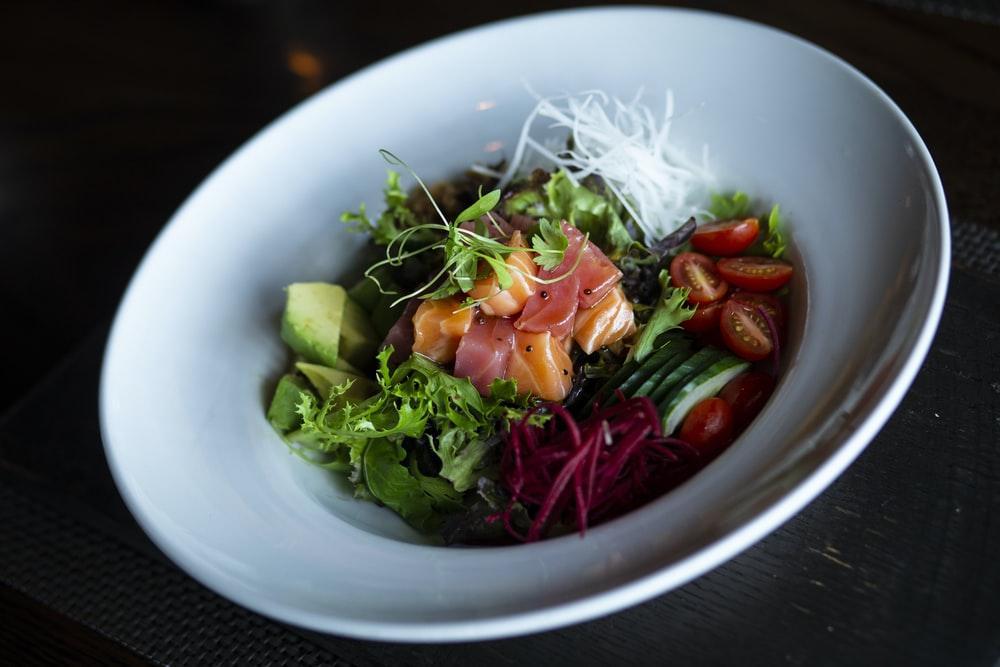
Restaurant Meal

Plan ahead

Give up bread, pasta, potatoes, rice, choose starch-free dishes:

  • If you order a main course in a restaurant, you can ask a waiter to substitute starchy foods with salad or additional vegetables.
  • When ordering a sandwich or burger, ask for the salad to replace the bread bun. Maybe they have ezekiel bread keto.
  • If they refuse to make a replacement, choose another dish from the menu.

If your meal does contain starchy foods, you can do one of the following: leave the meal intact (if possible), or carefully separate the carbohydrates from the entire meal before you start eating.

If you feel uncomfortable and others (the waiter, friends, or colleagues) seem to be asking for an explanation, refer to stomach problems, food allergies, or a special diet. We often depend on others’ opinions and want to match our environment, but health should come first. Always choose the dishes you feel are right and do not give in to pressure from those who have accompanied you for lunch or dinner.

Add healthy fats

Dishes in a restaurant may contain a small amount of fat, in which case it will be challenging satisfying hunger without eating carbohydrates. Solve the problem by merely adding fat to the ordered food:

  • Ask a waiter for an extra serving of butter and add it to vegetables or meat.
  • Ask for olive oil and vinegar for salad dressings and meat dishes.
  • Some restaurants serve cheaper, highly processed vegetable oils instead of olive oil. They are rich in omega-6 polyunsaturated fatty acids (PUFAs), which can be discreetly overused. To avoid this, many experienced low-carb dieters bring a small bottle of olive oil to their restaurant and ask for change before order.
  • Ask for heavy cream for coffee or tea.
Restaurant Salad

Watch out for sauces and seasonings

Choose sauces carefully, such as Béarnaise, which are mostly fatty, while ketchup is primarily carbohydrates.

If you doubt the correct sauce, ask about the ingredients that make it up before you order anything. Avoid sauces that contain sugar, flour, or other starch thickeners. You can ask to serve the sauce separately to decide how much to add to your meal. You should learn detailed information on what spices, oils, and fats you can eat on a keto diet before order.

Choose your drinks with care

Water, soda, tea, or coffee can be ordered at the restaurant if you are on a keto diet.

If you want to order alcohol, then choose champagne, dry wine, or spirits, neat or with soda. Try to learn any guide to alcohol on keto, and you’ll find detailed information on low-carb alcoholic drinks.

Think about dessert

Are you still hungry? If not, enjoy a nice cup of coffee or tea while others get down to dessert. If you go to a restaurant in the evening, you can order herbal tea or decaf coffee instead of coffee.

If you’re hungry and want something else to eat, ask for a cheese platter or berries with whipped cream. Add cream or butter to your coffee; this may be enough to satisfy your hunger.

Satisfy your hunger beforehand

Eat something fatty before placing an order. Nuts, olives, or cheese are good choices. You will stay full and can easily avoid eating high-carb meals that are served earlier than others. Having a pre-snack before an order will help you stay on top of your keto diet at the party.

Conclusion

Feel free to ask! If you haven’t found any items on the menu that fit the keto diet, feel free to improvise, and ask for something that fits into the low-carb diet. Focus on healthy foods you can enjoy – sustainable-seafood, salads, cold cuts, and vegetable platters. Be sure to add healthy fats to your meal: olive oil, butter, sour cream, and cheese. After eating delicious low-carb foods, cravings for high-carb, unhealthy foods will noticeably decrease.

Do you have your perfect restaurant keto food? Do you ask the waiter about the ingredients before ordering? We would love to hear about your experience!


About the Author

ThatHelpfulDad.com is happy to share a guest post by Author Reeve. Here is more about him…

My name is Adam Reeve and I have been a professional personal trainer and fitness instructor for over 10 years. Also, I’m a life coach, wellness writer, and low carb diet enthusiast.


Best Turmeric Supplement – Why I love this Organic Turmeric Powder

If you’re a believer in the health benefits of turmeric and looking for the best turmeric supplement, this article can help you. We’ll talk about what turmeric is, why turmeric is healthy, how to use turmeric for weight loss, I’ll give you 3 recipes for Turmeric Smoothies, and recommend what I think is the best turmeric supplement.

If you’re in a hurry and just want to know which product I’m recommending that’s cool too. It’s FGO’s Raw Organic Turmeric Root Powder. Here’s a link to it on Amazon…

[amazon box = “B01CRXAYKS”]


Mike, That Helpful Dad

Editor’s Note: I’m Mike, AKA “That Helpful Dad” and this website is all about providing practical solutions to real life problems. I hope you enjoy today’s wisdom – if you do be sure to visit my home page and sign up for my free weekly emails. You can also follow me on YouTubeTwitterFacebook, and Pinterest. I’d love to hear from you so drop me a comment and let’s chat.


What is Turmeric?

WebMD provides us with a succinct and informative defintion for what is turmeric…

In the U.S., turmeric is best known as a spice. It’s one of the main components of curry powder. In India and other parts of Asia, turmeric is used to treat many health conditions. It is believed to have anti-inflammatory, antioxidant, and perhaps even anticancer properties.

WebMD

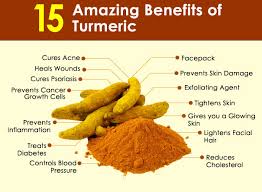
Why Add a Turmeric Supplement to Your Diet?

The health benefits of turmeric have been written about in detail by numerous trusted websites, including:

Potential Benefits of Turmeric

Turmeric is also believed to be good for helping with weight loss. Here are some articles on that too.


RECIPES: How I use Turmeric Supplements in my Diet

I’m not a complicated guy and I like to keep it simple. Personally I just use the Turmeric Supplement powder in my daily smoothies.

Here are 3 easy Turmeric Smoothie Recipes:

  1. Turmeric Shot – 1 TBSP FGO Turmeric Powder + 1 Oz Raw Honey + 1/3 Cup Almond Milk (I like Kirkland’s Organic Unsweetened Vanilla Almond Milk for this – you can get a 6 pack of it on Amazon or Costco for pretty cheap)
  2. Turmeric Berry Smoothie – 1 TBSP FGO Turmeric Powder + 1/4 cup Lifeway Original Kefir + 1 TB FGO Organic Acai Powder + 1 Oz Raw Honey + 1/4 cup fresh berries of your choice + 1-2 cups of Almond or Organic Whole Milk (your preference)
  3. Turmeric Peanut Butter Banana Smoothie – 1 TBSP FGO Turmeric Powder + 1 TSBP All Natural Peanut Butter (I like HomePlate’s Non-GMO Peanut Butter – it tastes awesome!) + 1 Organic Banana + 1/4 cup Lifeway Original Kefir + 1 Scoop Optimum Nutrition Whey Protein Powder (Double Chocolate flavor works great for this) + 1-2 cups of Almond or Organic Whole Milk (your preference)

If you have a turmeric smoothie recipe to share, please drop it in the comments below so I can try it too!


Why Do I Love FGO’s Turmeric Powder Supplement?

  • It’s 100% Raw;
  • It’s USDA-Certified Organic;
  • It actually tastes pretty mild (not overpowering) in my smoothies;
  • the amount you get is very reasonable for the price;
  • it comes with 100% money-back guarantee on Amazon;
  • I can add it to my Amazon Prime Subscribe & Save to save even more;
  • I’ve used other FGO products and have always been happy with their quality;

Pick up a packet of FGO’s Turmeric Powder today…

amzn_assoc_tracking_id = “thathelpfulda-20”; amzn_assoc_ad_mode = “manual”; amzn_assoc_ad_type = “smart”; amzn_assoc_marketplace = “amazon”; amzn_assoc_region = “US”; amzn_assoc_design = “enhanced_links”; amzn_assoc_asins = “B01CRXAYKS”; amzn_assoc_placement = “adunit”; amzn_assoc_linkid = “1b45539f0c3b3753cb008b37d7207733”; //z-na.amazon-adsystem.com/widgets/onejs?MarketPlace=US

Your Shopping List

In addition to the FGO Turmeric Root Powder, here are some quick links to the other products I talked about in this article:

amzn_assoc_tracking_id = “thathelpfulda-20”; amzn_assoc_ad_mode = “manual”; amzn_assoc_ad_type = “smart”; amzn_assoc_marketplace = “amazon”; amzn_assoc_region = “US”; amzn_assoc_design = “enhanced_links”; amzn_assoc_asins = “B07HL1NRGQ”; amzn_assoc_placement = “adunit”; amzn_assoc_linkid = “218a339fafef0064af2cfec109496ecc”; //z-na.amazon-adsystem.com/widgets/onejs?MarketPlace=US amzn_assoc_tracking_id = “thathelpfulda-20”; amzn_assoc_ad_mode = “manual”; amzn_assoc_ad_type = “smart”; amzn_assoc_marketplace = “amazon”; amzn_assoc_region = “US”; amzn_assoc_design = “enhanced_links”; amzn_assoc_asins = “B01BCCYJHE”; amzn_assoc_placement = “adunit”; amzn_assoc_linkid = “88714202e1f59447e2df1b5ecbb396c3”; //z-na.amazon-adsystem.com/widgets/onejs?MarketPlace=US amzn_assoc_tracking_id = “thathelpfulda-20”; amzn_assoc_ad_mode = “manual”; amzn_assoc_ad_type = “smart”; amzn_assoc_marketplace = “amazon”; amzn_assoc_region = “US”; amzn_assoc_design = “enhanced_links”; amzn_assoc_asins = “B07834YDRN”; amzn_assoc_placement = “adunit”; amzn_assoc_linkid = “679778e67a23224ece00f2fd227cb1dc”; //z-na.amazon-adsystem.com/widgets/onejs?MarketPlace=US amzn_assoc_tracking_id = “thathelpfulda-20”; amzn_assoc_ad_mode = “manual”; amzn_assoc_ad_type = “smart”; amzn_assoc_marketplace = “amazon”; amzn_assoc_region = “US”; amzn_assoc_design = “enhanced_links”; amzn_assoc_asins = “B00CMQD282”; amzn_assoc_placement = “adunit”; amzn_assoc_linkid = “a92d52b43ee04941a355ae34acbf6d14”; //z-na.amazon-adsystem.com/widgets/onejs?MarketPlace=US amzn_assoc_tracking_id = “thathelpfulda-20”; amzn_assoc_ad_mode = “manual”; amzn_assoc_ad_type = “smart”; amzn_assoc_marketplace = “amazon”; amzn_assoc_region = “US”; amzn_assoc_design = “enhanced_links”; amzn_assoc_asins = “B000QJ7CRE”; amzn_assoc_placement = “adunit”; amzn_assoc_linkid = “4292a8bcf427b0057eca3d904cc40a11”; //z-na.amazon-adsystem.com/widgets/onejs?MarketPlace=US amzn_assoc_tracking_id = “thathelpfulda-20”; amzn_assoc_ad_mode = “manual”; amzn_assoc_ad_type = “smart”; amzn_assoc_marketplace = “amazon”; amzn_assoc_region = “US”; amzn_assoc_design = “enhanced_links”; amzn_assoc_asins = “B000QSNYGI”; amzn_assoc_placement = “adunit”; amzn_assoc_linkid = “822b171f0d75a57bb3ae95c706ccc65b”; //z-na.amazon-adsystem.com/widgets/onejs?MarketPlace=US

Never Miss a Tip

Let’s stay in touch…


What to Read Next

Intermittent Fasting
Best Tents for Families

Intermittent Fasting – The Beginner’s Guide

Intermittent Fasting is a popular lifestyle diet and many people have discovered that intermittent fasting for weight loss really works, but did you know that IF has other benefits benefits besides just it’s effectiveness for helping you lose weight? On this page, we’ll discuss what intermittent fasting is, how it works, the various types of intermittent fasting schedules, tips on how to succeed with intermittent fasting, and much more. In addition, I’ll also share my own personal results with intermittent fasting – a lifestyle I’ve been living now for nearly 2 years.

Intermittent Fasting Frequently Asked Questions (FAQ) – That Helpful Dad { “@context”: “https://schema.org”, “@type”: “FAQPage”, “mainEntity”: [ { “@type”: “Question”, “name”: “What is intermittent fasting?”, “acceptedAnswer”: { “@type”: “Answer”, “text”:”Intermittent fasting is a catch-all term for lifestyle diets in which someone doesn’t eat for a preset period of time (the fasting state) and does eat during a preset period of time (the fed state). At its most basic level it amounts to not eating after dinner and possibly delaying breakfast.”} }] }

Editor’s Note: This article is part of a series on Intermittent Fasting and this is the MAIN PAGE of that series. This article has been updated numerous times to reflect what I’ve learned about IF along the way. You’ll find links to the other articles in the IF series below.

Mike, That Helpful Dad

Hi, I’m Mike, That Helpful Dad. It’s been nearly 2 years since I began this journey and I’m excited to share what I’ve learned along the way so that, if YOU try intermittent fasting, you’ll be set up for success!

Meanwhile I should point out that this article is NOT a ‘scientific’ review of Intermittent Fasting; instead it’s a personal experience story from one man’s POV. I don’t pretend to know everything about Intermittent Fasting. I’m writing to hopefully inspire you with ideas for a technique that perhaps can help you make your life better in the same way Intermittent Fasting helped me. Good luck.

So what have I learned after nearly two years of Intermittent Fasting?

Overall I learned that Intermittent Fasting is surprisingly easy and it gives me lots of energy. It’s also a very forgiving diet that helps you overcome the inevitable times when you ‘fall off the wagon.’

Intermittent Fasting has become my new ‘lifestyle’ and I can’t see myself going back anytime soon. HOWEVER Intermittent Fasting is NOT a magic cure-all and there are a few important tips to keep in mind if you want to try it – I’ll detail them for you here. 


Intermittent Fasting Table of Contents

[lwptoc]


I. What is Intermittent Fasting?

Intermittent fasting is a catch-all term for lifestyle diets in which someone doesn’t eat for a preset period of time (the fasting state) and does eat during a preset period of time (the fed state).

At it’s most basic level it amounts to not eating after dinner and possibly delaying breakfast. And if you are a beginner looking to try IF this is where you may want to start.

Personally I use the 16/8 Intermittent Fasting schedule (see more below) where I don’t eat for 16 hours and eat all my food within an 8 hour window. It looks like this: stop eating around 6pm and start eating again around 10am the next day.

Why would someone want to try intermittent fasting?

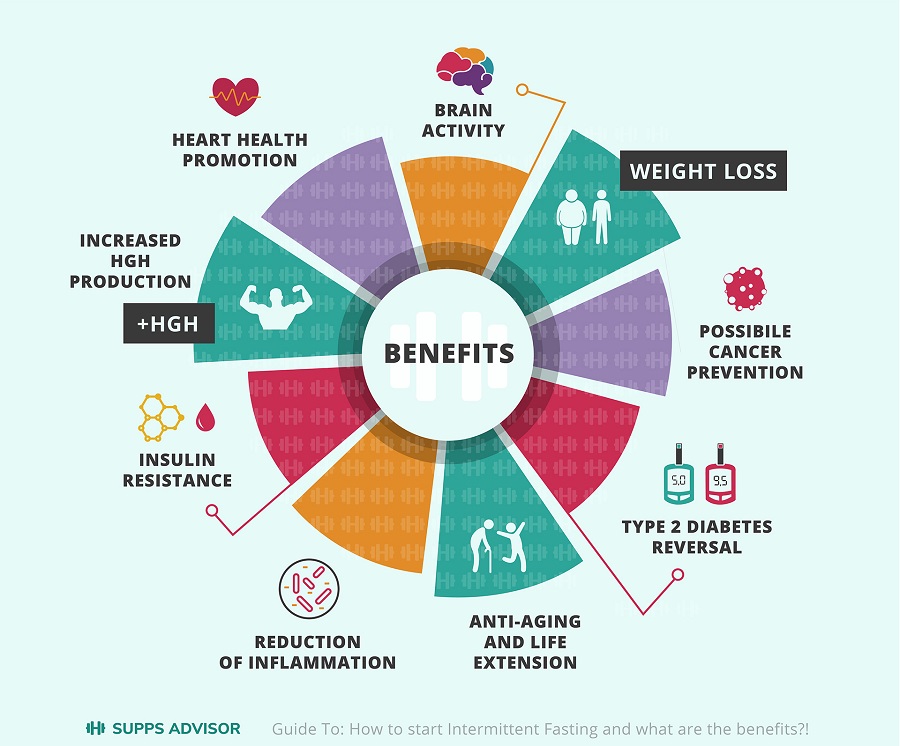
Most people choose to try intermittent fasting because it helps with weight loss. However there are are a number of benefits to Intermittent Fasting too – including potentially increased energy, more mental clarity, loads of time (and money) saved on not preparing the meals you skipped, and much more. (Read my personal journey as well as the references below to learn more about this).

Benefits of Intermittent Fasting from our friends at Supps Advisor

There are many types of intermittent fasting diet plans and eating schedules and I’ll detail them below but first let’s talk about what most people use IF for…


II. Intermittent Fasting for Weight Loss

By far the number one reason why I hear most people try intermittent fasting is because they are attracted to the possibility of using intermittent fasting for weight loss.

But does intermittent fasting for weight loss really work?

For our purposes, the reason why Intermittent Fasting seems to work for weight loss is basically common sense…

If you are restricting or eliminating calories consistently over time, then you’ll tend to lose weight. It’s not rocket science.

Remember, with intermittent fasting you are not eating for a predefined period of time (for example with 16/8 Intermittent Fasting you don’t eat for 16 hours). Now when you put yourself into this ‘fasting’ state and because you are not eating, you’re by definition restricting calories (at this during this time period) — and if you do that consistently over time you’ll lose weight.

So that’s it? Intermittent Fasting is just caloric restriction?

Not quite.

There’s a lot of more to the story about intermittent fasting for weight loss, so I wrote a separate article about it. You can read it here…(click the pick)

Article: Intermittent Fasting for Weight Loss

If you are interested in using intermittent fasting for weigh loss my article also include a plan for success as well as links to books on the topic.


III. Intermittent Fasting Schedules

What are the most popular types of intermittent fasting eating schedules?

There are many different versions of intermittent fasting. Here are the most popular types are…

  • Time Restricted Feeding (16/8, 14/10, 12/12) – where you don’t eat for 16 hours and eat all your food within the remaining 8 hours. I personally live the 16/8 Intermittent Fasting lifestyle and love it!
  • Eat, Stop, Eat (OMAD, 24-hour fasting, Whole Day Fasting) – as the name implies, you’re basically fasting for 23 hours and then eating One Meal a Day (OMAD) or going for a full 24 hours before eating.
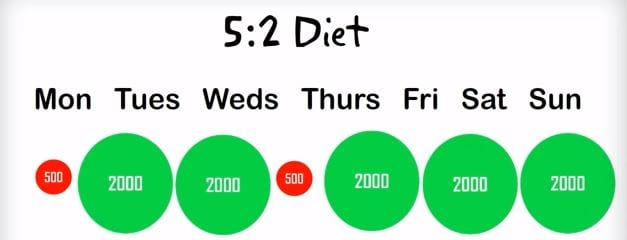
  • 5:2 Intermittent Fasting – With 5/2 Fasting you’ll be trying to limit your total daily calorie intake to only 500 calories for TWO DAYS during the week. The other 5 days you’ll be eating your typical (hopefully healthy) diet.
  • Warrior Diet – a type of Time Restricted feeding in which you do a version o 20/4 Intermittent Fasting where you eat little to no food for 20 hours and then eat one large meal at night during a 4-hour window.
  • Extended Day Fasting – 36 Hour Fasting, 48 Hour Fasting, and even 3-7 Day Fasting. I.E. the king of fasting. Yikes!

Because this is another in-depth topic, I wrote a separate article further detailing the types of intermittent fasting, you can read that by clicking this pic…

Article: Intermittent Fasting Eating Schedules

IV. Intermittent Fasting Results

As I mentioned, I’ve been a practitioner of the Intermittent Fasting lifestyle for about 2 years now and I can honestly say that this ‘diet’ has changed my life in many positive ways. I’ve written about the benefits of Intermittent Fasting on this blog numerous times in the past and today I’d like to share more of my Intermittent Fasting Results with you – providing transparency of results for 1 month, 3 months, 6 months, 1 year, and even now out to 2 years. 

You can read my full story here – it includes why I started intermittent fasting as a beginner, what my initial fears were about intermittent fasting, what my results were from 1 month through to 2 years, and what I learned along the way.

Read my intermittent fasting results article here…

Article: Intermittent Fasting Results

V. So What CAN You Eat During a Fast?

During the period while you are fasting (on most of the intermittent fasting schedules) pretty much all you can have is black coffee or simple tea. Some research suggests you can add some cinnamon (for blood sugar control) to the coffee (and I do this).

What about Butter or Coconut Oil?
There is also a LOT of debate (see references below for a sample) about whether you can also add in ‘good fats’ like grass-fed butter and/or coconut oil to your morning tea or coffee and that this won’t break the fast because apparently these good fats…

  1. Keep you in the ketosis (fat-burning state).
  2. They don’t spike an insulin response like eating carbs would.
  3. They provide your brain-food (the fat is used by your brain for energy).
  4. So long as you keep it under 50 calories from these good-fats you are supposedly still fasting.

Look, I’m not scientist here and I can’t tell you with medical research certainty if any of this is this is true or not, all I can tell you in that my experiments have shown and for me, using 1/2 TBSP of grass-fed butter in my coffee works (and has generated the results you’ll read in my personal story about intermittent fasting).

As a side note, I love the coffee + cinnamon + butter combo so much I developed a recipe for it. Check it out here…

My coffee + butter recipe

For further reading about what you can eat DURING a fast see the references below.


VI. Intermittent Fasting Tips – The Video

Here’s a video I made at the 6 month mark of Intermittent Fasting.

https://youtu.be/mv6VvwM81pY


VII. Intermittent Fasting Tips

These are the tips I collected after practicing Intermittent Fasting for a full year.  If you’re planning to try Intermittent Fasting for beginners I’d recommend you consider using some or all of the following:

  1. Skipped Days = Lethargy: you can skip a day or two if you like but I discovered that when I skipped an Intermittent Fasting day, I felt poor physically – specifically, I felt lethargic, unmotivated, and bloated. As a result I rarely skip a day of fasting and usually get in at least 14 hours. 
  2. Fasting Cardio vs HITT: the combo of Intermittent Fasting and Fasted Cardio (AKA Cardio before Breakfast) did increase my energy level but I still think longer HITT later in the day is more effective because you can burn more calories overall. I think an alternating combo of the two is best.
  3. Workouts Burn Even More Fat: CrossFit and other constant movement workouts worked particularly well from an energy standpoint. There is also the theory that working out larger muscle groups (legs, chest, back, etc) and building up those muscles will continue the post-workout fat-burning process longer (see topic #6 of this post and many others).
  4. Fluids are a Must: Drinking 1 glass of water immediately upon waking and then my Cinnabun Coffee Cup was more than enough to take me through to 10-11am for the 16-hour fast cycle to work its magic. I also like adding in some turmeric to my coffee as well. Additionally a nice cup of green or moringa tea is also good if you want something more to drink too
  5. Eating Schedule is Flexible: When I am ready to break my fast (at 10-11am) I load up on protein – yogurt, milk, eggs, bacon, etc. I then eat lunch around 1.5-3 hours later, then have some fruit/snack around 330-4, and then dinner at 6ish. Many people say to avoid fruits because they are high in sugar and that impedes the fat loss – that may be true but I like fruits and believe their overall health benefits outweigh the negatives for long-term health.
  6. Strict DIET is NOT a must : At no time did I focus on any particular diet. I tried not to eat a bunch of junk but I wasn’t strict. So long as I was in the ‘eating window’ I ate what I wanted — for me that’s mostly protein and good fats but I still a fair amount of carbs too. I pretty much ate my normal pre fasting diet. That meant I didn’t eat a set menu of restricted foods – perhaps if I did do those things then Intermittent Fasting would be even more effective but as I said I’m just an Average Joe and I like keeping things simple.
  7. Eat Dinner Early: The key with Intermittent Fasting (at least for me) is to eat dinner early and avoid those late night snacks. DO that and you can cruise thru to 16 hours around 10 am with ease.
  8. Alcohol is a bit of a Problem: Alcohol appears to play a key role in the process. I love beer but unfortunately, so many of the beers I like (IPAs) are ‘heavy’ from a calorie standpoint and when I have a beer I usually want to have a snack too. All those calories add up – fast. My results were negatively impacted when I had more beers per month then when I didn’t. It’s not rocket science. I’m not willing to give up my beer and chicken wings completely so I realize that’s going to decrease some of the effectiveness of my Intermittent Fasting, but at the same time I look at it from a different POV: Intermittent Fasting helps me limit the negative impact of the beer so I can still enjoy it with less guilt. (The Power of Perspective is pretty cool, huh?)
  9. Caloric Restriction takes you to the next Level: I don’t like to count calories, but after 9 months of intermittent fasting I felt like I was hitting a plateau. At that point I decided to pay marginal attention to my calories and tried to make a conscious effort to stay in a net caloric deficit (basically consuming less calories than my body required which for me was approx 2,000 calories a day). I didn’t go crazy with this and I relied on basically just reading food labels and doing some simple math in my head to add up approximately what I was consuming throughout the day calorie-wise. When I added this into the mix it took my results to the next level – during the final 3 months I went from 154 lbs to 149 lbs and dropped 2 more inches from my waist. I realize this tip is not rocket science but it’s important to point out. I didn’t count calories religiously and I didn’t necessarily limit what I ate (I just ate less of it) and it worked for me. I suppose if you want to be more hard core on this, you’ll get even better results than I did, but as I’ve said all along, I want to use a method that is easy and is something I can live with over the long run. Here’s a link to calculate the calories YOU need to lose weight
  10. SMART Goals are ideal – Looking back now I can see that my 3-month goal to lose 4 inches off my belly was a bit unrealistic – especially when I didn’t stick to the original plan or change my diet much. Set yourself up for success by setting a reasonable goal. Looking ahead (since I still don’t plan to change my diet completely and I still want to drink beer, I’m giving myself more time  to reach my 32/32 belly/waist goal — I’ll keep you posted on my progress and you can subscribe to my blog for updates).

Meanwhile, I’ve since collected more key insights about intermittent fasting and you can read those in my personal journey with IF article.


VIII. Intermittent Fasting Resources

I’m just one guy and as I wrote already I don’t know everything there is to know about intermittent fasting. There are a lot of great references and books about Intermittent Fasting. Here are some of the resources I’ve found helpful, along with an assortment of top-rated books that you might find helpful if you practice intermittent fasting for beginners….

Intermittent Fasting References Overall:

Fasting Cardio References

Coffee + Butter References

Food vs Fasting References

Time Restricted Eating References:

Eat-Stop-Eat Fasting References:

5:2 Intermittent Fasting References:

Warrior Diet References:

Extending Day Intermittent Fasting References:


Intermittent Fasting – Have YOU Tried it?

If you’ve tried Intermittent Fasting, Fasting Cardio, have some killer Morning Ritual, or any related wisdom to share, please do so. I’m eager to learn your tips so we can help each other improve.

If this post helped you feel free to share it with a friend.

When you do these things we all win.

Enjoyed This Article?

Share it with a friend using this social media friendly images – perfect to pin, post, and pass along…

Intermittent Fasting – The Beginner’s Guide

What to Read Next?

    Intermittent Fasting Schedules – Most Popular Types of Intermittent Fasting

    Intermittent Fasting is all the rage these days, but what many people don’t realize is that Intermittent Fasting diet plans are not one size fits all – and that’s a GOOD thing. In this article, we’ll discuss the most popular types of intermittent fasting schedules. Hopefully you’ll find an intermittent fasting eating plan that works for you so you can benefit from this amazing lifestyle.


    Editor’s Note: This article is part of a series on Intermittent Fasting.

    Mike, That Helpful Dad

    Hi, I’m Mike, That Helpful Dad. I’ve been living the Intermittent Fasting lifestyle for about 2 years now and it’s changed my life for the better. I hope it can help you too.


    What is Intermittent Fasting?

    Intermittent fasting is a catch-all term for lifestyle diets in which someone doesn’t eat for a preset period of time (the fasting state) and does eat during a preset period of time (the fed state).

    Why would someone want to do that?

    Most people choose to try intermittent fasting because it helps with weight loss. However there are are a number of benefits to Intermittent Fasting too.

    For the purposes of THIS article, we’re going to assume you’ve already bought in to the benefits of intermittent fasting and are really just looking to better understand what the options are for intermittent fasting eating schedules.


    Most Popular Intermittent Fasting Schedules

    Depending on who you ask, if you research the types of intermittent fasting, you’re likely to see anywhere from 4 types of intermittent fasting, to 6 intermittent fasting diets, to 7 ways to try intermittent fasting, to even 15 different variations of intermittent fasting. Wow, who knew?

    I’m not here to judge what is and what isn’t really intermittent fasting – maybe there are really 15 different types or maybe there’s even more. After all the definition of Intermittent Fasting is pretty wide open to interpretation (a period of fasting vs a period of fed) so perhaps some of the lesser known types of intermittent fasting like Circadian Rhythm Fasting, Dry Fasting, and Fat Fasting qualify. But for our goals today, I’m going to draw your attention to the most popular types of intermittent fasting schedules since I’m assuming you’re likely to be pretty new to the concept. If that’s the case, then you’ll want to set yourself up for success by trying some of the tried and true methods of intermittent fasting eating plans that have been proven to work for many people (myself included).

    I. Time Restricted Feeding (16/8, 14/10, 12/12)

    Although I have no concrete evidence on this, I’m going to say that time restricted feeding is the most popular type of intermittent fasting eating schedule. I say this because it’s the most common type of intermittent fasting I hear people talking about in the real world. It’s also the version of IF that I follow and I’d like to be in the popular crowd so there’s that too. 🙂

    Here are the most popular variations of time restricted intermittent fasting.

    • 16/8 Intermittent Fasting means you don’t eat for 16 hours, and you eat all your food within an 8 hour window (fed). (This is the version most recommended for men).
    • 14/10 intermittent fasting means you don’t eat for 14 hours, and you eat all your food within a 10 hour window. (This is the version most recommended for women).
    • 12/12 intermittent fasting means you don’t eat for 12 hours, and you eat all your food within a 12 hour window. (This is more of a starting version to build from).

    Time restricted feeding is a really easy way to start intermittent fasting. Basically you don’t eat snacks after dinner and/or you skip breakfast. Consider what this looks like:

    16/8 Intermittent Fasting from our Friends at Supps Advisor
    • I practice 16/8 intermittent fasting so I try to stop eating around 6pm and then I don’t start eating until around 10am the next day.
    • If you do 14/8 IF and stop eating around 6pm, you can start again the next day at 8am. That’s easy.
    • And 12/12 IF is even easier. Stop eating around 7pm and start again at 7am. Easy-peesie. (Note: 12/12 IF is also called “Overnight Fasting”).

    I’ve been practicing 16/8 intermittent fasting for around 2 years – read my results in this article.

    What I love about 16/8 IF is that it’s a diet you can easily do every day, without feeling like you’re missing out or starving yourself. And because it’s so easy, it becomes a lifestyle you WANT to live.

    You can learn more about Time Restricted Eating here:


    II. Eat, Stop, Eat Fasting (OMAD, 24 Hours, etc)

    Moving on to a bit more advanced fasting. Within the Eat-Stop-Eat Fasting, you typically hear people talk about the following:

    • OMAD – This means “One Meal a Day” – most people define this as fasting for 23 hours and eating all your food in a 1 hour period. So this could also be called 23/1 Fasting.
    • 24 Hour Fasting – basically you eat normally (as you define it) one day, fast an entire day, and then eat normally again. Then repeat.
    • Also called “Whole Day Fasting”

    Those I know who practice this type of Eat-Stop-Eat Fasting love it. HOWEVER I don’t know anyone who does this consistently ever day. Usually I’ll hear people say they do this 2-3 times a week.

    That said, people who practice this type of fasting often proclaim the cleansing benefits of this lifestyle.

    You can learn more about Eat-Stop-Eat Fasting here:


    III. The 5-2 Method of Intermittent Fasting

    Not to be confused with Eat-Stop-Eat fasting, 5:2 Intermittent Fasting is a different animal. With 5/2 Fasting you’ll be trying to limit your total daily calorie intake to only 500 calories for TWO DAYS during the week. The other 5 days you’ll be eating your typical (hopefully healthy) diet.

    Most people who do 5:2 Intermittent Fasting will eat a 200 calorie meal and a 300 calorie meal and they’ll try to eat high-fiber, high-protein foods.

    5:2 Fasting is also called Twice a Week Fasting.

    A variation of 5/2 Fasting is Alternate Day Fasting (500 calories every other day) but the latter, while successful for losing weight, has proven to be hard to stick with over the long term for some people.

    To learn more about 5:2 Intermittent Fasting or Alternate Day Fasting, check out these links:


    IV. The Warrior Diet

    Whether it’s good marketing or something more, the Warrior Diet version of Intermittent Fasting has gained lots of popularity recently. As noted on Medical News Today, “supporters of the Warrior Diet claim that humans are natural nocturnal eaters and that eating at night allows the body to gain nutrients in line with its circadian rhythms.”

    Although it sounds hard – it’s proclaimed as a 20/4 Intermittent Fasting where you eat little to no food for 20 hours and then eat one large meal at night during a 4-hour window.

    That said, the Warrior Diet isn’t really a time restricted diet (if we define time restricted fasting as a period of NOT eating followed by a period of eating), because during the 20-hour ‘fasting’ window of the Warrior Diet you’re allowed to eat minimal amounts of raw fruits and vegetables.

    While I am not here to say if the Warrior Diet is a true version of Intermittent Fasting, the fact is that most people do define it as an Intermittent Fasting Schedule so we’ll include it here too.

    More importantly though, if you choose to follow the Warrior Diet Fasting plan, you may want to read more about the science behind Intermittent Fasting in general – especially if your goal is to use intermittent fasting for weight loss because if you eat more than 50 calories during the 20 hour ‘fasting’ window you MAY not stay in the ‘fasting state’ as effectively as you do with other forms of intermittent fasting (see the science behind the fasting state benefits of intermittent fasting here).

    To learn more about the Warrior Diet, check out these links:


    V. Extended Fasting (Multiple Day Intermittent Fasting)

    Not for the feint of heart (and not for beginners of IF), Extended Day Fasting is pretty much what the name implies:

    • 36 Hour Fasting
    • 48 Hour Fasting
    • 3-7 Day Fasting

    All these forms of intermittent fasting schedules are more extreme versions of the IF diet. There’s a boatload of evidence that people point to as the cleansing benefits of these types of intermittent fasting variations but you’ll need to graduate to this level of fasting if you want to set yourself up for success.

    To learn more about Extending Day Intermittent Fasting, read these articles:


    Intermittent Fasting Schedules – The Bottom Line

    There really is something for everybody when it comes to Intermittent Fasting Eating Schedules.

    If you’re looking to get started, try one of the easier versions like 12/12 IF or 14/10 IF. All you really need to do is skip that after dinner snack.

    Give it a try and let me know how it works.


    What to Read Next

    Intermittent Fasting for Weight Loss
    The Best of Series

    How to Make Homemade Dog Food – Recipe and Tips

    homemade dog food

    Homemade Dog Food – It’s Not Hard

    If you’re like me, you love your pets like a member of the family. You want them to have only the best in their lives and that means you want them to have the best diet too, right? So why buy store bought dog food that sits on the shelves for months (and has who-knows-what ingredients inside) when you can make your own homemade dog food recipe with human-grade ingredients?

    Hi, I’m Mike, AKA That Helpful Dad. I’ve been making homemade dog food for my pups for over a decade and I’m here to help you learn how to make it too. Cooking homemade dog food for your pets is easy, it’s fun, and it’s oh so good for them. In this article, I’ll show you one of my favorite recipes for homemade dog food.

    Cooking for your dog is easier than you think!

    One of the most popular vids I’ve put on YouTube over the years is a homemade dog food recipe  – it has over 400,000 views on YouTube and ranks in the top 5 on Google Search for Videos about homemade dog food – yet it’s a really just a simple vid about me doing something I love for my pets. Who knew?
    I think the reason it’s been so popular is that this homemade dog food recipe is easy to make, chock full of healthy goodness for your dog, it’s super fresh, and yields positive results for your pet.

    Homemade Dog Food Recipe VIDEO


    Homemade Dog Food Recipe

    Ingredients:

    1. 2 fresh celery stalks
    2. 1/2 cup fresh carrots
    3. 1/2 cup frozen or fresh green peas
    4. 1/2 cup frozen or fresh chopped spinach
    5. 1 medium fresh sweet potato
    6. 2 Tablespoons Extra Virgin Olive Oil (EVOO)
    7. 1 cup fresh lamb
    8. 1-2 fresh chicken breasts
    9. 1-4 cups non-salted chicken broth

    Tools Needed:

    1. Large Cooking Pot. Lots of options for this but I use one by Rachel Ray. Here’s a link to the newest version of it on Amazon:
      Rachael Ray Porcelain Enamel II Nonstick 8-Quart Covered Oval Pasta Pot with Pour Spout, Green Gradient
    2. Food Processor. Lots of options for this too. I use the tried and true Cuisinart. Here’s a link for that too.
      Cuisinart DLC-10SY Pro Classic 7-Cup Food Processor, White

    Steps

    1. Gather ingredients. Note that you may need to adjust the quantities for your ingredients based on the size of your pets. The recipe here is enough to feed 2 small Yorkies (6-8 lbs each), 1/2cup of food twice per day, for about 4 days.
    2. Heat 2T of EVOO in your pot
    3. Use your Food Processor to roughly chop all your vegetables (NOT the meat). You don’t need to liquify them, just chop them into ‘bite-size’ pieces appropriate for your pet.
    4. Put all vegetables and the raw meats into the pot.
    5. Add your chicken broth to the pot.
    6. Add enough water to cover the meats
    7. Put the pot on the stove and bring to a boil.
    8. Once it boils, turn down heat to medium and cook for 20-30 minutes or until the meats reach an internal temp of 165 degrees. If you want a good thermometer to check this, here’s the one I use:
      ThermoPro TP03A Digital Food Cooking Thermometer Instant Read Meat Thermometer for Kitchen BBQ Grill Smoker
    9. After 20-30 minutes, remove your meats and use the food processor to chop the meat. Then return the meat to the pot – at this point, it should start to look like a stew.
    10. If you are going to serve immediately, be sure to let it cool first – maybe add an ice cube or two to your pet’s bowls.
    11. Refrigerate any unused portion. It should keep for 3-4 days in the fridge (OR) you can also freeze it for long-term use.
    12. Watch your pets go crazy for this food!

    Homemade Dog Food Recipe Source

    This homemade dog food recipe is adapted from the book “The Whole Pet Diet” by Andi Brown. This book is very helpful on many topics related to helping your pet – beyond just a good diet. It not only provides you with a lot of recipes like the one I’m recommending but also a wide variety of holistic tips about caring for your dogs the natural way (without simply relying on medications). You can pick it up on Amazon here…

    Editor’s Note: Where available I’ve included Amazon affiliate links on this page to help you find these products faster – while I may earn a small fee if you buy the products I recommend, know that using my links does NOT cause you to pay higher prices AND most importantly understand that I ONLY recommend products I actually use myself. To learn more, see my Trust Guarantee. Regardless of where you may buy these items, I honestly do believe they will help you.


    The Stars of the Homemade Dog Food Video

    Bonus – in this video you’ll see our beloved Yorkies Bella and Sassy. This vid was filmed a while back and while Bella is still with us (and still eats this stew every day), Sassy passed away a few years ago. This video is part of their legacy. For more on Sassy’s story, check out this free book I’m writing…

    Dog Book


    Do You Have a Homemade Dog Food Recipe?

    If you’ve tried this recipe or have to share, please do so. I’m eager to learn your tips so we can help each other improve.

    If this post helped you feel free to share it with a friend.

    When you do these things we all win.


    Want more tips like this?

    How to Make a Super Fast Protein Shake – It doesn’t get any easier!

    40+ Fitness Editor Mike provides a tip on how to easily mix with just a fork the ON Brand protein with just 1 cup of milk or water. Mike recommends ON Brand Protein because it is a quality protein that is also cost-effective and EASY to mix. If you compared to GNC’s Wheybolic Extreme 60, you will find that ON Brand is just as good but much cheaper.

    Example:
    ON costs about $45 for a 70+ serving tub that provides 24g protein per scoop. That’s about $.65 cents per serving.

    GNC Wheybolic Extreme 60 costs about $55 for a 51 serving tub which provides 20g protein per scoop. That’s over $1.05 per serving.