How to Cut the Cord and Ditch Cable for Good. Tips on online tv streaming providers like Direct TV Now, Fubo TV, Hulu Plus, PlayStation Vue, Philo, Sling TV, YouTube TV, and more
Want to Watch NFL Redzone without Cable, Stream NFL Network, and use the NFL App to watch NFL Games online? In this article and video I’ll show you all the ways you can do this using streaming apps like Fubo TV, PlayStation Vue, Sling TV on Amazon Firestick, Roku TV, Apple TV, and your smart tv, OR by using the NFL App on your phone, tablet, or computer. Ready, set, hike!
[lwptoc]
Watch NFL Redzone Streaming
Editor’s Note: This article is part of our popular series on How to Cut the Cord and Stream TV Online. If you want to see more articles like this, get detailed reviews about streaming tv providers, and learn what to watch on Netflix, Amazon Prime Video and more – see all these articles when you visit our Cord Cutter Page. You can also visit our home page and subscribe to our blog and get a FREE Step-by-Step Guide to Cutting the Cord.
Watch NFL Redzone and NFL Network Online Without Cable SUMMARY
If you are in a hurry here are the four main ways you can watch NFL Redzone and NFL Network online without cable.
Use Fubo TV to watch NFL Redzone AND NFL Network on your Amazon Firestick, Roku, Apple TV or smart tv device.
Use PlayStation Vue to watch NFL Redzone AND NFL Network on your Amazon Firestick, Roku, Apple TV or smart tv device.
Use Sling TV to watch NFL Redzone AND NFL Network on your Amazon Firestick, Roku, Apple TV or smart tv device.
Use the NFL App to watch NFL games, the NFL Network, and NFL Redzone on your Amazon Prime Video, Roku, Apple TV, or on your phone, tablet, or computer.
Watch NFL Redzone and NFL Network Online – The VIDEO
If you want to learn how to watch the NFL Network online or the NFL Redzone stream, this video will show you how. We’ll review all the ways you can watch NFL Network Channel and NFL Redzone Channel online – including a discussion of IF you can watch NFL Network and NFL Redzone on AT&T Now (formerly DirecTV Now), FuboTV, Hulu, Philo, PlutoTV, PlayStation Vue, Sling TV, and YouTube TV.
We’ll also talk about how to watch NFL Network and NFL Redzone on Amazon Prime and Roku TV. And we’ll discuss if you can watch NFL Network and NFL Redzone yet on Apple TV+ or Disney+ TV. Finally I’ll show you how you can use the NFL app or your Smartphone, Tablet, or PC to stream NFL Network and NFL Redzone if you are a subscriber to Verizon, FIOS, Spectrum, Cox, or Xfinity.
How to Watch NFL Redzone and NFL Network Online Video
Watch this video and see how easy it is to learn how to stream NFL Redzone and NFL Network online without cable.
SKIP AHEAD in video using this table of contents guide:
00:40 Summary: You can watch NFL Redzone and NFL Network online with Fubo TV, PlayStation Vue, Sling TV, and the NFL App
03:50 Can you watch NFL Network or NFL Redzone on Hulu? No! Even though Hulu has all those adds about “Hulu has Live Sports” you can’t watch NFL Network or NFL Redzone!
04:11 Can you stream NFL Redzone on Philo? No
04:29 How to watch NFL Channel on Pluto TV? You can watch some NFL programming on Pluto TV but not NFL Redzone.
06:50 Can you watch NFL Network or NFL Redzone on YouTube TV? Not yet
07:39 How to use the NFL App to watch NFL Network and NFL Redzone streams your phone, tablet, or computer using the NFL App AND your subscription to PlayStation Vue, Fubo TV, Sling TV, or even cable providers like Verizon, FIOS, Cox, Xfinity, Spectrum and more.
If you’re involved in hospital sales this article and video is for you. These 10 sales tips can help you CONSISTENTLY achieve your goals in hospital sales whether you sell specialty pharmaceuticals, medical devices, disposables, or capital equipment.
Michael Stoppa, MBA
Hi, I’m Michael Stoppa, AKA “That Helpful Dad” and I’ve worked in the pharma and medical device industry for nearly 16 years – with 10+ of those years spent in hospital sales. In spite of ever-increasing sales quotas, I’ve met or exceeded my goals 14 of 16 years, including 8 years in a row. These are the tips I’ve used and I’m sharing them with you so that YOU can achieve YOUR goals too. Good luck.
10 Tips for Hospital Sales Success – The Video
10 Tips for Hospital Sales Video Table of Contents:
Netflix Dark – what’s this show about? Is it worth watching? In this video and text review, I’ll tell you about the Netflix series Dark and why I consider Dark to be one of the best Netflix Original Series – especially if you like science fiction and/or time travel stories. Have you watched Dark yet? Are you ready for Dark Season 3? Let’s get to it!
Netflix Dark is a mystery inside a riddle wrapped in an enigma – and that’s what makes it awesome.
Netflix Show Synopsis: Throughout the series, Dark explores the existential implications of TIME and its effects upon human nature.
Netflix Storyline: “When two children go missing in then small German town of Winden, its sinful past is exposed along with the double lives and fractured relationships that exist among four families as they search for the kids. The mystery-drama series introduces an intricate puzzle filled with twists that includes a web of curious characters, all of whom have a connection to the town’s troubled history — whether they know it or not. The story includes supernatural elements that tie back to the same town in both the past and the future.
Did you know? Dark represents the first German original series produced for Netflix.
Dark is not a show you can watch casually in the background!
Because of the time-travel aspect and it’s affect on the characters, you have to pay attention when you’re watching. Personally I love this aspect of the show – it’s definitely a thinking person’s kind of show.
Dark The Family Tree – Spoiler Alert
STOP READING or SKIP this section if you don’t want any potential spoilers.
The pic below is a “Family Tree” of the Dark Characters. Although you don’t necessarily need it to watch the show, if you get into the series, you’ll eventually find yourself wondering about the characters in their past, present, and future forms.
The Dark Wikipedia Page and the Dark Family Tree image below may be helpful to you…
Netflix Ozark – what’s this show about? Is it worth watching? In this vid, I’ll tell you about the show Ozark on Netflix and why I consider this to be one of the best Netflix Original Series. Have you watched Ozark yet? Are you ready for Ozark Season 3? Let’s get to it!
Ozark was created by Bill Dubuque (“The Accountant,” “The Judge”). The series stars Jason Bateman as Marty Byrde, a financial planner who relocates his family from Chicago to a summer resort community in the Ozarks. With wife Wendy and their two kids in tow, Marty is on the move after a money-laundering scheme goes wrong, forcing him to pay off a substantial debt to a Mexican drug lord in order to keep his family safe. While the Byrdes’ fate hangs in the balance, the dire circumstances force the fractured family to reconnect.
One exceptional way to generate wealth while enjoying favorable tax benefits is to invest in real estate. In this article, we’ll give you 10 recommendations for books about investing in real estate – this list includes books suitable for beginners looking to get started in real estate investing, all the way up to seasoned pro’s who have been investing in real estate for years and know the three keys to success…
Location + Cash Flow + Tax Advantages.
Editor’s Note from That Helpful Dad: This article is written by Michael Thomsett – one of the most-published authors in the world on the subject of investing.
Michael Thomsett has been actively involved in the investment world for over 40 years and has published countless books on finance and investing. At ThatHelpfulDad.com we’re thrilled to be able to showcase more of Michael’s work for you and hope you enjoy learning from him.
Perhaps most importantly, Michael Thomsett has been a friend and mentor to That Helpful Dad for over a decade. My life has been improved from Michael’s wisdom and I hope yours will be too.
DISCLAIMER – all the information you see here is for educational purposes only. Neither Michael Thomsett nor anyone at ThatHelpfulDad.com is recommending you make any investments based on what you read here. Please consult with a licensed financial advisor before you make any investment decisions.
1-The Book on Rental Property Investing.
Practical, real-world advice for those looking to build wealth and cash flow through rental properties!
The Book on Rental Property Investing, written by real estate investor and co-host of the BiggerPockets Podcast Brandon Turner, contains nearly 400 pages of in-depth advice and strategies for building wealth through rental properties. You’ll learn how to build an achievable plan, find incredible deals, pay for your rentals, and much, more more! Real estate investing will never again be the same!
If you’ve ever thought of using rental properties to build wealth or obtain financial freedom, this book is a “must-read.”
Michael Thomsett loves this book because “This book explains how investors succeed or fail; easily applied strategies for beginners; tips on how to find the best deals; fixer-upper tips; financing guidelines; and tax planning suggestions.”
2. The ABCs of Real Estate Investing
“The ABCs of Real Estate Investing: The Secrets of Finding Hidden Profits Most Investors Miss (Rich Dad’s Advisors)” will teach you how to:
– Achieve wealth and cash flow through real estate
– Find property with real potential
– Show you how to unlock the myths that are holding you back
– Negotiating the deal based on the numbers
– Evaluate property and purchase price
– Increase your income through proven property management tools
Michael Thomsett loves this book because “This book show how to control cash flow with real estate; locate the best investment properties; negotiate the best deals; evaluate price and property based on neighborhood, age and condition; and apply property management ideas.”
3-The Millionaire Real Estate Investor
The Millionaire Real Estate Investor is your handbook to the tried and true financial wealth building vehicle that rewards patience and perseverance and is available to all–real estate. You’ll learn:
Myths about money and investing that hold people back and how to develop the mindset of a millionaire investor
How to develop sound criteria for identifying great real estate investment opportunities
How to zero in on the key terms of any transaction and achieve the best possible deals
How to develop the “dream team” that will help you build your millionaire investment business
Proven models and strategies millionaire investors use to track their net worth, understand their finances, build their network, lead generate for properties and acquire them
The Millionaire Real Estate Investor is about you and your money. It’s about your financial potential. It’s about discovering the millionaire investor in you.
Michael Thomsett loves this book because “you will learn about the myths and realities of real estate; learn the criteria for finding the best deals; set up a team of experts to help the deal work well; and learn the proven strategies used by other successful investors.”
4-What Every Real Estate Investor Needs to Know about Cash Flow
What Every Real Estate Investor Needs to Know About Cash Flow removes the guesswork from investing in real estate by teaching you how to crunch numbers like a pro, so you can confidently judge a property’s value and ensure it provides long-term returns.
Real estate expert, Frank Gallinelli has added new, detailed investment case studies, while maintaining the essentials that have made his book a staple among serious investors. Learn how to measure critical aspects of real estate investments, including:
Discounted Cash Flow
Net Present Value
Capitalization Rate
Cash-on-Cash Return
Net Operating Income
Internal Rate of Return
Profitability Index
Return on Equity
Whether you’re just beginning in real estate investing or you’re a seasoned professional, What Every Real Estate Investor Needs to Know About Cash Flow has what you need to make sure you take the smartest approach for your next investment using proven calculations.
Michael Thomsett says “This book provides guidance about cash flow, which matters more than profits. It explains cash flow and how it works and also introduces key formulas every real estate investor needs to know – formulas you will use for your entire real estate investing career.”
5. How to Invest in Real Estate – The Ultimate Beginner’s Guide
Unlike most traditional real estate books, this one won’t tell you there is “one secret path” to real estate success. Instead, it dives into dozens of unique, life-changing quests and is packed with more than forty real-life stories of how real estate investors are finding success in today’s economy.
What’s inside:
How to invest in real estate while working a full-time job
The truth about LLCs and corporations
How to earn more at work (or on the side) so you can invest more
Getting your spouse on board with real estate investing
Eight unique property types you can invest in today
Eleven powerful strategies for building wealth through real estate
Twenty-eight tested methods for finding great real estate deals
Partnerships, BRRRR investing, and other creative ways to fund your deals
And so much more!
Michael Thomsett says “This book shows how to be a real estate investor while still keeping a day job; eight different kinds of property; powerful strategies to build wealth; and proven methods for finding great deals.”
6-Investing in Rental Properties for Beginners
If being a real estate investor is your dream and being a landlord is not, this is the book for you! The author will personally take you through the steps she’s used on over 560 people to build their dream income and lifestyle.
Here’s some of what you’ll discover in this book:
Find what the best market/price for your investment portfolio should be for your budget;
Learn how to invest out of state EASILY and EFFORTLESSLY to build your portfolio;
How to find low cost properties and analyze them to make sure you are choosing the right property;
How NOT to be swindled out of thousands by contractors;
The Three KEY FACTORS that determine whether it’s a good deal or not;
How vacancy rates is a MADE UP NUMBER and how to professionally analyze any rental market;
The difference between a rental property owner versus landlord – and how that impacts your investment strategy;
That there is such a thing as a profitable and compassionate real estate investor, and you can do your part to offer long term affordable housing and stop the middle class squeeze;
If you’re ready to turn your dreams of being a real estate investor into a reality, then hit the BUY NOW button!
Michael Thomsett says “This book shows you how to find the best market and the best price; find low-cost properties; how to work with contractors without getting swindled; key factors defining a good deal; the difference between being an owner and a landlord; and much more.”
7. Anyone Can Invest in Real Estate
This book will go over topics like Financing, Rentals, Fix and Flips, Business Plans and many more important topics.
This book is not a motivational book, this is a Real Estate Investing Guide.
To be a successful real estate investor you need to do research to build a good foundation of knowledge. “ANYONE Can Invest In Real Estate” has all the information you need to start your career and be a successful real estate investor.
Michael Thomsett likes this book because “it teaches you all about financing, rentals, flipping, business planning, and detailed information about every aspect of finding and profiting from properties.”
8. The Real Estate Rehab Investing Bible
This book gives you the information,education, and systems every investor needs to start flipping and rehabbing houses without doing the work yourself,and without losing your shirt to contractors and bad investing decisions.
Find Deals: where and how to find deals, analyzing deals,and estimating repairs in minutes to acquire a rehab
Fund Deals: where and how to borrow money, creative financing, and the finance request template to present to asset based lenders and private lenders to fund your deal
Fix Deals: how to run a rehab with a proven system without lifting a hammer, identify A+ licensed and insured contractors at wholesale pricing, and what to focus on to maximize your profit
Flip Deals: how to properly price, stage, and add the sizzle features to get properties sold within weeks of listing the property by properly analyzing comparables and staging the rehab properly
The proven techniques Paul shares work in any location, in any market. If you’re ready to get in the game, The Real Estate Rehab Investing Bible teaches you how to play.
Michael Thomsett says “Learn how to turn the ugliest house on the block, into the best house; and in the process, make a tidy profit when you sell. This book explains how to evaluate property to flip, set and stay within a budget, and assess profit potential as well as risk. This market offers great opportunities that too many investors are not willing to take.”
9. 50 Real Estate Investing Calculations
When Real Estate Investors say, “I wish I’d known that,” this is what they are talking about.
Real Estate Investing Calculations are the Rules of Real Estate Investing, and you won’t be successful without knowing them.
Real Estate Investing offers you four huge benefits that other forms of investing do not.
Cash Flow
Asset Appreciation
Financial Leverage
Special Tax Treatment
But your success will depend on how well you estimate these items before you purchase a property, and how well you manage them after you purchase.
A basic rule of Business Management is “In order to manage, you must first measure.” And that’s the purpose of Real Estate Investing Calculations. They are the tools of your trade, regardless of where your interest lies.
Here are just some of the topics this book addresses:
* Negotiating Real Estate * Rental Property * Fix and Flip * Financial Freedom * Great Deals * Flipping Houses * Estimating Rehab Costs * Investing in Foreclosures * Buying Without Cash or Credit * Multi-Family * Managing Rental Property * Rehab Investing * Property Management * Section 1031 Exchange * Triple Net Lease * Delaware Statutory Trust * Real Estate Exam * Lease Agreements * Apartment Rentals * Self Directed IRA Investing * Lowering Your Taxes * Business Tax Deductions * Tax Strategies * Real Estate Finance * Money Lending * Real Estate License * Due Diligence * REIT * NNN * Real Estate Development * Mortgage Broker * Rental Agreements * Apartment Buildings * Site Selection * Loopholes * Limited Liability Companies * Limited Partnerships * Tax Free Income * Exchanging Properties
Michael Thomsett likes this book because “This book explains all of the essential calculation every real estate investor needs. One thing you don’t need to benefit from this book is an advanced math degree; it breaks down all you need and also provides links to easy-to-use free online calculators.”
10. Rental Property Profits: A Financial Tool Kit for Landlords
Real estate investing doesn’t have to be risky. With rental prices climbing, vacancy rates low, and property values rising, real estate investing has become a tempting option for achieving financial security.
The idea is simple: buy a property, fix it up, and then rent it until you’re ready to sell. But the reality can be confusing, requiring in-depth financial and tax knowledge that most newcomers lack.
Rental-Property Profits walks you through every important step, from spotting smart investments to taking advantage of tax breaks and loop holes. With clear language and updated forms, worksheets, checklists, and formulas, this new edition explains how to:
Evaluate risks and opportunities in a post-recession market
Determine if you qualify for an investor loan
Calculate cash flow and maintain healthy levels
Establish sound bookkeeping and accounting systems
Handle rental property depreciation
Report annual income and expenses accurately
And much more
Housing is bouncing back, and the number of real estate investors is growing. This book will help build your nest egg, while bypassing costly mistakes.
Michael Thomsett likes this book because “it walks you through every important step, from spotting smart investments to taking advantage of tax breaks and loop holes. With clear language and updated forms, worksheets, checklists, and formulas, this new edition explains how to:
Evaluate risks and opportunities in a post-recession market.
Determine if you qualify for an investor loan.
Calculate cash flow and maintain healthy levels.
Establish sound bookkeeping and accounting systems.
Handle rental property depreciation.
Report annual income and expenses accurately.
It all that isn’t enough of an endorsement then consider this as the best reason of all – I am the author of this fabulous book so I encourage you to buy it today and let me know what you think!”
Stranger Things Season 3 has come and gone with a BANG worthy of its July 4th Debut, as Netflix dropped the entire season (8 episodes) on the holiday and gave Stranger fans like my friends and I a chance to binge to our hearts content. If you’ve completed the season already, you’re surely experiencing a sense of What’s Next? Euphoria as, in true Stranger Things fashion, Season 3 flayed our minds with ever more possibilities of what could happen in the future as this popular franchise races into the unknown.
Stranger Things 3
In this article, we’re going to give you 10+ questions to ponder coming off of ST3 as we try to help get you through the void of waiting till Stranger Things 4 arrives (and right now it seems only the Mindflayer knows when that might be).
SPOILER ALERT! This article is intended for viewers who have already completed the entire Season 3 of Stranger Things. Nearly every question on our list contains a SPOILER. Please do NOT read this article if you don’t already know what happens! You’ve been warned.
10 Unanswered Questions about Stranger Things 3 – Do YOU Know the Answers?
BONUS – you can WATCH this article as a video is you prefer – here’s our YouTube vid about all these questions…
Still reading the old school way?
That’s cool. Then let’s start with the most obvious question (and again this is a MAJOR spoiler so stop reading NOW if you haven’t watched the ST3 Episode 8 season finale called “The Battle of the Starcourt Mall”)…
Question 1 – Did Hopper really die?!?
There’s no sense making you wait for us to ask this question. It’s the #1 question on the mind of very Stranger Things fan as we all saw Hopper’s Indiana Jones-esque fight seen with that Terminator-looking Russian named Grirogi where our favorite Hawkins lawman vanquished his season 3 nemesis but had to sacrifice his own chances for escape in order to allow Joyce a chance to destroy the Russian’s interdimensional portal opening device before the Red troops barged in and foiled their plans. If a single picture speaks 1000 words, how many does this gif say?
Sacrifice
Oh what might have been for Joyce and Jim, right?
And yet, is it really over for Hopper? If you watched past the credits for the episode 8 finally then you’ve also seen this little nugget.
If so, how did the Hawkins’ sheriff get all the way to the Gulag?
Did Jim get thrown by the explosion into some hidden corner of the lab and wake up later to the discovery that he’d been captured by Russian? But then why didn’t the US Troops who raided the Russians’ secret lair beneath the Starcourt Mall find Hopper instead? And just how did the Russians secret Hopper away?
Or did Joyce’s explosion of the portal-ripping device cause Hopper to be somehow be shifted through space (and time?) to Russia?
Or do the Russians have another interdimensional machine that was somehow connected to their device in the US that provided a portal through which Hopper (and anyone else who was present) in the portal room when the device exploded were magically transported to Russia?
Remember Murray was the third wheel to Joyce and Hopper as the trio infiltrated the Russian base beneath the Starcourt Mall. Murray’s ability to speak Russian and his causing of distraction to the guards was critical to the mission’s success. Yet while Joyce and Hopper completed the goal of blowing up the the portal opening device, and while we saw Joyce escape, and Hopper perish (or did we?), we never saw what happened to Murray.
Did Murray escape with Joyce? Was he captured by Russians who escaped with him and took him back to a prison in the gulag? Did the US Black Helicopter troops take Murray into custody instead? Just what happened to our boy Murray? We don’t know. That means he could be the American as well.
And then there’s Murray’s voicemail – perhaps the biggest easter egg from ST3 that’s been discovered so far.
You can actually call Murray’s Number – Try it!
Call the number and you’ll hear what Murray Bauman’s voicemail says…
“Hi, you have reached the residence of Murray Bauman. Mom, if this is you, please hang up and call me between the hours of 5 and 6pm as previously discussed, ok? If this is Joyce, Joyce, thank you for calling, I have been trying to reach you. I have an update. It’s about, well, it’s probably best if we speak in person. It’s not good or bad, but it’s something. If this is anyone but my mother or Joyce, well, you think you’re real clever, getting my number, don’t ya? Well, here’s some breaking news for you: You’re not clever. You’re not special. You are just simply one of the many, many nimwits to have called here, and the closest you will ever get to me is this prerecorded message so at the beep, do me a favor and hang up and never call here again.”
That voicemail would seem to indicate the Murray is NOT the American because he’s still in the US. Then again, it could all be a ruse, right?
So could the American in Russia be someone else instead? There are other theories that the American is the long-lost Barb, or Joyce’s old beau Bob, or that perhaps the Russians discovered another child like El with superpowers capable of communicating with the demigorgon.
Alas, we just don’t know and in spite of all our theories or what Stranger Things actors like David Harbour may tease, we’ll never know until ST4 drops.
Meanwhile…let’s move on. After all, that was only Question 1!
Question 3 – Relationships: Who’s In? Who’s Out?
ST3 was a whirlwind of relationship madness. What’s up with…
Joyce and Hopper?
El and Mike?
Max and Lucas?
Steve and Robin?
Dustin and Suzie?
Nancy and Jonathan?
Will and ??
Obviously we all wanted to see Joyce and Hopper finally get together.
Will this ever happen?
It seemed like this just might happen (as they finally made plans for a formal date in episode 8 with a Enzo’s redux), but unfortunately Jim’s ‘situation’ at the end of the season put a bit of damper on things – being dead or stuck in a Russian prison are both not very conducive to dating. And so we wait.
Meanwhile, after starting ST3 constantly lip-locked (much to Hopper’s chagin), El and Mike spent most of the season ‘on a break’ after Max helped El realize there was more to life than Mike. Leading to this rather famous GIF…
Although they made up by episode 8, it’s clear that Mike and El are growing apart and when he didn’t take the olive branch from EL’s I love you, AND given the little fact that El moved away to God knows where with Joyce’s family, we have to wonder if El and MIke are done?
Lucas and Max’s on-again-off-again relationship still seems strong, and among everybody on this list, they’re probably the most sure-thing as a couple – of course given the fact that they’re also the only ones who actually live in the same town doesn’t hurt.
Meanwhile there’s Steve and Robin – and it’s complicated. After first be introduced to Ethan Hawke’s daughter Maya as the new Robin character, we watched as the actress quickly integrated herself into the cast as a new fan favorite and then we spent the whole season watching Steve and Robin (seemingly) flirt, develop an amazing rapport, and grow closer through a series of shared stress and trauma.
We saw the climax of Steve finally realizing and admitting his feelings to Robin on the floor of a bathroom stall at The Starcourt and yet Steve’s hopes did NOT lead to the first kiss we all thought was coming.
Steve: “I love you, Robin.” Robin: “I love girls.”
Instead Robin took the moment to deliver one of the shockers of the season – in spite of her obvious attachment to Steve, Robin actually likes girls. Kudos to the writers of ST3 for giving us a twist nobody saw coming.
That said, Steve and Robin clearly have an affinity for one another and even if it’s just as friends, let’s hope their ‘relationship’ continues.
That brings us to Dustin and Suzie.
Suzie and Dustin
Dustin endured an entire season of laughs behind his back from his friends as clearly not a single one of them really thought that “Suzie from Camp” actually existed. While most fans believed that Suzie probably did exist and that the ST3 directors were waiting for an opportune time to reveal her, nobody could have guessed that Suzie would be revealed in such dramatic fashion – becoming the key to solving the riddle that led to the climax of entire season. (For more on this, see question 6 below). Suzie rocks? Literally!
But will Dustin and Suzie’s love survive even with the help of high powered ham radios? 10-4, good buddy.
Next we have Nancy and Jonathan. Outside of El and Mike, Nancy and Jonathan have the longest running love story on Stranger Things.
Nancy and Jonathan – will it last?
We watched the seeds develop in ST1 and their love bloom in ST2, however in ST3 things faltered. Like many young couples they experienced the hardships of trying to find their way in the harsh realities of a cruel world (jobs aren’t easy, money is tight, and the every day realities of relationships are not always easy). Their story line played second fiddle the entire season but they both played key roles at crunch time – joining the rest of the gang of kids and doing battle against Russians, Billy, & even the Mindflayer.
When it was all said and done, Nancy and Jonathan remained together.
That’s until Jonathan decided to leave with Joyce and the rest of the family to who knows where.
Now presumably over 18 and free to go where she pleases, we have to wonder why didn’t Nancy go away with Jonathan? Or perhaps he didn’t invite her?
Can their love survive? Or will young hearts move on?
At last we come to Will. For the first time in two seasons, Will didn’t spend the entire season in the (Upside Down) and instead got to live among his friends. Unfortunately for him, while Will still wanted to dress up and play D&D his buddies had other things on their minds (girls!).
The innocence of Will continues to be destroyed.
Thus, once again, Will was on stuck in his own world without his friends. Kind of sad really. For a character that’s endured so much attacks on his childhood innocence, to see it continue to be destroyed is heartbreaking.
Question 4 – Did El really lose her powers?
Fighting against the Mind Flayer and it’s minions for three seasons takes a toll. Does this look easy?
El battles a monster… again.
By the end of season 3, El couldn’t even move a small teddy bear.
Are El’s powers really gone?
Will El ever get her powers back?
If not, how who will protect humanity from The Mindflayer?
Can El get her powers back? Does her relationship with Mike help or hinder this? Will Hopper’s death or return make a difference? What do YOU think?
Question 5 – Is Billy really dead?
Dacre Montgomery as Billy was downright awesome. He was a fan favorite for many reasons…
The ladies loved Billy
In ST2, Billy was a minor problem. In ST3, the Mindflayer took full control of Billy and used him as a pawn to lead an army of The Flayed in an effort to take control of our world.
All season, Billy tormented the Stranger Things cast. But in the end, Billy turned out to be a hero – standing up to The Mindflayer and protecting the kids when all hope seemed lost. For this he paid the ultimate price.
Could Billy possibly have survived this?
Although it’s unlikely, given the death, we have to wonder – could Billy possibly have survived? Hey, maybe Billy is the American in the Russian prison?!? I haven’t seen anyone talk about that yet? Maybe the Mindflayer sucked out his soul and transported him through an interdimensional portal to Russia? Hey, stranger things have happened, right? (You see what I did there? haha)
Question 6 – Was The Neverending Story the Highlight of Season 3?
C’mon, admit it. You loved the Neverending Story montage song, right?
As someone who grew up in the 80’s, I remember the story of Atreau and the Luck Monster vs The Nothing. Was the movie cheesy? Sure. Did I watch it every time it was on? Well, let’s not get carried away.
But the point is that I had no idea that Suzie and Dustin would use the Neverending Story song to unleash the secret to the Russian key code (it was Planck’s Constant) that would allow Joyce and Hopper access to the area where the interdimensional portal device was located.
And it was awesome!
Everybody is singing The Neverending Stoooooooorrrrrryyyy!
Question 7 – Who is the REAL Monster?
OK, let’s get real – we’ve now seen three seasons of The Mindflayer and it’s minions. Although the demogorgon was absent from ST3 until the very end, we were treated to The Mindflayer and some crazy mix of fertilizer + body parts….
The Mindflayer
The Fertilizer Monster
Eventually both were vanquished.
Yes we saw the demogorgon in that famous end scene in the Russian prison. But still, one has to wonder, how much mileage does the Mindflayer and its minions have for audiences? Is there more to the Mindflayer? Is there another ‘monster’ behind the monster?
For that matter, has anyone ever thought to ask if perhaps the Mindflayer is actually nice? Maybe it’s a case of Androcles and the Lion – where the lion had a thorn in his paw and he was mean because his paw hurt? Or maybe the Mindflayer is like one of Asimov’s characters in The Gods Themselves and is looking for resources he can’t find in his dimension?
Maybe the Mindflayer just wants to borrow a cup of sugar? 🙂
Or maybe the Mindflayer isn’t the real monster at all?
Maybe it’s the Russians?
Or maybe it’s a US Government Conspiracy?
Or maybe it’s the Illuminati?
Hey, you never know? But it’s gotta be something more than just The Mindflayer, right? What do YOU think?
Question 8 – Where are Joyce and The Byers and El moving away to?
If you watched episode 8, after all was said and done, we saw Joyce packing up the U-Haul and all the kids saying goodbye.
It’s time to go
The way everybody was talking it sure seemed like it was a FAR AWAY move. So where the heck are they going to? Any ideas?
Question 9 – Is Camp Know Where the ‘must-have’ merch of Season 3?
Every season we’ve had some must-have item, right? First it was the Hawkins High T-shirts. Or Hopper’s Sheriff’s hat. Then it was Dustin’s red, white, and blue hat from ST2. But what about this year?
Or do you think it’s Steve and Robin’s Scoops Away costumes?
What’s YOUR vote?
Question 10 – WHEN will we see Stranger Things Season 4?
This is the most important question right?
If you recall, Stranger Things Season 1 came out mid-July 2016.
And Stranger Things Season 2 was late October, 2017.
We had to wait nearly 2 years until Stranger Things Season 3 was released to the fireworks of a July 4, 2019 debut.
So when will we get Stranger Things Season 4?
I’ve gotta give some credit to my wife on this one – she picked up on a possible Easter Egg in that final scene with Mike and El…
Did Mike gives us a clue to the release of Stranger Things Season 4?
In this scene, Mike talks about how far away El is moving (but not where!) and during the conversation he says how they might see each other at THANKSGIVING or CHRISTMAS.
Could we get a holiday release for Stranger Things 4?
ST4 Thanksgiving 2020?
ST4 Christmas 2020?
When do YOU think ST4 will drop?
Sadly, we’ve reached the end of our Stranger Things debate. But the story doesn’t have to end here – be sure to let us know what YOU think about these questions or anything we might have missed.
Meanwhile, if you enjoyed this article, please share it with you friends. You can use the pin or the vid to share…
Investing is a concept everyone should know about but few actually take the time to understand. In this Guide to Investing we’ll talk about basic investing concepts like Stocks and Bonds, Risk, and Portfolio Management, but we’ll also delve into advanced concepts such as Cryptocurrencies, Options, Commodities, and more. The goal of this article is to give you a basic understanding of the topic of investing and provide you with quality references to learn more — to that end you’ll find links to videos, books, and other quality websites that can help you expand your education on this important topic.
Table of Contents
(This list is long. Skip ahead to the sections that interest you).
Disclaimer
Know the Risks
Develop YOUR Personal Trading Philosophy
Investing in Bonds (Intermediate)
Investing in Commodities (Intermediate)
Cryptocurrencies (Intermediate)
ETFs & Mutual Funds (Beginners & Intermediate)
Investing in Gold and Silver (Beginner & Intermediate)
Investing in Options (Intermediate)
Getting Started in Stocks (Beginners)
Day Trading vs Swing Trading
Dividend Investing
Fundamental Analysis
Roboinvesting Services
Technical Analysis
Value Investing
PIN ME to Save for Later
Editor’s Note from That Helpful Dad: This article is written by Michael Thomsett – one of the most-published authors in the world on the subject of investing and options trader.
Michael Thomsett
Michael Thomsett has been actively involved in the investment world for over 40 years and has published countless books on finance and investing. At ThatHelpfulDad.com we’re thrilled to be able to showcase some of Michael’s work for you and hope you enjoy learning from him.
Perhaps most importantly, Michael Thomsett has been a friend and mentor to That Helpful Dad for over a decade. My life has been improved from Michael’s wisdom and I hope yours will be too.
DISCLAIMER – all the information you see here is for educational purposes only. Neither Michael Thomsett nor anyone at ThatHelpfulDad.com is recommending you make any investments based on what you read here. Please consult with a licensed financial advisor before you make any investment decisions.
Where people invest and how they choose products, determine to a large degree whether the investment program they use will succeed or fail. With so many investment plans to follow, you may select a low-risk or a high-risk portfolio, or attempt to balance the two.
Risk is the core concern that most people need to pay attention to, and unfortunately, this is one aspect of investing most often ignored. The tendency for many is to focus on the potential rewards of a particular course of action, but to overlook the serious risks that are unavoidable. That’s a problem – and that’s where we can help.
This article includes discussion and brief introduction of many investment topics – with an eye on risk.
The first step in accomplishing your investing trading goals is to know the risks and the attributes of each type of investment.
This guide to investing introduces many of the most popular types of investments and their risk; but this guide is only a starting point. By researching further using the links we recommend, you will gain an understanding of both rewards and risks, and start the journey toward control of your investment dollars.
Being aware of risk applies equally to new AND experienced investors.
Are there blind spots in your assumptions?
Have you beaten the odds so far and overlooked risks to which you are exposed?
Everyone can review their portfolio, range of products and underlying assumptions to improve their positions and maintain control over exposure to risk – and the knowledge you gain here will help you.
To learn more about how Risk affects your investments, here are some links to check out.
The typical “crowd mentality” of the market is reactive and emotional.
The tendency is for many people to buy into the market as it reaches a top and to sell as the market reaches a bottom.
The prevailing emotions of the market are GREED and FEAR. Consequently, rather than following the advice to “buy low and sell high,” the majority of traders tend to “buy high and sell low.”
A better approach to investing that has proven itself over time is “buy and hold.”
How does The Buy & Hold Strategy work? A strong company is identified, and its stock is purchased and held indefinitely. Many decades ago, “buy and hold” was the most popular strategy. The average holding period for stocks was 8 years. With the introduction of the Internet, trading became easier and cheaper, and the buy and hold concept fell out of favor. Today, the average holding period of stocks is a matter of a few months rather than of years.
Another way to think about when (or if) to buy and sell stock is based on whether you give in to the crowd mentality dominated by emotion, or use cold logic and reason. A contrarian investor is not merely a person who contradicts what most people do; the contrarian makes decisions based on analysis and reason, and ignores the emotional tendency to make decisions at the wrong time (buy high, sell low).
Bottom line: don’t fall the crowd!
Get some basic education. Here are some of the best all-time books for basic understanding of investing – these will help you develop a trading philosophy build on WISDOM.
I-How to Invest in Bonds (For Intermediate Investors)
What is a Bond? A bond is called a debt instrument. When you buy a bond, you are lending money to the issuer (government or corporation). The issuer promises to repay the bond plus interest on a predetermined schedule, including interest. Bonds can be bought directly or through an income mutual fund.
Who sells Bonds? Issuers include the U.S. government, state governments and agencies, and local agencies raising money for infrastructure projects. At first glance, a bond might seem like a fairly straightforward idea. The issuer promises to repay and gives bondholders first priority, meaning they will be repaid before stockholders and others in the event the company goes out of business. Bonds are all rated by one of the major rating services, including Standard & Poor’s, Moody’s, and Fitch.
How are Bonds rated? A highly-rated issuer offers investment grade bonds and ratings are AAA or Aaa. Investment grade has several tiers of ratings. Below investment grade are speculative bond issuers, rated Ba1 or BB+. The highest-risk investments, bonds most likely to go into default, are rated C or D. Many bond investors overlook the risks in picking bonds, even junk bonds (likely to default) because the interest rate is higher than average. But this is a mistake.
Bonds carry Risk too
How much to Bonds cost? Bonds may be available at any time at face value ($1,000 for a $1,000 bond) or at a premium or discount. When the interest rate offered on a bond is lower than current market rates, the bond will be available at a discount. For example, if a bond is at 98, it has been discounted two points. A $1,000 bond can be bought or sold for $980. When the interest rate is higher than current market rates, a bond is sold at a premium because the higher rate makes it desirable. A bond listed as available for 103 has a 3% bump, so a $1,000 bond can be bought or sold for $1,030.
How do you buy Bonds? Bonds may be purchased directly or as part of a mutual fund or ETF. For those investors requiring their money be managed professionally, a bond mutual fund is the most sensible way to go, versus figuring out how to buy a bond directly.
II-Investing in Commodities (For Intermediate Investors)
What is a Commodity? Commodities (also called futures contracts) are agreements between potential buyers and sellers to fix the price of a future trade. The most widely traded commodities are in the energy market. Futures also are traded on agricultural products, currency rates, interest rates, metals and many more.
How does a commodity investment work? A commodity buyer agrees to a specified price for a known quantity of a commodity, and seller agrees to provide that price for the goods involved. The origin of commodities is in the agricultural markets. Farmers used to take significant risks deciding what to grow, because the future market prices might not be high enough to produce a profit. As a result, commodities fixed the future price so that growers would proceed with some certainty that their crops would sell at a high enough price to justify selecting one crop over another.
There are a wide variety of commodities to trade
Today, the commodities contract has become much more than just a future price guarantee. As a leveraged contract, the market includes many speculators on both the buy side and sell side. Anticipating the direction of price movement, a buyer would expect a contract to increase in value and a seller would expect it to decline. So whether trading in corn, soybeans, frozen orange juice, gold, treasury securities, or oil and gas, the commodities trader often is not a true trader in the underlying commodity but in the contract itself.
Just as options have standardized terms, so do futures. Terms include the underlying commodity, the amount covered by each contract, the grade or quality if applicable, and location for delivery upon exercise. Trading of futures contracts occurs at a commodity exchange. High-volume exchanges include the Chicago Board of Trade (CBOT), parent company of the Chicago Mercantile Exchange (CME), New York Mercantile Exchange (NYMEX) and Commodities Exchange (COMEX).
Commodities trading is expensive and demands a high level of skill and knowledge. For this reason alone, most individuals will not want to directly deal in buying and selling contracts, but will prefer to trade through a commodities-based mutual fund or exchange-traded fund. The top ETFs specializing in commodities is one place to begin searching for as way to trade in this specialized field. More traditional mutual fund investors can also select funds specializing in commodities. Investors can also buy shares of companies that produce and market commodities (energy, agriculture, mining, etc.).
III-Cryptocurrencies – The Future of Investing? (Intermediate Investors)
Bitcoin, Litecoin, Ripple, Ethereum, and more.
Did you realize how many different cryptocurrencies there are now?
Perhaps the most misunderstood investment is also the newest. Cryptocurrency demands a complete explanation and summary in order to understand exactly what it is and how it works.
Who invented Cryptocurrency? Crypto’s were introduced in 2008 with Bitcoin, invented by Satoshi Nakamoto. He described this as a “peer-to-peer electronic cash system.” This involved creating a decentralized digital system. Previous efforts at setting up a digital currency had all failed. Any monetary system is based on accounts, balances and transactions. In traditional banks, assets are insured and kept safe physically.
The challenge to a digital money system is keeping non-physical value safe from theft or hacking. Without the server or bank to provide this, every participant has to ensure safety and protection for themselves.
Cryptocurrency solves this problem.
It requires a database in which not just anyone can change value or enter transactions. This actually is the same requirement for a physical bank account, but it is done digitally.
How does it work? Those acting in the crypto network sets up a record of all transactions. The peer-to-peer (p2p) technology is based on a public key cryptography, an announcement of transfer in value. For example, one person transfers Bitcoin to another and a public key announces the transfer. It’s that simple. But if you are the owner of cryptocurrency, how is your ownership protected? This is accomplished through coding and encryption.
Cryptocurrency is nothing more than a digital currency, competing with the physical currency everyone recognizes. However, because these currencies are transacted all around the world and traded with high volume, the actual value changes daily. Many have speculated and have seen values rise and fall rapidly.
Is investing really this easy? No!
Crypto is not only a currency, but a system.
It changes in value so it is also speculative in many respects.
But as more companies begin accepting crypto as payment for services, it will gain in public acceptance. Growing pains for this new industry were obvious, for example when in January, 2018, the North American Bitcoin Convention would not accept Bitcoin for payment of registration fees.
What is a Mutual Fund? Mutual funds are organizations that invest for thousands of individuals. Funds are combined to create portfolios and are managed professionally. Selection of investments is based on the stated purpose of each fund (income, growth, aggressive growth, safety, etc.).
The size of a mutual funds varies. As of 2018, the biggest mutual fund is operated by Vanguard, and reports assets under management of $657 billion. This company manages several mutual funds and other types of accounts. But is bigger always better? With such a large presence in the market, a large fund cannot move quickly. If they want to dispose of shares in one company, doing so all at once would negatively impact share prices; as a result, a large fund is forced to buy and sell in smaller increments than they might want to otherwise.
What is an Open-Ended Mutual Fund vs a Closed-End Mutual Fund? This is an example of how an open-ended fund works. That means there is no limit on how much is placed in the fund. A closed-end fund, in comparison, sets a limit. You can buy shares in a closed-end fund over a public exchange, and the value of shares is a reflection not only of how well the fund has performed, but on how many people want share.s The supply and demand affects the asset value.
How do Mutual Funds Perform vs the Stock Market? Performance is measured by net return. Mutual funds, on average, yield less than the average of the overall market. Timing of decisions is one cause of this; another is a requirement that a portfolio on assets must be kept in cash, so that when shareholders want to cash out, funds are available for prompt payment.
How do Mutual Fund Fees work? Funds are further analyzed by what they cost. A complex array of fees may be charged. The most common is a load fee, which translates to a commission for salespeople who direct their clients to a fund. The load may be as high as 8.5%, meaning that out of every $100 invested, $91.50 goes into the mutual fund and $8.50 goes to the salesperson. The argument is that you pay an expert to direct you to the best funds, but in fact, funds you can buy directly — no-load funds — may perform as well and sometimes better than a comparable load fund.
Beyond the load are many other fees and costs. All funds charge a management fee to pay the professionals who make portfolio investment decisions. Many funds charge a fee to promote the fund to more investors, and calculate many other fees as well. Making valid comparisons is a challenge. The Financial Industry Regulatory Authority can help. FINRA) offers a free calculator to make comparisons accurately. This is a great tool for anyone considering investing in a mutual fund.
What is an ETF vs a Mutual Fund? One alternative to the traditional mutual fund is the exchange-traded fund (ETF). This is a mutual fund that comes with a predetermined basket of securities with something in common. It is fixed and does not change. The typical basket may consist of stocks of companies in one industry, in a country, or by levels of market risk. Some ETFs are based not on stocks, but on debt securities like bonds of countries or regions, or on the currency exchange rates of a region.
What are the benefits of an ETF vs a Mutual Fund? The ETF automatically diversifies a portfolio, which is a positive aspect of selecting an ETF. But it also tends to average out to the net returns (profits or losses) of all components in the basket. For many, the ETF is not as effective as a traditional mutual fund. However, whereas mutual fund shares can be bought or sold only directly with the mutual fund’s management, the ETF is traded on the public stock exchanges, so trading is easier and more immediate. ETF investors can also trade options on the fund rather than buying shares, or as a way to hedge market risk of ownership in the ETF.
Why are gold and silver worth money? So-called “precious metals” have a few attributes in common. As far as their value goes, it is their rarity that matters. Utility is a second key attribute. God, silver and many other precious metals are used in coinage, jewelry, medicine and dentistry, research and many types of construction. The third attribute is perception. Throughout history, discoveries of gold, for example, have caused gold rushes. Although few people got rich in these fevers, the perception was that anyone going to the area (whether Sutter’s Mill in California or the Klondike in Yukon Territory, Canada, hundreds of miners .lost their entire fortune and even died, while those who supplied shovels, pans, tents and other equipment often were the primary beneficiaries of the influx of people.
Austin Power Goldmember
Gold is rare.
All of the known gold in the world would only fill 3 1/4 Olympic-sized swimming pools.
While this might seems like a small worldwide supply, platinum is ever rarer.
All of the known platinum in the world would fit into one of those pools and cover only two to three inches.
Silver is less rare but widely used in many fields, notably coinage and jewelry. Its per-ounce value is much lower than gold’s but it remains a popular item for speculation, in the form of coins and silver bars.
How do you invest in precious metals? You can buy the actual physical metal in the form of bullion. Or as an alternative to investing directly in physical gold and silver, or buying shares of mining companies, many people today prefer to buy shares of ETFs that track the value of previous metals. The most popular of these are SPDR Gold Trust (GLD) and iShares Silver Trust (SLV). Shares of both can be purchased on the stock exchanges during trading hours, and both offer options in addition to purchase of shares.
VI-Investing with Options (Intermediate and above)
What are Options? One of the most complex of investment vehicles is the option, an intangible contract that provides its owner the right to buy or sell 100 shares of a stock or other security. Terminology is a particular challenge for anyone new to options, and levels of risk must be fully understood before anyone trades in options. Options trading can be high-risk or extremely conservative, depending on which of the dozens of strategies is selected. But it doesn’t have to be this risky – if you equip yourself with a big of knowledge, options trading can actually help you reduce stock market risk dramatically.
Here is a basic summary of how options investing works: There are two types of options. Calls give their owner the right (but not the obligation) to buy 100 shares of a particular stock, at a fixed price and by or before a known date. Puts give their owner the right (but not the obligation) to sell 100 shares of stock.
The fixed price specified by the option is called the strike. This is the price per share an option holder can get when buying (with a call) or selling (with a put) 100 shares of stock.
The stock or other security is called the underlying and this is the security for which 100 shares per option can be traded.
Every options has a limited life. Its expiration is known in advance, and with monthly options it is the third Saturday of expiration month, which may be one month away or as far away as 30 months.
These are the four “standardized terms” of every option. The type of option (call or put), strike, underlying and expiration and fixed and cannot be changed. Collectively, they determine the value of an option, called its premium and this changes as the value of the stock rises or falls and as expiration date approaches.
What is an option ‘premium?’ The value of premium is divided into three parts. Intrinsic value represents the number of points that an underlying is above the strike of a call or below the strike of a put. Time value varies based on the time to expiration, and it declines as expiration approaches, ended up at zero by the point of expiration. Extrinsic value (also called implied volatility) is the ever-changing value of the option based on the trading range of the underlying stock. This has to be estimated because it attempts to guess the future value of an option based on the price behavior of the underlying, and this form of value is where all of the uncertainty and unknown factors are located.
Options trading techniques
The potential of options as a trading device is rich and flexible. Options can be bought or sold as speculative moves or as highly conservative ways to hedge market risk.
The most obvious form of trade is the long option, the purchase of calls or puts. A trader buys a call in the belief that the underlying price will rise above the strike, and will buy a put if the belief is that stock prices will fall.
Beyond buying long options, traders cal also sell short options. In this trade, the option is sold as an opening transaction and bought as a closing transaction. Instead of the familiar buy-hold-sell series of transactions, short options are traded in reverse, or sell-hold-buy.
Long and short options can be combined as well. In trading multiples of options, the spread is a trade in which two options are bought or sold at the same time,. A vertical spread has the same expiration but different strikes. A horizontal spread (also called a calendar spread) has the same strike but different expirations. A diagonal spread has different strikes and expirations.
The straddle is the purchase or sale of a call and a put with the same strike and expiration date. This can be varied with a strangle or one of several synthetic strategies.
The full range of possible variations in trades is complex, and rules apply for levels of collateral traders must maintain when selling options.
Basic options education
The process of learning about options is complex and demanding. Basic education can be gained from basic options books and online resources. The Options Industry Council (OIC) is the industry’s training and education website. It provides basic and advanced online courses helping traders to learn all about options. The Options Clearing Corporation (OCC) supports the OIC and is the clearing organization for options trades. Another resource for education is the exchange set up specifically to trade options. This is the Chicago Board Options Exchange (CBOE).
Beyond these industry associations, many other sites offer exceptional educational links, many of which are free.
What is a stock? The stocks of a corporation represent part ownership. With a company’s total worth in the millions or billions, large ownership would be possible for only a small number of exceptionally wealthy people or companies. However, anyone can buy stock in a company in the hope that its value will increase over time.
Stocks are listed on public exchanges like the New York Stock Exchange (NYSE) and NASDAQ.
Stock Trading Techniques Most people who buy stocks enter long positions. This means they buy.
The sequence of a typical trade is buy-hold-sell.
If the timing is right and the price per share rises, shares can be sold at a profit. If the share price declines, stock can be sold at a loss or held in the hope that price will rebound in the future.
Some traders believe the price will fall, and they enter a short position. This is the opposite, selling shares in the hope of a lower future price, when the shares can be bought and the position closed. The net difference between a higher short position and a lower long position will be the net profit. The risk of going short is that the stock price could rise, meaning the short seller could lose. This is a complex and risky way to trade. The first step is to borrow shares from the broker and then sell them. The broker charges interest for as long as the shares remain open. The trader has to not only benefit from a declining price per share, but also pay for interest and trading fees.
As an alternative to shorting stock, traders can also buy puts. The maximum loss on a put is limited to the premium paid, versus unlimited losses on short stock. If the stock price falls, the value of the put increases. For every point the stock falls below the put’s strike, the put will gain one point of value. However, puts expire in the future, so buying puts is a fight against time in two respects. First, when expiration occurs, the put will be worthless. Second, as expiration comes closer, the time value of the put declines with increasing speed.
Stock buyers and sellers may rely on the fundamentals (financial strength and earnings power) of a company. Or they may rely on technical analysis, the study of price trends and volatility as well as changes in volume, moving averages and momentum.
How to Invest in Stocks
How do you select a company as an investment? There are thousands of companies with publicly traded stock, ranging in price from a few pennies to thousands of dollars per share.
This daunting task is made easier with the application of a few principles. Most first-time stock investors may begin by identifying value investments. These are companies whose stock is priced at a bargain level, but whose dividend yield is attractive. Other criteria may be applied as well, usually based on strong fundamental indicators. Knowing future growth of a company and its stock value is never easy, but clues may be found by identifying a short list of companies with strong indicators in a few areas: growth in revenue and earnings, dividend yield and growing dividend per share, and strong or improving cash flow (management of cash coming in to the company versus cash going out).
A company should be able to compete strongly within its sector. This does not mean they must be the strongest company, but they should be able to claim and keep a decent market share of a finite population. Companies failing to keep up with changing technology and market preferences will not be value investments as their frame becomes obsolete. For example, why have most book stores gone out of business? Why is Sears closing stores and heading for bankruptcy? Did did big companies like General Motors and Kodak lose their markets? They did not keep up with changing market conditions and consumer preferences.
Selecting a stock should be based not on current fads but on how strongly the company has built a base for competing in the market and controlling its costs. A well-managed company will be able to identify what consumers expect, and anticipate what this will look like in the future. As long as management is able to see ahead, growing stock prices follow.
This is the best way to pick stocks: Identify well-managed companies that compete strongly within their sector, and control costs to generate profits and cash flow.
One popular way to trades in shares of stock is through day trading and swing trading.
What is Day Trading? Day trading is a system of entering and exiting positions within a single day. The day trader believes that holding shares between sessions is high-risk because prices can change while markets are closed. This form of trading also avoids the rule of margin and collateral imposed by federal law and brokerages. Because margin is always based on value at the end of the trading day, the day trader is not required to post margin at all. The end-of-day balance is zero, even if the day trader has been involved in a high dollar volume of short trades.
What is Swing Trading? Swing trading is substantially different than day trading. It involves holding open positions for a limited time, normally between two and five days. A swing trader tends to make decisions based on logic and observation, versus the more common emotional tendency of many traders. When an unexpected event occurs (like an earnings surprise), the stock price tends to move in an exaggerated fashion. The swing trader looks for this and recognizes the opportunity to enter a position, knowing that the exaggerated price move tends to self-correct within one to three days in most cases. This practice — timing trades logically rather than emotionally — is called contrarian investing, and is the most successful form of swing trading. This also requires the ability to recognize reversal signals and confirmation.
So what is a dividend? As Investopedia notes, “A stock dividend is a dividend payment made in the form of additional shares rather than a cash payout. Companies may decide to distribute this type of dividend to shareholders of record if the company’s availability of liquid cash is in short supply.”
What is a Dividend Achiever? The most basic form of this is to pick stocks with exceptionally high dividends, notably those whose dividends per share has been increased every year for 10 years or more (these are called dividend achievers). Such stocks tend to perform above average in the market in terms of growth in value over time. In selecting high-dividend stocks, traders may also rein vest dividends in additional partial share purchase, rather than taking a cash payment. This sets up a compound return on the dividend yield.
Beyond picking high-dividend stocks, some traders time share purchases to earn the quarterly dividend. Buying shares immediately before ex-dividend date and selling shares on or after ex-dividend date, sets up the earnings of a quarterly dividend even though shares are held for only a few days.
A dividend capture strategy is an expansion of this strategy. A trader buys a call and exercises it right before ex-dividend date, buying 100 shares (hopefully for a price below current market price). Once the dividend is earned, shares are sold. The quarterly dividend is earned even though the holding period was very brief. This can be repeated with different companies every week, meaning that instead of earning the stated yield, dividend income is increased substantially.
All of fundamental analysis is concerned with interpretation of financial strength. This includes the trend in revenues and earnings; dividend payout and yield; price/earnings ratio; long-term debt and total capitalization; and many more indicators.
The proponents of technical analysis study charts and try to anticipate how prices will move next. Although this is a valid part of overall analysis, it is not a matter of one or the other. Both fundamental and technical signals can and should be evaluated together.
History has shown that although there may be a lag between financial reporting and price behavior, strong fundamentals tend to lead directly to strong technical signals and price behavior. The fundamental measurement is financial information should not be performed only at one moment in time. It is more meaningful when studied as part of a fundamental trend over several years. A fundamental analyst looks for consistency: growing revenue and earnings, steady net return (earnings divided by revenue), consistent price/earnings ratio, growing dividend payment, steady dividend yield, and flat or declining long-term debt to capitalization ratio (the portion of capitalization represented by debt rather than equity).
What is Roboinvesting? Any automated or automatic form of investing can be classified as roboinvesting. The minimum level of human involvement in making decisions is the most important attribute to this strategy.
A new field has emerged to address this trend. Robo-advisors are financial advisors who refer clients to investment choices or who provide financial advice along these lines. A roboinvestment is based on application of computerized math or algorithms rather than on either fundamental or technical analysis. Dozens of individuals and firms have begun advising clients to invest in this manner. Based on risk profile of a client, the advisor will highlight stocks, commodities, mutual funds, ETFs, real estate and other investment choices. The ETF market is a prominent choice within this market.
For investors who doubt the value of personal advice and analysis, roboinvesting may be a viable system. However, the debate between human intelligence in decision making, versus automated and math-based selection of investments, continues. There are two attributes of the decision worth considering. First is the value (or flaw) in human intelligence. Second is the reliability of automated systems to properly identify opportunities and to highlight them.
In technical analysis, a trader studies price patterns and trends. The purpose is to identify opportunities to enter and then to exit a trade and generate a net profit.
Fundamental analysis focuses on financial information and competitive strength of a company; technical analysis is based on the study of stock prices.
Price indicators come in many forms. Two major classifications are Western and Eastern indicators. Typical Western indicators include double tops and bottoms, head and shoulders, gaps, and movements above resistance or below support. Eastern indicators come in dozens of formations, and also are called candlesticks. The candlestick chart is the most widely used form today, consisting of a series of sessions revealing direction of price movement, range of prices during a session, and opening and closing prices.
Patterns may indicate reversal and continuation. A reversal pattern appears near the top of an uptrend (bearish reversal) of the bottom of a downtrend (bullish reversal). Continuation patterns are used to indicate that the current direction of price movement will continue.
Both reversal and continuation patterns should be confirmed by a second pattern forecasting the same price behavior to follow.
Beyond price-specific indicators, technical analysis involves the study of volume, moving averages and momentum.
When volume is unusual or exceptional, it may forecast reversal. There are several volume indicators, but the strongest and most visible is the volume spike. This is a single or double session of unusually high volume, and an immediate return to more typical volume levels. Volume spikes are seen when strong reversal is indicated by a price pattern.
Moving averages are lagging indicators. When used to anticipate likely price movement, the application of two moving averages is useful. Typical in this form of analysis is a 50-session moving average and a 200-session moving average. Another form of moving average is the Bollinger Bands indicator. It consists of three bands. The middle band is a simple moving average of 20 periods. The upper and lower bands each are two standard deviations away from the middle band. The range created by the upper and lower bands define the likely trading breadth, and when price moves above the upper band or below the lower band, it invariably turns and moves back into range within a very short time period.
Momentum oscillators measure the speed and strength of a trend, regardless of direction. As momentum increases, the current movement is expected to accelerate as well. When momentum reaches a plateau and weakens, it anticipates reversal in the near future.
Indicators appearing close to resistance or support are the strongest, and if price violates these trading range borders, reversal is most likely. This is especially true if price moves through resistance or support with a strong gap. Gaps are likely to fill immediately after they appear.
A value investment is defined in several different ways. For most people, it means a stock at a bargain price, available below the intrinsic value of the company. For other investors, a value investment is one managed exceptionally well, competitively strong, and paying a higher than average dividend.
Value investors tend to be conservative and to seek consistency and quality. In comparison, a growth investor is one seeking rapid appreciation in stock. Although this occurs in some cases, growth stocks tend to be higher-risk, so a growth investor is more likely to be a speculator.
These terms are not absolute. Both value and growth investors may find a mix of stocks for their portfolio. A balance between value and growth is one form of diversification. For many investors, this is a wise combination of attributes for a stock portfolio.
If you are looking for recommendations on some of the best books about investing for beginners, then this article is for you. We’ll give you 10 recommended books about investing that are perfect for those new to investing in the stock market. Use this as a buying guide to begin building your financial literacy library.
Description:
“The greatest investment advisor of the twentieth century, Benjamin Graham, taught and inspired people worldwide. Graham’s philosophy of “value investing” — which shields investors from substantial error and teaches them to develop long-term strategies — has made The Intelligent Investor the stock market bible ever since its original publication in 1949.”
If you are a beginning investor and have only 1 book to buy, this is the one you need.
Description:
“The Little Book of Common Sense Investing is the classic guide to getting smart about the market. Legendary mutual fund pioneer John C. Bogle reveals his key to getting more out of investing: low-cost index funds. Bogle describes the simplest and most effective investment strategy for building wealth over the long term: buy and hold, at very low cost, a mutual fund that tracks a broad stock market Index such as the S&P 500.”
Description:
“Warren Buffett is the most famous investor of all time and one of today’s most admired business leaders. He became a billionaire and investment sage by looking at companies as businesses rather than prices on a stock screen. The first two editions of The Warren Buffett Way gave investors their first in-depth look at the innovative investment and business strategies behind Buffett’s spectacular success. The new edition updates readers on the latest investments by Buffett. And, more importantly, it draws on the new field of behavioral finance to explain how investors can overcome the common obstacles that prevent them from investing likeBuffett.”
Description:
“Many investors, including some with substantial portfolios, have only the sketchiest idea of how the stock market works. The reason, say Lynch and Rothchild, is that the basics of investing aren’t taught in school. In Learn to Earn, Lynch and Rothchild explain in a style accessible to anyone how to read a stock table in the daily newspaper, how to understand a company’s annual report, and why everyone should pay attention to the stock market. They explain not only how to invest, but also how to think like an investor.”
Description:
“Ray Dalio, one of the world’s most successful investors and entrepreneurs, shares the unconventional principles that he’s developed, refined, and used over the past forty years to create unique results in both life and business—and which any person or organization can adopt to help achieve their goals.”
Description:
“In a time of increasing inequality, when high-frequency traders and hedge-fund managers seem to tower over the average investor, Burton G. Malkiel’s classic and gimmick-free investment guide is now more necessary than ever. Rather than tricks, what you’ll find here is a time-tested and thoroughly research-based strategy for your portfolio. Whether you’re considering your first 401k contribution or contemplating retirement, this fully-updated edition of A Random Walk Down Wall Street should be the first book on your reading list.”
Description:
“In the world of investing, slow and steady wins the race. With this mantra in mind, trusted author and finance guru Eric Tyson is back with the latest edition of the #1 bestselling book, Investing For Dummies, to help you achieve your investment goals. Inside, he offers time-tested advice on how to develop a winning investment strategy that matches your abilities with your expectations — all the while ensuring you’re slowly and steadily growing your portfolio.”
Description:
“Whether you’re a complete investing novice or just confused about all the contradictory advice out there, A Beginner’s Guide to Investing is an accessible guide to growing your money the smart and easy way. Throw away the get-rich quick schemes that never work and turn off the financial news and it’s constant noise. Whether your dream is protecting your assets in a turbulent market or growing your wealth so that you can retire in style, this book is the blueprint.”
Description:
“An up-to-date guide to the complex world of equities. Getting Started in Stock Investing and Trading walks investors and traders through the essential information they need to know before they decide what kind of participant they want to be in equities. The book is filled with the key strategies and tools and offers a comprehensive guide for those entering this marketplace. The author does not argue that one method is better or more appropriate than another. Rather, he reveals the various methods and lets investors decide for themselves. The book covers investment risks, value investing, market strategies, trading methods such as day and swing trading, technical indicators, and diversifying your portfolio.
Description:
“Investing means different things to different people… and there is a huge difference between passive investing and becoming an active, engaged investor. Rich Dad’s Guide to Investing, one of the three core titles in the Rich Dad Series, covers the basic rules of investing, how to reduce your investment risk, how to convert your earned income into passive income… plus Rich Dad’s 10 Investor Controls. The Rich Dad philosophy makes a key distinction between managing your money and growing it… and understanding key principles of investing is the first step toward creating and growing wealth. This book delivers guidance, not guarantees, to help anyone begin the process of becoming an active investor on the road to financial freedom.
Get Wisdom BEFORE You Invest
If you’re a beginning investor you may be overly anxious to invest in order to take advantage of the power of compound interest and to ‘get in the game,’ however without the wisdom to invest wisely you may end up just throwing your hard earned money away.
As King Solomon warned in Proverbs 19:2 “Zeal without knowledge is not good; don’t be hasty and miss the way.”
Today’s lesson is about King Solomon’s Money Management Tips — in this article we’ll explore some of the wise ruler’s thoughts on wealth, including the importance of financial education and having a plan for managing your hard earned money.
Life Lesson #22: Don’t be a fool with your hard-earned money
Look familiar?
Editor’s Note: This is Part 1 of our mini series on Solomon’s Money’s Management Tips and a larger series of articles on using The Wisdom of Solomon to change your life.
An Ounce of Wisdom…
Before we get started, let me give you an important tip – this page is filled with numerous quotes from King Solomon and since he’s widely regarded as the wisest man who ever lived, it’s probably a good idea for all of us to pay attention to what Solomon is saying.
Sounds interesting…
Quick tip: make note of the references to Solomon’s quotes, then do yourself a favor and go back and read them – again and again and again – because the more you make his wisdom a part of your life, the more you can call upon it when you need it most. Make sense?
It Starts with Caution…
There’s no point in discussing how to acquire wealth, without first talking about something even more important than making money — having the wisdom to know what to do with it once you get it.
As Solomon said…
“What good is money in the hands of a fool since he has no desire to get wisdom?” (Prov 17:16).
So what happens if you get some money but you don’t have any wisdom?
Solomon has answered that for us. Consider the following warnings:
Prov 21:20 “In the house of the wise are stores of [wealth], but a fool devours all he has.”
Prov 14:1 “The wise woman builds her house, but the foolish one tears her’s down with her own hands.”
Prov 23:19-21 “Be wise and keep your heart on the right path. Don’t make friends with gluttons, they’ll make you poor.”
As you can see, all three of these are pretty much saying the same thing – if you get money, don’t be a fool and squander it.
Apparently that lesson was so important to Solomon that he felt the need to repeat himself multiple times to make sure we pay attention to it!
Be sure to keep those few words of caution in mind as you continue through these lessons, otherwise you may find yourself lamenting this little tidbit from the king as well…
“Cast but a glance at riches and they are gone, for they will surely sprout wings and fly away [on the fool]” (Prov 23:5).
This is fun!
Now lest you think I am just here to preach to you, please understand that is not the case. I’ll be the first to admit that I made all 3 of these mistakes in the past because I foolishly believed I could figure out everything on my own and didn’t need to listen to the advice of others. That wasn’t smart and the consequence of that foolishness is that I lost a LOT of money I shouldn’t have.
The good news for me is that I learned some valuable lessons in the process, but the even better news for YOU is that you can learn these lessons without having to lose money. It’s your choice…
Do you want to learn the easy way (by listening to this wisdom and applying it to grow and protect your money) or do you want to learn the hard way (by having to pay money to learn as you go)?
Solomon Says “Have a Plan”
In Part 1 of this series on King Solomon’s Money Management, we’ll talk about the importance of having a plan when it comes to managing your money.
If you’ve learned anything about me yet from reading my other lessons, you should know by now how much I value a good plan. As we’ve talked about in the lesson called The Power of Planning, it’s important to understand that…
“A goal without a plan is just a dream.”
Antoine de Saint-Exupéry
What that means to YOU in the context of this lesson is pretty simple…
You may have a goal in life to build wealth, and it’s great to have a goal, but remember, if you don’t actually have a plan for exactly HOW you’re going to get all that money, then it’s unlikely you’ll get all the money you desire, and worse yet, you may end up in the poor house instead.
Don’t just take it from me, let’s see what King Solomon had to say about this too. Did you know that Solomon was big on having a plan regarding money, both when it comes to acquiring it, as well as managing it?
(Prov 16:16) “It is better to choose wisdom than gold, to choose understanding before silver.”
As we talked about above, money without wisdom isn’t going to last long in the hands of a fool.
Don’t be that fool.
2-Build wealth over time
(Prov 24:3-4) “By wisdom a house is built and through understanding it it established; through knowledge its rooms are filled with rare and beautiful treasures.”
Remember, Rome wasn’t built in a day. You need time to build wealth – and you need wisdom, understanding, and knowledge to make it grow.
3-Plan your purchases
(Prov 24:27) “Finish your outdoor work and get your fields ready, after that build your house.”
In other words don’t go making major purchases on a car or house until you’ve built up some savings and made a plan for how you’re going to pay for everything.
4-Manage your money carefully
(Prov 27:23-27) “Be sure you know the condition of your flocks, give careful attention to your herds; for riches do not endure forever, and a crown is not secure for all generations. When hay is removed and new growth appears and the grass from the hills is gathered in, the lambs will provide you with clothing, and the goats with the price of a field. You will have plenty of goats’ milk to feed you and our family.”
Be prudent with your money. Use a budget to keep track of your income and expenses. Know how to make your money work for you.
Know the risks associated with money and understand that it’s much easier to lose money than it is to make it, BUT if you manage it well, then it can make your family’s life easier.
5-Live beneath your means
(Prov 13:7) “One man pretends to be rich yet has nothing, another pretends to be poor yet has great wealth.”
You know the cliche about ‘trying to keep up on the Joneses” – don’t be foolish and try to show off for your neighbors by flaunting your wealth or always thinking you need to have the latest and greatest toy – that’s a sure path to the poor house.
Have the wisdom to show restraint on what you buy.
Use your money for what you need, not just all the things you THINK you want because if you allow yourself to become a habitual spender you’ll never be satisfied.
Pray that God will give you the wisdom to cherish what you already have and not be so focused on what you don’t have (and probably don’t need anyway) – that will save you a lot of money).
Don’t Wait, Use This Wisdom Today
Your ToDo for Today…
Look at the 5 tips from Solomon’s Money Management Planning Section above and pick just 1 item that you can TAKE ACTION on right now.
For example…
Is there something you want to buy?
If so, make a plan for how you’re going to pay for that purchase.
Perhaps you’ve realized that it’s time to increase your financial education?
If you’re like me, you’re always on the lookout for ways to be more productive. After all, the older we get the more we realize that time is precious – we can’t buy more of it and the sands of the hourglass never stop draining – so if there’s a trick that can help me better use my time I want to know about it. If you’re reading this, I’m guessing YOU do too.
To be more productive, you could try this technique…
Jim Carrey’s Productivity Hack?
Heck, I’d love to supercharge my productivity like Jim is doing in the vid, however for most of us Average Joe’s that little trick may not work. Yet have no fear, because, as always That Helpful Dad is here to help you by sharing a life lesson that anyone CAN use (yes that means YOU) to improve their productivity and reach their goals faster.
It’s called The Rule of 5
And it starts with a story…
The story behind the success of Mark Victor Hansen and Jack Canfield. Do those names ring a bell to you? This pair is the powerhouse behind the uber popular self-help series known as Chicken Soup for the Soul. These books are so legendary that there are now over 250 titles in the series and Mark and Jack have had their books translated into 40+ languages and sold more than 500 million copies worldwide.
Until they got some advice from an old teacher who told them…
“If you would go every day to a very large tree and take five swings at it with a very sharp ax, eventually, no matter how large the tree, it WILL come down.”
They did it – oops!
Recognizing the value of good advice, the story goes that Mark and Jack developed The Rule of 5.
Here’s how the Rule of 5 works…
Every day, do 5 specific things that will move you closer to your goal.
Wait, that’s it?
Yup, it’s not rocket science – but then again, most true wisdom isn’t hard to understand – the real trick is to actually DO it – day in and day out.
The keys to using this trick successfully are as follows:
Be SPECIFIC with your activities each day. Write them down and know exactly what you plan to do.
Make sure your activities are directly related to furthering your main goal – don’t mistake busy work for productivity. If the task isn’t really aligned with your goal, don’t do it.
Be persistent – use the Rule of 5 every day until you reach your goal.
The right actions, done consistently over time, lead to results.
It’s that Journey of 1000 miles and the single steps you take along the way toward the goal – shockingly simple but incredibly effective.
So what happened with Mark and Jack?
They applied this wisdom as follows: every day they did 5 specific things that they believed would move them closer to their dream of selling their books.
Mark said, “every day we did 5 radio interviews, or sent out 5 copies to book editors who might review our book, or called 5 network marketing companies and asked them to buy the book as a motivational tool for their sales people, or we gave a seminar to at least 5 people and sold the books at the back of the room.”
Jack added, “We wrote 5 press releases, we called in to 5 talk shows (sometimes at 3am), we even went to 5 gas stations, bakeries, restaurants, you name it, always selling our book. Day in, day out we did a minimum of 5 things for over two years.”
And then, finally, they broke through!
The tree they were chopping fell (thankfully not on top of them) — they found a publisher who believed in them and that snowball of public momentum continued rolling and hasn’t stopped to this day!
You Can Do It Too
Like Mark and Jack, you can use this wisdom to create real change in your life and achieve your goals.
Will it be easy?
Probably not.
Will you have to work hard?
Probably so.
But if your dream is important to you, if this is your legacy, then why not put in the effort AND use a productivity hack that is proven to work – The Rule of 5.
The Rule of 5 Challenge
Try the Rule of 5 Productivity Hack for 5 Weeks and see if if works for you.
I’d wager that it will – not just a little, but a lot.
I’d also wager that once you get things snowballing in the right direction by using the Rule of 5 and you start seeing success, you’ll be motivated to keep going – which will lead to even more success.
Share This Article
Want to Read the Chicken Soup Books?
If you’ve never read the Chicken Soup books, you’re missing out. There is quite of bit of wisdom for life in these books and there are books for pretty much every occasion. Here’s some of the most popular ones…




































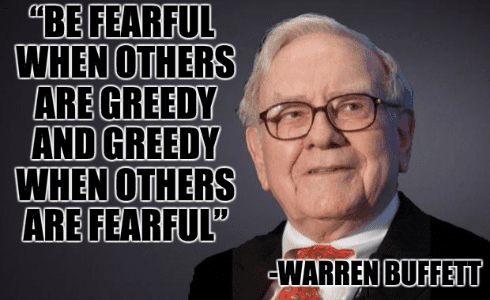





















 That Helpful Dad