Tag Archives: intermittent fasting

How to Optimize Your Energy and Overcome Fatigue

Readers of my blog know how much Intermittent Fasting (IF) has changed my life for the better – I started with IF back in 2017 and haven’t looked back. You can read about my journey with IF here, but today I wanted to share an article with you that provides some of the science behind how Time Restricted Eating (TRE) like Intermittent Fasting can help to optimize your energy and combat fatigue – both benefits I can personally attest to!


New to Intermittent Fasting? Start with these articles:


Simple Remedies to Optimize Your Energy and Combat Fatigue

(As seen on Mercola.com – This article is part of a weekly series in which Dr. Mercola interviews various experts on a variety of health issues. Today’s interview is with Dr. Steven Gundry, a cardiologist, heart surgeon, medical researcher and author, is perhaps best known for his “Plant Paradox” book, which was a massive bestseller. He has now published another book called “The Energy Paradox: What to Do When Your Get-Up-and-Go Has Got Up and Gone.

amzn_assoc_tracking_id = “thathelpfulda-20”; amzn_assoc_ad_mode = “manual”; amzn_assoc_ad_type = “smart”; amzn_assoc_marketplace = “amazon”; amzn_assoc_region = “US”; amzn_assoc_design = “enhanced_links”; amzn_assoc_asins = “B085NTP6DZ”; amzn_assoc_placement = “adunit”; amzn_assoc_linkid = “1ebaa181666dcfb49ad124356d10cbc1”;

Time-Restricted Eating

The good news is there’s a lot you can do to improve your energy levels. One such strategy, which I embraced years ago, is time-restricted eating (TRE), a form of intermittent fasting in which you restrict all of your food intake to a certain number of consecutive hours each day.

As an added boon, this strategy doesn’t cost you a penny. If anything, it’ll save you money. Gundry was ahead of the curve on this one, having written about TRE in his first book, “Dr. Gundry’s Diet Evolution,” published in 2006.

“I had an entire chapter in that book devoted to time-restricted eating, and my editor at Random House at the time, Heather Jackson, said, ‘This is so crazy that I’m not going to let you do this.’

She said this. True story. And I said, ‘Look, I’m telling you, I’ve been doing this now for four years and I’ve been using it on my patients and it’s not crazy. Here’s the research.’ And she said, ‘OK. I’m going to give you two pages to make your case. I’m throwing the rest of the chapter away.’

So, I got two pages. I saw her at the mindbodygreen symposium last summer, before the COVID-19 outbreak. She came up to me and said, ‘You were right. I apologize. You weren’t crazy, you weren’t nuts. Everybody now knows.’”

Indeed, in recent years, TRE has gained a lot of recognition as mounting evidence shows the simple act of restricting the number of hours during which you consume food during the day will improve your health in a variety of ways, primarily by improving your mitochondrial health and metabolic flexibility.

As noted by Gundry, keeping your eating to a window of six to eight hours a day is an achievable goal for most people. However, most need to gradually ease into it.

“Metabolic flexibility is probably the underlying problem in the vast majority of diseases that we see and I wrote the book to try and make it easy,” Gundry says. “What I see in my practice is that a lot of people go, ‘OK. I usually eat breakfast at 7 and starting tomorrow I’m going to start eating breakfast — break-fast — at noon.’ And they fall flat on their faces.

They get headaches, they get hungry, they don’t think right. They have no energy and they decide ‘This isn’t for me.’ That’s because they have a high insulin level, they’re insulin resistant and can’t use stored fat as an energy source …

So, in the book, what I do is, over a six-week period, I get them used to eating during a shorter and shorter time window. It’s very much like learning a new exercise program. I couldn’t run a marathon right out the gate, but I can train and get there. So that’s what we do.”

Part of the process involves retraining your circadian rhythm. Your food intake, which impacts the circadian rhythm of your gut microbiome, and other circadian rhythms are intricately connected, and the more you can realign these circadian rhythms, the better your whole body will function, including your mitochondria.

Click here to learn more

Crucial Notes on Meal Timing

At the most extreme end of TRE is the one meal a day (OMAD) routine, which can work well if you’re young and healthy. However, once you get into middle age and older, I believe it can start to backfire. I’m also not convinced that it’s healthy to remain on an OMAD diet in perpetuity, for the simple reason that your body will typically work best when you challenge it now and then.

During winter months, about six months out of the year, Gundry promotes using a two-hour, or even as short as a single-hour eating window during weekdays, and then eating during a much longer window during weekends. He’s been doing this for the past 21 years.

For me, cycling — mixing longer and shorter fasting intervals — has been a key to long term success, and taking the weekends off from this strict regimen may be part of why this strict regimen has worked so well for so long for Gundry.

“I think you’ve got to break it up. I don’t do it all year around, and I break it up on the weekends, and the reason I do that is so I won’t go mad,” Gundry says. Another important detail with regard to timing is to avoid eating at least three hours before bed. Even if you restrict your eating to six hours or less, if you eat too close to bedtime, you’re canceling out many of the benefits. As explained by Gundry:

“It’s really important to stop eating at least three hours before bedtime for a couple of really important reasons. No. 1, you’ve got to undergo mitochondrial repair during the night.

You have to undergo brain cleaning during the night from the glymphatic circulation. Digestion takes huge amounts of blood flow, and if you’re eating, all that blood flow is heading down to your gut when it should actually be going up to your brain.”

TRE Makes Most Diets Better

Gundry quotes data from Satchin Panda, which shows that rats raised on a standard American diet equivalent that also are put on a TRE regimen fare much better than those who are not on TRE. This despite the fact that they’re eating the same thing. The same has been shown to hold true in humans.

Remarkably, Panda has shown the average American eats for 16 hours a day. Essentially, they’re grazing all day long, stopping only while sleeping. About 90% eat for more than 12 hours.

Simply reducing your eating window to 12 hours would be an improvement. As noted by Gundry, “Big Food, Big Agriculture have convinced us that this is the proper way to eat.” In reality, the only thing these big businesses and their recommendations are good for is disease.

The Case for EMF Avoidance

Gundry and I are also in agreement about the dangers of electromagnetic fields (EMFs). I’ve previously written about how magnesium can help mitigate some of the damaging effects from EMF, and Gundry has a patient who appears to have had success using this strategy. Melatonin, which is a very potent mitochondrial antioxidant, is another potential mitigator.

“Melatonin is a very interesting way of mitigating against the bad effects of EMF,” Gundry says. “Now, as I talk about in the book, I used to think that people who said that they were sensitive to these invisible rays [EMFs] were out on the lunatic fringe.

But the longer I’ve been doing this, I’ve had some fantastic experiences with very credible people, who when we mitigated EMF got well. One patient was profoundly affected by her husband’s AICD, a defibrillator, which was communicating his EKG with a satellite.

As soon as it went into him, she couldn’t sleep next to him. She had migraine headaches. We finally turned off the transmitter in his AICD, and just like that, all of [her symptoms] went away. So, these people are canaries in a coal mine and we have to believe it.”

Leaky Gut Underlies Most Chronic Disease

While antioxidants like melatonin can certainly help improve mitochondrial function, I think there are better ways than simply piling on antioxidants. You also need to remove dietary and lifestyle factors that cause the energy depletion in the first place. EMF exposure is one environmental factor. Leaky gut, caused by lectins in your diet, is another factor that needs to be addressed.

Leaky gut is an underlying condition of most chronic disease, so, if you have a chronic ailment, chances are you have leaky gut.

According to Gundry, leaky gut is an underlying condition of most chronic disease, so, if you have a chronic ailment, chances are you have leaky gut. Thanks to Dr. Alessio Fasano, who heads up the Celiac Research Center at Harvard, we now have sophisticated tests that can diagnose this problem.

Fasano discovered the mechanism by which lectins cause leaky gut, and gluten is a lectin. When these and other food particles are able to cross your gut lining, they cause chronic inflammation, which requires a lot of energy to combat. This is one reason for your fatigue and general malaise. Gundry explains:

“If your immune system is distracted down to your leaky gut, first of all, it’s not going to be available when [pathogens] come in through your nose or mouth. And secondly, your immune system is so hyperactivated that when it sees something that might not be all that important, it goes crazy and you get a cytokine storm. That, of course, is one of the major lethal consequences [of] the Western diet.”

Linoleic Acid Can Decimate Mitochondrial Health

Another dietary factor that decimates mitochondrial health, and thus energy production, is omega-6 linoleic acid (LA). “In the book, I talk about the Goldilocks effect,” Gundry says. However, LA is naturally found in virtually all foods, so it’s near-impossible to become deficient. The problem really is excessive intake, which is near universal in Western countries due to processed food.

The primary culprit here is industrial vegetable oils, which most people eat far too much of. If you’re eating a whole food diet, you’re more likely to have a healthy ratio of LA, but even then, it may be causing trouble if you’re eating too many LA-rich foods, such as conventional chicken, for example.

You can learn more about the mechanisms of action behind LA’s damage in “Why Chicken Is Killing You and Saturated Fat Is Your Friend” and “The Type of Fat You Eat Affects Your COVID Risk.” Olive oil is another food that is high in LA, but it also has other components that may modify some of the risks. Still, I choose to limit my olive oil intake. Overall, I try to keep my LA intake below 5 grams a day, regardless of the sources. Gundry has a more favorable view of olive oil, stating:

“If you limit your eating window, you actually stop that process from happening, which is really miraculous, No. 1. And No. 2, shameless plug for myself, with my Gundry MD high-polyphenol olive oil, you only need a tablespoon a day to get the equivalent polyphenols of a liter of olive oil a week.”

Surprising Benefits of Cheese

When it comes to fats, Gundry is a proponent of short and medium chain fatty acids. “For multiple reasons, I’ve been extolling the virtues of MCT oil since the ‘Plant Paradox,’” he says, adding:

“I think the saturated fats have other benefits. In particular, the saturated fats in cheeses may be one of the unsung heroes in longevity that I think needs more attention … I take care of a huge number of people who carry the APOE4 mutation, which is the Alzheimer’s mutation. I noticed early on that cheese really elevated not only small dense LDLs, but also elevated for most of my patients’ oxidized LDL …

I don’t like the traditional cholesterol theory of heart disease. On the other hand, I think oxidized LDL has an interesting place. What’s interesting is that when I’ve separated my patients into having them eat sheep cheese and goat cheese, I found dramatically different results.

I initially attributed it to the fact that sheep and goat have casein A2 and not casein A1. And I think casein A1 is a pretty bad actor. So, I said, well, I’m going to start letting my APOE4 [patients] have sheep and goat cheese, but in moderation. When I did that, I didn’t see this oxidized LDL.”

One potential mechanism for this might be because casein is a protein that can cause autoimmune reactions and contribute to leaky gut, which in turn contributes to increased LDL oxidation.

While most of Gundry’s autoimmune disease patients respond extremely well to Gundry’s plant paradox program, about 10% still do not fare well. Food sensitivity analysis has revealed a large number of them are sensitive to both casein A1 and casein A2.

Once their leaky gut is repaired, however, which may take up to a year, their immune systems typically become tolerant to these things again. “So, I think you can retrain the immune system once you get a good microbiome and seal the leaky gut.”

What About Meat?

While some autoimmune patients have reversed their conditions using a carnivore diet, popularized by Dr. Paul Saladino, who is a leading authority on the science and application of the carnivore diet, Gundry recommends limiting meat because of its effects on your gut microbiome. Interestingly, Gundry will be interviewing Saladino very shortly and that interview will be on his site. It should be a fascinating discussion.

“I have nothing against the carnivore diet as an elimination diet,” he says. “In fact, when Saladino was first on my podcast, he credited me as being the father of the carnivore diet because all plants are evil. And I went, ‘Please don’t do that to me.’

I think one of the mistakes that people make in, particularly, a keto diet where they’ve eliminated fiber, you actually starve your gut microbiome from making butyrate. The other, I think worrisome, part about a carnivore diet is you tend to make more hydrogen sulfide. I’m a huge fan of hydrogen sulfide, the rotten egg smell … but again, we get the Goldilocks rule …

Some is really good for you, it’s really good for mitochondrial function, but a lot is really toxic. And there’s some evidence with carnivore diets that you produce too much hydrogen sulfide. Now, I also understand the argument that if we eat a lot of gristle and a lot of mucin, basically nose to tail, that you can make butyrate by fermenting protein-based animal ingredients. I think you can.

But if you look at all the super long-lived folks, one of the things they have is really great production of butyrate. Butyrate, that short chain fatty acid, does so much good for mitochondria, I can’t even begin to tell you. Well, I do in the book.”

I agree that a strict no-carb diet is a mistake. Healthy carbs — think plant foods rich in fiber — need to be cycled in, there’s no question. Not every day, but certainly once or twice a week, even when you’re on a ketogenic diet. I recommend restricting carbs to about 50 grams or so for most of the week, and then increasing that to 100 or 150 grams once or twice a week once you’re metabolically flexible.

Protein, mTOR Activation and Exercise

Meat, of course, is also a source of protein, and while too much protein can be harmful by activating mTOR (thereby contributing to cancer and other problems), too little can be an unmitigated disaster, as I found out.

For a time, I aggressively restricted protein in an effort to minimize mTOR, and ended up developing sarcopenia (muscle loss). The lesson here is that you need protein, especially if you’re working out, and especially as you get older. With regard to mTOR activation, Gundry notes:

“The only way we can actually measure the effect of mTOR long term is insulin like growth factor IGF-1. I take care of a lot of super old people, 95 and above. I have a lot of 105-year-old patients that I study, and they all have very low insulin-like growth factors.

We’ve tried experiments with patients, really reducing their animal protein and replacing it with plant-based protein. I’m not taking protein away. Their insulin growth factors will drop 50 to 70 points in a matter of months, and I think that’s pretty interesting.

The other thing that’s interesting is that exercise will actually change your gut microbiome to eat branch chain amino acids before they get into you, and branch chain amino acids are one of the biggest stimulators of mTOR.

That’s why, if you’re building muscle and you’re a body builder, you gulp branch chain amino acids all the time. So, I think, probably Saladino — who exercises and also does TRE and has pretty good IGF-1s — can tolerate a very high animal protein diet.

The other thing that I’ve written about in all my books is that beef, lamb and pork have a sugar molecule called Neu5Gc, and fish and chicken have Neu5Ac. Many people make an autoantibody to Neu5Gc, so they attack their own blood vessels if exposed to beef, lamb and pork.”

Lastly, Gundry points out the importance of exercise. When you work your muscles, especially the big muscle groups, myokines are produced, which help grow new brain cells and aid your mitochondria. However, contrary to popular opinion, you don’t need to exercise continuously for 30 to 60 minutes each day, Gundry says. It’s OK to break it into smaller segments.

“Even walking up and down stairs for a minute may be as effective as walking 10 minutes on a level surface,” he says. “Doing a plank while you’re watching TV for a minute is a phenomenal exercise. My favorite is when you’re brushing your teeth, do deep knee bends, do squats.”

More Information

This interview coincides with the release of “The Energy Paradox: What to Do When Your Get-Up-and-Go Has Got Up and Gone,” so to learn more, be sure to pick up a copy. You can also learn more about Gundry by perusing his websites, GundryMD.com and DrGundry.com.


Books by Dr Gundry

If you enjoy Dr. Gundry’s tips, check out his books on Amazon. They include:
Intermittent Fasting – The Beginner’s Guide

Intermittent Fasting is a popular lifestyle diet and many people have discovered that intermittent fasting for weight loss really works, but did you know that IF has other benefits benefits besides just it’s effectiveness for helping you lose weight? On this page, we’ll discuss what intermittent fasting is, how it works, the various types of intermittent fasting schedules, tips on how to succeed with intermittent fasting, and much more. In addition, I’ll also share my own personal results with intermittent fasting – a lifestyle I’ve been living now for nearly 2 years.

Intermittent Fasting Frequently Asked Questions (FAQ) – That Helpful Dad { “@context”: “https://schema.org”, “@type”: “FAQPage”, “mainEntity”: [ { “@type”: “Question”, “name”: “What is intermittent fasting?”, “acceptedAnswer”: { “@type”: “Answer”, “text”:”Intermittent fasting is a catch-all term for lifestyle diets in which someone doesn’t eat for a preset period of time (the fasting state) and does eat during a preset period of time (the fed state). At its most basic level it amounts to not eating after dinner and possibly delaying breakfast.”} }] }

Editor’s Note: This article is part of a series on Intermittent Fasting and this is the MAIN PAGE of that series. This article has been updated numerous times to reflect what I’ve learned about IF along the way. You’ll find links to the other articles in the IF series below.

Mike, That Helpful Dad

Hi, I’m Mike, That Helpful Dad. It’s been nearly 2 years since I began this journey and I’m excited to share what I’ve learned along the way so that, if YOU try intermittent fasting, you’ll be set up for success!

Meanwhile I should point out that this article is NOT a ‘scientific’ review of Intermittent Fasting; instead it’s a personal experience story from one man’s POV. I don’t pretend to know everything about Intermittent Fasting. I’m writing to hopefully inspire you with ideas for a technique that perhaps can help you make your life better in the same way Intermittent Fasting helped me. Good luck.

So what have I learned after nearly two years of Intermittent Fasting?

Overall I learned that Intermittent Fasting is surprisingly easy and it gives me lots of energy. It’s also a very forgiving diet that helps you overcome the inevitable times when you ‘fall off the wagon.’

Intermittent Fasting has become my new ‘lifestyle’ and I can’t see myself going back anytime soon. HOWEVER Intermittent Fasting is NOT a magic cure-all and there are a few important tips to keep in mind if you want to try it – I’ll detail them for you here. 


Intermittent Fasting Table of Contents

[lwptoc]


I. What is Intermittent Fasting?

Intermittent fasting is a catch-all term for lifestyle diets in which someone doesn’t eat for a preset period of time (the fasting state) and does eat during a preset period of time (the fed state).

At it’s most basic level it amounts to not eating after dinner and possibly delaying breakfast. And if you are a beginner looking to try IF this is where you may want to start.

Personally I use the 16/8 Intermittent Fasting schedule (see more below) where I don’t eat for 16 hours and eat all my food within an 8 hour window. It looks like this: stop eating around 6pm and start eating again around 10am the next day.
Why would someone want to try intermittent fasting?

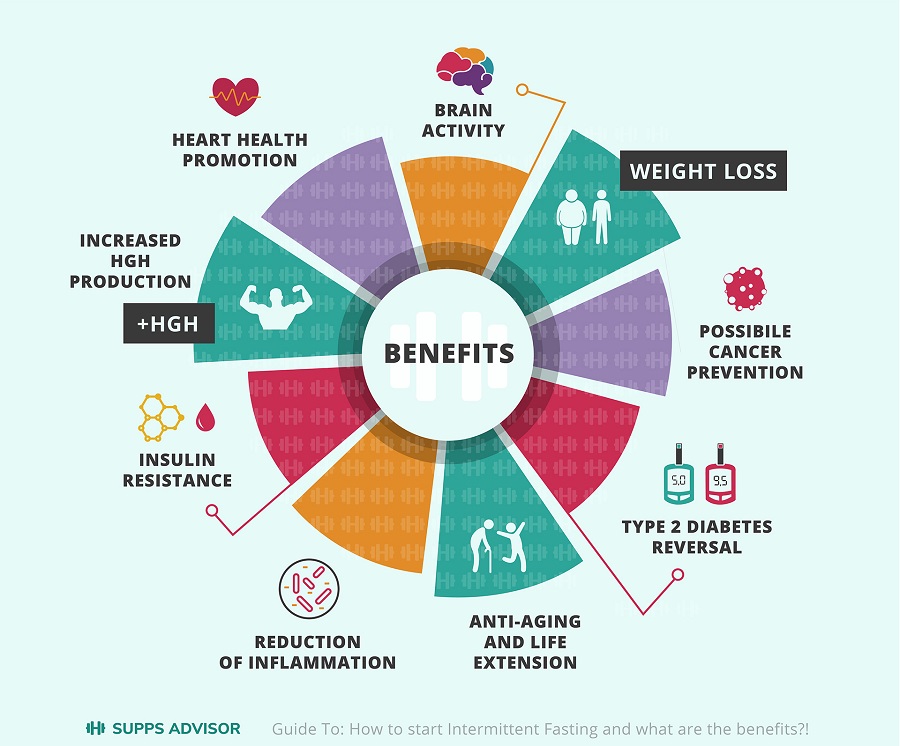
Most people choose to try intermittent fasting because it helps with weight loss. However there are are a number of benefits to Intermittent Fasting too – including potentially increased energy, more mental clarity, loads of time (and money) saved on not preparing the meals you skipped, and much more. (Read my personal journey as well as the references below to learn more about this).

Benefits of Intermittent Fasting from our friends at Supps Advisor

There are many types of intermittent fasting diet plans and eating schedules and I’ll detail them below but first let’s talk about what most people use IF for…


II. Intermittent Fasting for Weight Loss

By far the number one reason why I hear most people try intermittent fasting is because they are attracted to the possibility of using intermittent fasting for weight loss.

But does intermittent fasting for weight loss really work?

For our purposes, the reason why Intermittent Fasting seems to work for weight loss is basically common sense…

If you are restricting or eliminating calories consistently over time, then you’ll tend to lose weight. It’s not rocket science.

Remember, with intermittent fasting you are not eating for a predefined period of time (for example with 16/8 Intermittent Fasting you don’t eat for 16 hours). Now when you put yourself into this ‘fasting’ state and because you are not eating, you’re by definition restricting calories (at this during this time period) — and if you do that consistently over time you’ll lose weight.

So that’s it? Intermittent Fasting is just caloric restriction?

Not quite.

There’s a lot of more to the story about intermittent fasting for weight loss, so I wrote a separate article about it. You can read it here…(click the pick)

Article: Intermittent Fasting for Weight Loss

If you are interested in using intermittent fasting for weigh loss my article also include a plan for success as well as links to books on the topic.


III. Intermittent Fasting Schedules

What are the most popular types of intermittent fasting eating schedules?

There are many different versions of intermittent fasting. Here are the most popular types are…

  • Time Restricted Feeding (16/8, 14/10, 12/12) – where you don’t eat for 16 hours and eat all your food within the remaining 8 hours. I personally live the 16/8 Intermittent Fasting lifestyle and love it!
  • Eat, Stop, Eat (OMAD, 24-hour fasting, Whole Day Fasting) – as the name implies, you’re basically fasting for 23 hours and then eating One Meal a Day (OMAD) or going for a full 24 hours before eating.
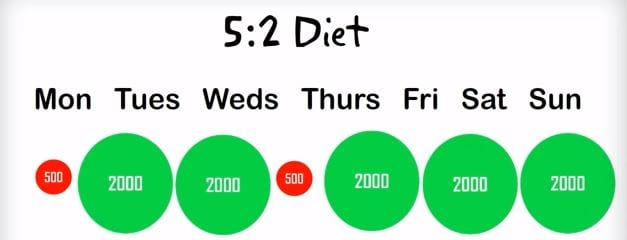
  • 5:2 Intermittent Fasting – With 5/2 Fasting you’ll be trying to limit your total daily calorie intake to only 500 calories for TWO DAYS during the week. The other 5 days you’ll be eating your typical (hopefully healthy) diet.
  • Warrior Diet – a type of Time Restricted feeding in which you do a version o 20/4 Intermittent Fasting where you eat little to no food for 20 hours and then eat one large meal at night during a 4-hour window.
  • Extended Day Fasting – 36 Hour Fasting, 48 Hour Fasting, and even 3-7 Day Fasting. I.E. the king of fasting. Yikes!

Because this is another in-depth topic, I wrote a separate article further detailing the types of intermittent fasting, you can read that by clicking this pic…

Article: Intermittent Fasting Eating Schedules

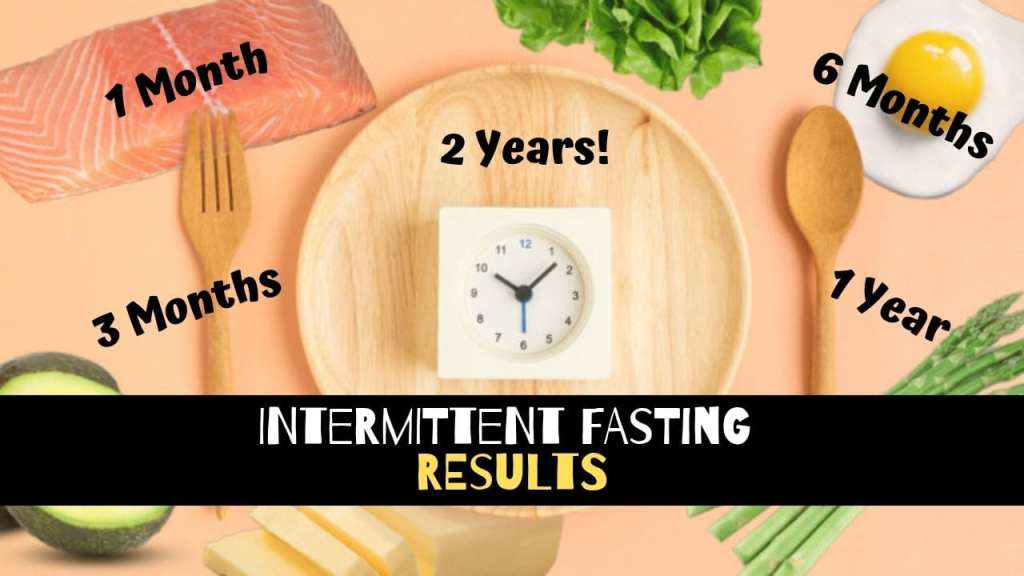
IV. Intermittent Fasting Results

As I mentioned, I’ve been a practitioner of the Intermittent Fasting lifestyle for about 2 years now and I can honestly say that this ‘diet’ has changed my life in many positive ways. I’ve written about the benefits of Intermittent Fasting on this blog numerous times in the past and today I’d like to share more of my Intermittent Fasting Results with you – providing transparency of results for 1 month, 3 months, 6 months, 1 year, and even now out to 2 years. 

You can read my full story here – it includes why I started intermittent fasting as a beginner, what my initial fears were about intermittent fasting, what my results were from 1 month through to 2 years, and what I learned along the way.

Read my intermittent fasting results article here…

Article: Intermittent Fasting Results

V. So What CAN You Eat During a Fast?

During the period while you are fasting (on most of the intermittent fasting schedules) pretty much all you can have is black coffee or simple tea. Some research suggests you can add some cinnamon (for blood sugar control) to the coffee (and I do this).

What about Butter or Coconut Oil?
There is also a LOT of debate (see references below for a sample) about whether you can also add in ‘good fats’ like grass-fed butter and/or coconut oil to your morning tea or coffee and that this won’t break the fast because apparently these good fats…

  1. Keep you in the ketosis (fat-burning state).
  2. They don’t spike an insulin response like eating carbs would.
  3. They provide your brain-food (the fat is used by your brain for energy).
  4. So long as you keep it under 50 calories from these good-fats you are supposedly still fasting.

Look, I’m not scientist here and I can’t tell you with medical research certainty if any of this is this is true or not, all I can tell you in that my experiments have shown and for me, using 1/2 TBSP of grass-fed butter in my coffee works (and has generated the results you’ll read in my personal story about intermittent fasting).

As a side note, I love the coffee + cinnamon + butter combo so much I developed a recipe for it. Check it out here…

My coffee + butter recipe

For further reading about what you can eat DURING a fast see the references below.


VI. Intermittent Fasting Tips – The Video

Here’s a video I made at the 6 month mark of Intermittent Fasting.

https://youtu.be/mv6VvwM81pY


VII. Intermittent Fasting Tips

These are the tips I collected after practicing Intermittent Fasting for a full year.  If you’re planning to try Intermittent Fasting for beginners I’d recommend you consider using some or all of the following:

  1. Skipped Days = Lethargy: you can skip a day or two if you like but I discovered that when I skipped an Intermittent Fasting day, I felt poor physically – specifically, I felt lethargic, unmotivated, and bloated. As a result I rarely skip a day of fasting and usually get in at least 14 hours. 
  2. Fasting Cardio vs HITT: the combo of Intermittent Fasting and Fasted Cardio (AKA Cardio before Breakfast) did increase my energy level but I still think longer HITT later in the day is more effective because you can burn more calories overall. I think an alternating combo of the two is best.
  3. Workouts Burn Even More Fat: CrossFit and other constant movement workouts worked particularly well from an energy standpoint. There is also the theory that working out larger muscle groups (legs, chest, back, etc) and building up those muscles will continue the post-workout fat-burning process longer (see topic #6 of this post and many others).
  4. Fluids are a Must: Drinking 1 glass of water immediately upon waking and then my Cinnabun Coffee Cup was more than enough to take me through to 10-11am for the 16-hour fast cycle to work its magic. I also like adding in some turmeric to my coffee as well. Additionally a nice cup of green or moringa tea is also good if you want something more to drink too
  5. Eating Schedule is Flexible: When I am ready to break my fast (at 10-11am) I load up on protein – yogurt, milk, eggs, bacon, etc. I then eat lunch around 1.5-3 hours later, then have some fruit/snack around 330-4, and then dinner at 6ish. Many people say to avoid fruits because they are high in sugar and that impedes the fat loss – that may be true but I like fruits and believe their overall health benefits outweigh the negatives for long-term health.
  6. Strict DIET is NOT a must : At no time did I focus on any particular diet. I tried not to eat a bunch of junk but I wasn’t strict. So long as I was in the ‘eating window’ I ate what I wanted — for me that’s mostly protein and good fats but I still a fair amount of carbs too. I pretty much ate my normal pre fasting diet. That meant I didn’t eat a set menu of restricted foods – perhaps if I did do those things then Intermittent Fasting would be even more effective but as I said I’m just an Average Joe and I like keeping things simple.
  7. Eat Dinner Early: The key with Intermittent Fasting (at least for me) is to eat dinner early and avoid those late night snacks. DO that and you can cruise thru to 16 hours around 10 am with ease.
  8. Alcohol is a bit of a Problem: Alcohol appears to play a key role in the process. I love beer but unfortunately, so many of the beers I like (IPAs) are ‘heavy’ from a calorie standpoint and when I have a beer I usually want to have a snack too. All those calories add up – fast. My results were negatively impacted when I had more beers per month then when I didn’t. It’s not rocket science. I’m not willing to give up my beer and chicken wings completely so I realize that’s going to decrease some of the effectiveness of my Intermittent Fasting, but at the same time I look at it from a different POV: Intermittent Fasting helps me limit the negative impact of the beer so I can still enjoy it with less guilt. (The Power of Perspective is pretty cool, huh?)
  9. Caloric Restriction takes you to the next Level: I don’t like to count calories, but after 9 months of intermittent fasting I felt like I was hitting a plateau. At that point I decided to pay marginal attention to my calories and tried to make a conscious effort to stay in a net caloric deficit (basically consuming less calories than my body required which for me was approx 2,000 calories a day). I didn’t go crazy with this and I relied on basically just reading food labels and doing some simple math in my head to add up approximately what I was consuming throughout the day calorie-wise. When I added this into the mix it took my results to the next level – during the final 3 months I went from 154 lbs to 149 lbs and dropped 2 more inches from my waist. I realize this tip is not rocket science but it’s important to point out. I didn’t count calories religiously and I didn’t necessarily limit what I ate (I just ate less of it) and it worked for me. I suppose if you want to be more hard core on this, you’ll get even better results than I did, but as I’ve said all along, I want to use a method that is easy and is something I can live with over the long run. Here’s a link to calculate the calories YOU need to lose weight
  10. SMART Goals are ideal – Looking back now I can see that my 3-month goal to lose 4 inches off my belly was a bit unrealistic – especially when I didn’t stick to the original plan or change my diet much. Set yourself up for success by setting a reasonable goal. Looking ahead (since I still don’t plan to change my diet completely and I still want to drink beer, I’m giving myself more time  to reach my 32/32 belly/waist goal — I’ll keep you posted on my progress and you can subscribe to my blog for updates).

Meanwhile, I’ve since collected more key insights about intermittent fasting and you can read those in my personal journey with IF article.


VIII. Intermittent Fasting Resources

I’m just one guy and as I wrote already I don’t know everything there is to know about intermittent fasting. There are a lot of great references and books about Intermittent Fasting. Here are some of the resources I’ve found helpful, along with an assortment of top-rated books that you might find helpful if you practice intermittent fasting for beginners….

Intermittent Fasting References Overall:

Fasting Cardio References

Coffee + Butter References

Food vs Fasting References

Time Restricted Eating References:

Eat-Stop-Eat Fasting References:

5:2 Intermittent Fasting References:

Warrior Diet References:

Extending Day Intermittent Fasting References:


Intermittent Fasting – Have YOU Tried it?

If you’ve tried Intermittent Fasting, Fasting Cardio, have some killer Morning Ritual, or any related wisdom to share, please do so. I’m eager to learn your tips so we can help each other improve.

If this post helped you feel free to share it with a friend.

When you do these things we all win.

Enjoyed This Article?

Share it with a friend using this social media friendly images – perfect to pin, post, and pass along…

Intermittent Fasting – The Beginner’s Guide

What to Read Next?

    Intermittent Fasting for Weight Loss

    If you’re looking for a diet program that can provide real results to help you lose weight, then you might want to consider Intermittent Fasting. In this article, we’ll discuss the benefits of intermittent fasting specifically from a weight loss perspective so you can decide if this lifestyle is right for you.


    Editor’s Note: This article is part of a series on Intermittent Fasting.

    That Helpful Dad

    Hi, I’m Mike, That Helpful Dad. I’ve been living the Intermittent Fasting lifestyle for about 2 years now and it’s changed my life for the better. I hope it can help you too.


    What is Intermittent Fasting?

    Since this article is focused specifically on Intermittent Fasting for Weight Loss, we won’t spend a lot of time on definitions. We have other articles that dive deeper into the science behind Intermittent Fasting and all the various Intermittent Fasting schedules you can use to tailor an IF lifestyle that works best for you.

    But, to ensure we’re on the same page, let’s give a simple definition for Intermittent Fasting as follows…

    Intermittent Fasting is “a diet plan that cycle between a period of fasting and non-fasting over a defined period.”

    A popular schedule for Intermittent Fasting is 16/8 for men or 14/10 for women. What that means is fasting for 16 hours and eating within an 8 hour window (or) fasting for 14 hours and eating within a 10 hour window. But other intermittent fasting schedules are options too – there is basically something for everybody with intermittent fasting.


    Intermittent Fasting for Weight Loss

    Will intermittent fasting help you lose weight? If so, how does intermittent fasting for weight loss work? Great questions, I’m glad you asked!

    Since most of my readers are Average Joe’s like me this is not a high science blog, I won’t bore you with the pathophysiology behind how Intermittent Fasting works at the metabolic level, (however there are some great articles on this I’ll link to in the references section below).

    For our purposes, the reason why Intermittent Fasting seems to work for weight loss is basically common sense…

    If you are restricting or eliminating calories consistently over time, then you’ll tend to lose weight. It’s not rocket science.

    Remember, with intermittent fasting you are not eating for a predefined period of time (for example 16 hours) – during this window you’ll be consuming little to no calories. Now when you put yourself into this ‘fasting’ state, a lot of potentially positive effects are occurring within your body that may benefit you beyond just the weight loss effect of IF, but given our focus on weight loss, the key here is that because you are not eating, you’re by definition restricting calories (at this during this time period) — and if you do that consistently over time you’ll lose weight.

    So that’s it? Intermittent Fasting is just caloric restriction?

    Not quite.

    Myself and other proponents of IF would argue that Intermittent Fasting is much more than just restricting calories – after all history has shown us that diets solely focused on calorie counting, calorie restriction, and other ‘starvation’ diets tend to not be effective over a long period because people can’t (and frankly don’t want to) maintain that type of diet for every long – and when they come off of that type of diet there is a high rebound rate where people tend to put back the weight the lost (and possibly even gain more).

    So what’s different with IF?

    Intermittent Fasting vs Calorie Restriction Diets.

    Will you likely restrict calories when you practice intermittent fasting?

    Probably.

    Does intermittent fasting REQUIRE you to restrict calories?

    No.

    Remember, intermittent fasting is basically a preset period not eating (the fasting state ) followed by a preset period of eating (the fed state; not to be confused with the feasting state). There’s nothing in the definition of IF or even in most of the various schedules associated with IF that specifically talk about calorie restriction.

    It’s important to understand the difference between IF and basic calorie restriction diets because if you don’t then you may not have success with Intermittent Fasting.

    Why?

    Because if you gorge yourself on junk food during the time of you eat with IF and you consume more calories then you need each day, then you will GAIN WEIGHT with intermittent fasting.

    Intermittent Fasting is NOT a Guaranteed Slam Dunk

    Oops!

    When I talk to people who are new to Intermittent Fasting I basically tell them that I stop eating around 6pm, skip breakfast and just have black coffee (or coffee with butter), and then start eating again at 10am. (I follow the 16/8 Intermittent Fasting version). Then, between 10am and 6pm I basically eat whatever I want.

    While that’s true, there is an important caveat – when I say I eat whatever I want, I don’t eat lots of junk food. Don’t get me wrong, I love chicken wings, beer, nuts, and I can crush a whole bag of Doritos if you give it to me. I DO still eat all those things. HOWEVER I don’t do that every day because, first off I don’t want to, and secondly, I know that Intermittent Fasting isn’t going to overcome poor eating habits.

    So I’ll say again, if you eat more calories than you need each day, then Intermittent Fasting isn’t going to be a weight loss solution for you and, more likely than not, you’ll probably gain weight with IF.

    That would be disappointing. I don’t want to see that happen to you.


    Intermittent Fasting for Weight Loss – a Plan for Success

    If you really want to succeed with using intermittent fasting for weight loss, then you do yourself a favor and find out how many calories you need per day to maintain your weight. To do this, use a caloric calculator (Healthline has one that’s free and easy to use here).

    As Healthline notes “an average woman needs to eat about 2000 calories per day to maintain, and 1500 calories to lose one pound of weight per week. An average man needs 2500 calories to maintain, and 2000 to lose one pound of weight per week.”

    So if you are looking to lose a pound a week, shoot for the daily calorie target associated with your personal situation. For me, the goal is APPROXIMATELY 2000 calories a day.

    I say ‘approximately’ because I don’t actually count calories, I just estimate them roughly throughout the day. In that sense, Intermittent Fasting is a fairly forgiving diet plan (so long as your estimates are not way off!).

    OK, I know my daily calorie goal, so now what?

    Once you know your daily calorie goal, then use Intermittent Fasting to help you achieve it.

    This is the real beauty of Intermittent Fasting – it makes is a LOT easier to achieve a daily calorie goal because you’re limiting the time period in which you are eating and from there it’s simple math.

    The less time you spend eating, the greater your chances of consuming less calories. This is the real key behind using Intermittent Fasting for Weight Loss.

    STOP RIGHT THERE – so basically you’re saying you still want me to starve myself? , Mike, this sounds even worse than a starvation diet because now I have to starve myself for longer periods of time. That sucks. No way!

    Intermittent Fasting = Starvation?

    WRONG!

    While it’s true that you won’t be eating for extended periods of time, you’re definitely NOT starving yourself. So long as you’re not eating a bunch of junk food, and you follow your normal healthy diet, you can eat whatever you want.

    Look, here’s the bottom line with IF – if you simply skip the after dinner snacks and skip breakfast, you’ll probably have a pretty easy time with Intermittent Fasting for weight loss.

    Seriously, is it really that hard to stop eating around 6pm and then not eat the next day till 8am (14 hour fast) or 10am (16 hour fast)? It’s not hard. I can do it and so can you.

    Eat what you want (within reason), but just eat that food during the intermittent fasting schedule that works for you. Do it consistently over time and watch the pounds (and your waist line) melt away.


    Intermittent Fasting for Weight Loss Resources

    One of the goals of our site is to curate quality content from other sites and share it with you. The following articles on intermittent fasting for weight loss may be helpful to you:

    Intermittent Fasting for Weight Loss Books


    What to Read Next?

    Live a Legacy Life
    How to Live a Legacy Life
    Best Foosball Tables

    Intermittent Fasting Schedules – Most Popular Types of Intermittent Fasting

    Intermittent Fasting is all the rage these days, but what many people don’t realize is that Intermittent Fasting diet plans are not one size fits all – and that’s a GOOD thing. In this article, we’ll discuss the most popular types of intermittent fasting schedules. Hopefully you’ll find an intermittent fasting eating plan that works for you so you can benefit from this amazing lifestyle.


    Editor’s Note: This article is part of a series on Intermittent Fasting.

    Mike, That Helpful Dad

    Hi, I’m Mike, That Helpful Dad. I’ve been living the Intermittent Fasting lifestyle for about 2 years now and it’s changed my life for the better. I hope it can help you too.


    What is Intermittent Fasting?

    Intermittent fasting is a catch-all term for lifestyle diets in which someone doesn’t eat for a preset period of time (the fasting state) and does eat during a preset period of time (the fed state).

    Why would someone want to do that?

    Most people choose to try intermittent fasting because it helps with weight loss. However there are are a number of benefits to Intermittent Fasting too.

    For the purposes of THIS article, we’re going to assume you’ve already bought in to the benefits of intermittent fasting and are really just looking to better understand what the options are for intermittent fasting eating schedules.


    Most Popular Intermittent Fasting Schedules

    Depending on who you ask, if you research the types of intermittent fasting, you’re likely to see anywhere from 4 types of intermittent fasting, to 6 intermittent fasting diets, to 7 ways to try intermittent fasting, to even 15 different variations of intermittent fasting. Wow, who knew?

    I’m not here to judge what is and what isn’t really intermittent fasting – maybe there are really 15 different types or maybe there’s even more. After all the definition of Intermittent Fasting is pretty wide open to interpretation (a period of fasting vs a period of fed) so perhaps some of the lesser known types of intermittent fasting like Circadian Rhythm Fasting, Dry Fasting, and Fat Fasting qualify. But for our goals today, I’m going to draw your attention to the most popular types of intermittent fasting schedules since I’m assuming you’re likely to be pretty new to the concept. If that’s the case, then you’ll want to set yourself up for success by trying some of the tried and true methods of intermittent fasting eating plans that have been proven to work for many people (myself included).

    I. Time Restricted Feeding (16/8, 14/10, 12/12)

    Although I have no concrete evidence on this, I’m going to say that time restricted feeding is the most popular type of intermittent fasting eating schedule. I say this because it’s the most common type of intermittent fasting I hear people talking about in the real world. It’s also the version of IF that I follow and I’d like to be in the popular crowd so there’s that too. 🙂

    Here are the most popular variations of time restricted intermittent fasting.

    • 16/8 Intermittent Fasting means you don’t eat for 16 hours, and you eat all your food within an 8 hour window (fed). (This is the version most recommended for men).
    • 14/10 intermittent fasting means you don’t eat for 14 hours, and you eat all your food within a 10 hour window. (This is the version most recommended for women).
    • 12/12 intermittent fasting means you don’t eat for 12 hours, and you eat all your food within a 12 hour window. (This is more of a starting version to build from).

    Time restricted feeding is a really easy way to start intermittent fasting. Basically you don’t eat snacks after dinner and/or you skip breakfast. Consider what this looks like:

    16/8 Intermittent Fasting from our Friends at Supps Advisor
    • I practice 16/8 intermittent fasting so I try to stop eating around 6pm and then I don’t start eating until around 10am the next day.
    • If you do 14/8 IF and stop eating around 6pm, you can start again the next day at 8am. That’s easy.
    • And 12/12 IF is even easier. Stop eating around 7pm and start again at 7am. Easy-peesie. (Note: 12/12 IF is also called “Overnight Fasting”).

    I’ve been practicing 16/8 intermittent fasting for around 2 years – read my results in this article.

    What I love about 16/8 IF is that it’s a diet you can easily do every day, without feeling like you’re missing out or starving yourself. And because it’s so easy, it becomes a lifestyle you WANT to live.

    You can learn more about Time Restricted Eating here:


    II. Eat, Stop, Eat Fasting (OMAD, 24 Hours, etc)

    Moving on to a bit more advanced fasting. Within the Eat-Stop-Eat Fasting, you typically hear people talk about the following:

    • OMAD – This means “One Meal a Day” – most people define this as fasting for 23 hours and eating all your food in a 1 hour period. So this could also be called 23/1 Fasting.
    • 24 Hour Fasting – basically you eat normally (as you define it) one day, fast an entire day, and then eat normally again. Then repeat.
    • Also called “Whole Day Fasting”

    Those I know who practice this type of Eat-Stop-Eat Fasting love it. HOWEVER I don’t know anyone who does this consistently ever day. Usually I’ll hear people say they do this 2-3 times a week.

    That said, people who practice this type of fasting often proclaim the cleansing benefits of this lifestyle.

    You can learn more about Eat-Stop-Eat Fasting here:


    III. The 5-2 Method of Intermittent Fasting

    Not to be confused with Eat-Stop-Eat fasting, 5:2 Intermittent Fasting is a different animal. With 5/2 Fasting you’ll be trying to limit your total daily calorie intake to only 500 calories for TWO DAYS during the week. The other 5 days you’ll be eating your typical (hopefully healthy) diet.

    Most people who do 5:2 Intermittent Fasting will eat a 200 calorie meal and a 300 calorie meal and they’ll try to eat high-fiber, high-protein foods.

    5:2 Fasting is also called Twice a Week Fasting.

    A variation of 5/2 Fasting is Alternate Day Fasting (500 calories every other day) but the latter, while successful for losing weight, has proven to be hard to stick with over the long term for some people.

    To learn more about 5:2 Intermittent Fasting or Alternate Day Fasting, check out these links:


    IV. The Warrior Diet

    Whether it’s good marketing or something more, the Warrior Diet version of Intermittent Fasting has gained lots of popularity recently. As noted on Medical News Today, “supporters of the Warrior Diet claim that humans are natural nocturnal eaters and that eating at night allows the body to gain nutrients in line with its circadian rhythms.”

    Although it sounds hard – it’s proclaimed as a 20/4 Intermittent Fasting where you eat little to no food for 20 hours and then eat one large meal at night during a 4-hour window.

    That said, the Warrior Diet isn’t really a time restricted diet (if we define time restricted fasting as a period of NOT eating followed by a period of eating), because during the 20-hour ‘fasting’ window of the Warrior Diet you’re allowed to eat minimal amounts of raw fruits and vegetables.

    While I am not here to say if the Warrior Diet is a true version of Intermittent Fasting, the fact is that most people do define it as an Intermittent Fasting Schedule so we’ll include it here too.

    More importantly though, if you choose to follow the Warrior Diet Fasting plan, you may want to read more about the science behind Intermittent Fasting in general – especially if your goal is to use intermittent fasting for weight loss because if you eat more than 50 calories during the 20 hour ‘fasting’ window you MAY not stay in the ‘fasting state’ as effectively as you do with other forms of intermittent fasting (see the science behind the fasting state benefits of intermittent fasting here).

    To learn more about the Warrior Diet, check out these links:


    V. Extended Fasting (Multiple Day Intermittent Fasting)

    Not for the feint of heart (and not for beginners of IF), Extended Day Fasting is pretty much what the name implies:

    • 36 Hour Fasting
    • 48 Hour Fasting
    • 3-7 Day Fasting

    All these forms of intermittent fasting schedules are more extreme versions of the IF diet. There’s a boatload of evidence that people point to as the cleansing benefits of these types of intermittent fasting variations but you’ll need to graduate to this level of fasting if you want to set yourself up for success.

    To learn more about Extending Day Intermittent Fasting, read these articles:


    Intermittent Fasting Schedules – The Bottom Line

    There really is something for everybody when it comes to Intermittent Fasting Eating Schedules.

    If you’re looking to get started, try one of the easier versions like 12/12 IF or 14/10 IF. All you really need to do is skip that after dinner snack.

    Give it a try and let me know how it works.


    What to Read Next

    Intermittent Fasting for Weight Loss
    The Best of Series

    How 1 Pat of Butter Helped Me Lose 10 Lbs and 3 Inches from My Belly!

    Butter – The Magic Bullet of Weight Loss?

    What you are about to read is a true story. Nobody’s names have been changed and there are no witnesses to protect. In fact there isn’t even mystery to solve. The fact is, if you want to achieve the same results as me, then all you need to do is mimic what I did and use a single pat of butter to lose weight. It really works!

    Share this article with this Pin-Friendly Image 🙂

    If you are in a rush, here’s a TLDR Summary of this article…

    Put a pat of grass-fed butter in your morning coffee and skip breakfast as part of an Intermittent Fasting Routine and watch the weight fly off and your waistline go down!

    If you want to know more to my story, get a great recipe for your morning coffee, and understand WHY using butter to lose weight really works, then keep reading.


    The Backstory

    I’m in my mid-40’s and for the last few years I was getting more and more horrified to see my waistline expand (it got up to 37.5 inches!) and my energy decrease. So about 6 months ago I read Tim Ferris’ Tools of Titans book and heard about the benefits of Intermittent Fasting. Since I gained like 100+ useful tips from Tim’s book I decided to try his recommendation for Intermittent Fasting too — boy am I glad I did!

    That said, this is not an article about Intermittent Fasting — I’ve already done that and you can read it here…

    https://thathelpfuldad.com/intermittent-fasting/

    Butter for Weight Loss – This Story

    This IS an article about how I used grass-fed butter to lose weight as one of the key pillars of my success with Intermittent Fasting.

    And the best thing about this idea is that it’s so freakin’ simple!

    The basic premise is that you put 1/2 Tablespoon of Grassfed Butter in your black coffee in the morning. Then you skip breakfast, complete your 14–16 hour fast period, and happily move on with your day. Honestly it doesn’t get any easier than that.

    Using this technique I lost 10 pounds (and counting) and more than 3 inches off my belly!

    Butter for Weight Loss and YOU

    If you try what I am suggesting, it’s very possible YOUR results could exceed mine.

    After all, I started at a relatively healthy 5’8″, 166 pounds at baseline so there wasn’t a lot of weight for me to drop.

    My main goal was to decrease my waistline — and that’s exactly what I did. Using a loose tape measure I am now at 34.5 inches around my belly, but from a practical standpoint I can now comfortably wear 32 inch waist pants again — Woo Hoo!


    Common Questions about Butter for Weight Loss

    1. Why Butter? How does this work?
      Because butter is a fat and while we are in the Fasting State our bodies are burning fat for energy— we want this to continue as long as possible so we can lose weight, lower our waistline, and experience all the benefits of Intermittent Fasting. Butter essentially becomes an energy source (read: brain food) that we can use for fuel during the Fasting State. What we don’t want is to trigger an insulin response by eating carbs or protein during our fast — if we do that we move out of the Fasting State and into the Fed State.
    2. Why GrassFed Butter?
      Because we want to feed our body with healthy fats. My favorite options here are Kerrygold Irish Butter (no salt) and Vital Farms, but there are lots of choices here.
    3. Why just 1/2 Tablespoon? 
      Because a full Tablespoon of butter has about 100 calories and, while there is a LOT of debate about this (which I compiled in my Intermittent Fasting article), many sources seem to agree that if you can stay under 50 calories while eating only healthy fats, then you’ll increase your odds of staying in the Fasting State.
    4. What about Ghee, Coconut, or MCT Oil like Tim Ferris talked about?
      Those may all work too, assuming you are choosing healthy, organic options. Last I read Tim actually uses some of these in his now famous Titanium Tea. As for me, while I’ve tried other options here, from a taste perspective, I just like the grassfed butter choice.
    5. Why Black Coffee?
      Because black coffee has no calories and won’t break your fast. Additionally, the caffeine is a source of energy that can compliment the healthy fat energy source from the butter.
    6. Is this just the same thing as “Bulletproof Coffee?”
      Definitely NOT. Bulletproof coffee does use ‘good fats’ in it’s recipes but it is full of so much fat calories that many suspect it breaks your fast. It’s a bit like overkill in my opinion but I guess it depends on your goals. If you are not practicing intermittent fasting and not trying to lose weight and therefore don’t care about all the calories in bulletproof coffee and just want the energy from it (as part of your Ketogenic Diet for example), then bulletproof coffee is potentially a great option for you. BUT for what we are trying to accomplish here (I.E. using butter for weight loss via intermittent fasting), bulletproof coffee is not a good choice for us.
    7. Do you have a recipe for your version?
      As a matter of fact I do! I call it my CinnaBUTTER Coffee Cup and you can read it here…

    https://thathelpfuldad.com/cinnabutter-coffee-recipe/


    Butter for Weight Loss – The Bottom Line?

    Look, I’m not scientist here and I can’t tell you with medical research certainty why grass-fed butter in your coffee is so beneficial (or not). All I can tell you is that I tried one of Tim Ferris’ ‘self guinea pig’ experiments and put the idea to the test on myself — and in my experiment consistently using 1/2 TBSP of grass-fed butter in my morning coffee helped me achieve results that I am super stoked about.

    I’m grateful that Tim shared his ideas in his book. I’m hopeful that by sharing my ideas with you it will inspire you to consider this lifestyle change. After all, I’m just an Average Joe and if I can do it, so can you.


    What to Read Next?

    https://thathelpfuldad.com/product/tim-ferris-tools-of-titans-book-review/

    Want More Tips Like This?

    CinnaBUTTER Coffee Recipe – Tasty AND Good for You? Oh Yeah

    CinnaBUTTER Coffee  – Wake Up to a better cup

    Tired of the same old K-cups? Why not give yourself something to look forward to with your morning cup of Joe? Even better, how about a cup of coffee that not only tastes great but is also healthy for you AND won’t break your fasting routine? If this sounds interesting to you then I’ve got another practical solution for you to try – I call it the CinnaBUTTER Coffee Cup.

    Cinnamon Coffee

    I’ll give you two versions of the CinnaBUTTER Coffee Cup to try – the super simple, super fast, anyone-can-do-it version and the Pimp My Cup AwesomeR version.

    BONUS: Add CinnaBUTTER Coffee to your AM Ritual to take your morning routine to new heights!


    CinnaBUTTER Coffee Cup Recipe

    If you just want the recipe without all the details, here it is, however, if you want to know more about why it’s healthy, how it relates to fasting, and get some tips for taking this coffee and more to the next level, keep reading.

    CinnaBUTTER Coffee Cup Super Simple Recipe

    1. Put a ½ Tablespoon of Grassfed Butter in the bottom of your coffee mug
    2. Brew your favorite cup of coffee into the mug that has the butter so it melts the butter as it pours into it.
    3. Sprinkle some cinnamon on the top.
    4. Stir
    5. Enjoy

    You can use your regular K-Cup for this version of the recipe or any other regular coffee that you normally brew. The goal of the super simple CinnaBUTTER Coffee Cup recipe is just to introduce the idea to you and kick up your regular cup a notch with flavor while also allowing you to experience the potential health benefits of this coffee. This is a speedy way to enjoy the CinnaBUTTER Coffee Cup for those in a rush – you’ll get 75% of the overall benefits from using this method and anyone can do it.

    How long does it take?
    How fast can you cut the butter and sprinkle the cinnamon? It adds about 30 seconds to your normal routine.

    What about my cream and sugar?
    I encourage you to at least try the CinnaBUTTER Coffee Cup without any additional cream and sugar. The flavor is already there so you shouldn’t need to add anything to it. Also if you add cream on top of butter it will end up breaking your fast. And if you add sugar, you’ll really spike your blood sugar. Add them if you must and you’ll enjoy the flavor but try to work yourself towards the non-additive version so you can get the health benefits too.


    CinnaBUTTER Coffee Cup – Pimp My Cup AwesomeR Recipe

    Cinnamon Coffee
    1. Put a ½ Tablespoon of Organic Grass-fed Butter in the bottom of your mug.
    2. Grind fresh coffee beans.
      • Simple: use a motorized coffee/spice grinder.
      • Advanced: practice mindfulness and use a ceramic burr-grinder for the freshest possible taste.
    3. Brew your coffee with a French Press or an Aeropress (my choice) – pressing it into the mug that has the butter.
    4. Sprinkle organic cinnamon onto the top.
    5. Stir with an organic cinnamon stick.
    6. Smell the amazing aroma.
    7. Enjoy.

    For the Pimp My Cup AwesomeR version of the CinnaBUTTER Coffee Cup we’re moving beyond instant coffee, K-Cups, or even pre-ground beans. Here we want only the freshest beans, we want to brew them with a French Press or an Aeropress (see below), we’re using organic grass-fed butter, organic cinnamon, and we’re adding an organic cinnamon stick into the mug at the end too. The goal here is to get the best possible experience. We’re being mindful when we use our ingredients (thus the hand-crank ceramic burr grinder and that use-anywhere Aeropress). And we’re using only the best ingredients. Our goal is taking time to turn the simple into the extraordinary vs. rushing through life.

    OMG, How Long Does All This Take?
    Don’t be afraid of this method from a time standpoint. It’s not like it takes forever. If you use the motorized spice grinder it adds about 30 seconds total to the process. If you go the hand grinder that will add a good minute. The French Press or Aeropress adds another 2-3 minutes. So what’s the total additional time? Let’s call it 5 minutes. Is 5 minutes of additional time worth it to get the full experience of the CinnaBUTTER Coffee Cup Pimp My Cup AwesomeR experience? I think so, but I encourage YOU to give it a try for yourself and let me know.


    CinnaBUTTER Coffee Cup Tools of the Trade

    This section gives you some tips on what I use to make my CinnaBUTTER Coffee cups. Where available I’m including some Amazon affiliate links – remember I only recommend products I actually use myself and to learn more see my Trust Guarantee. Pick these up on Amazon or find them at your local store. Enjoy…

    1. Favorite Butter – I’ve been using Vital Farms grass fed, pasture-raised butter and KerryGold Irish Butter. Use whatever version you prefer but move beyond the run-of-the-mill butter because a lot of your flavor will come from the butter so don’t skimp on this important ingredient.
    2. Favorite Coffee – Lots of options here. Try to expand your horizons a bit. Yes, you can use your K-Cups but trust me when I say that there is a difference between K-Cups and using coffee grounds. Right now my favorite beans are Sprouts Mountain Gold – it’s bold, rich, and even has hints of chocolate in it. I also like using Organic Colombian Coffee beans as well.
      • Did you know most places that sell coffee beans have a grinder that you can use for free? Try it, because even if you don’t grind at home, you’ll get a better flavor and aroma by using coffee grounds vs K-Cups, etc.
    3. Coffee Bean Grinders: The reason to grind at home is to experience the freshest coffee aromas and flavors. Did you know that coffee beans lose their freshness just a few hours after grinding? If that’s true then you’ll want to grind at home. Now if you really want to blow your mind with aroma and incredible fresh flavor try the hand-grinding – it takes a minute or two but its nice. That said, if you are not ready to go there just yet, then at least use a coffee/spice grinder — you’ll get 80% of the benefits of fresh grounds. Here’s what I use:
    4. Aeropress: This is a take-anywhere way to make your own fresh coffee in under 5 minutes with just coffee grounds and hot water. I have another article about the Aeropress, there’s tons more online, and there’s even a Wikipedia page for Aeropress. The bottom line about Aeropress is that it’s inexpensive compared to a french press and yet many believe it provides a better cup. Pick up one on Amazon using this link.
      • BTW, the pic doesn’t do it justice – check out this video too…
    5. Cinnamon: Lots of options here. I’ve always been a fan of McCormick’s spices, but here are a few options. Find them on Amazon or your local grocer…
    6. Hot Water/Tea Kettle: If you are going to to the Aeropress route, you’ll need a way to heat hot water quickly. I love using an electric tea kettle – it’s fast, you can control the temp (Aeropress recommends 175-185 degree hot water), and easy to pour.

    Do you use something else besides these tools?
    If so, please share your tips with me.


    Why is the CinnaBUTTER Coffee Cup Healthy for you?

    Assuming you are not adding cream and sugar to the cup and that you are not using coffee with any artificial sweeteners, etc, then you should be able to benefit from the potential health benefits of this style of coffee. I say potential because I am not a doctor nor do I play one on TV. That being said I’m not the first to tout the benefits of adding healthy fats to your coffee or the pro’s of using cinnamon in your diet.

    I always encourage people to do their own research and if need be talk to your doc or nutritionist but in the meantime consider the following…Benefits of Healthy Fats like grass fed butter:
    1. Ecowatch: Why Grass Fed Butter is One of the Healthiest Fats on the Planet.
    2. Dr Axe: Benefits of Grass Fed Butter
    3. Paleo Hacks: How to use Grass Fed Butter
    4. ManyEats.com: Health Effects of Butter

    Benefits of adding Cinnamon to your diet:
    1. https://www.medicalnewstoday.com/articles/317207.php
    2. http://time.com/4751426/why-cinnamon-is-insanely-good-for-you/
    3. https://www.healthline.com/nutrition/10-proven-benefits-of-cinnamon

    What about my fasting? Will the CinnaBUTTER Coffee Cup break my fast?
    One of the best things about the CinnaBUTTER Coffee Cup (either version) is that it won’t break your fast AND it fits in great with an Intermittent Fasting routine. I’m a big fan of Intermittent Fasting and I have an article with lots of tips for that lifestyle.

    Intermittent Fasting
    Tips for Intermittent Fasting

    Using grass fed butter is great because not only do you get lots of flavor but you also get access to ‘good’ fats to use as an energy source and brain-food during your fasting stage. Can you say Double-Bonus? Remember there are no carbs in the butter or we don’t want to add any to your CinnaBUTTER Coffee Cup so we can stay in the fasting stage. But you do need energy and that butter provides a great way to bridge yourself to the end of your fasting period.

    For me, a single cup of CinnaBUTTER Coffee takes me all the way through to the end of my 16-hour fasting cycle.

    As for the cinnamon – again using it is for more than just flavor (although let’s not overlook the fact that cinnamon is great tasting and there was a famous Seinfeld skit from “The Dinner Party” episode about cinnamon too.

    What’s super important about cinnamon for our purposes is that cinnamon regulates blood sugar and while were in the fasting stage we want to ensure we’re using energy from fat not carbs so we can get all the benefits of the Intermittent Fasting routine. Cinnamon helps us to do that.

    Do you see the magic of the CinnaBUTTER Coffee Cup?
    To use the old ad line… it tastes great AND it’s less filling!


    CinnaBUTTER Coffee Cup – Give it a try

    OK, it’s time to stop reading and start brewing.

    Give the Cinnabun Coffee Cup a try and let me know what you think. I’m guessing you’ll find yourself happy you gave it a try.


    Want more Tips like this?