How to Cut the Cord and Ditch Cable for Good. Tips on online tv streaming providers like Direct TV Now, Fubo TV, Hulu Plus, PlayStation Vue, Philo, Sling TV, YouTube TV, and more
In this video I’ll share 10 Tips that can help you close more deals in your contract negotiations. Our focus is on creating a ‘win-win-win’ mindset of collaboration so that we can negotiate a deal that works for all sides.
Why listen to me?
Because I can help you.
20 years in contract negotiations – gamut of hospital sales, insurance & financial services, and real estate contracts.
10 years specifically in medical device and pharma sales
Closed over $90+ million on hospital contracts for individual Hospitals, Systems, and GPOs
Business Acumen: Contracting Analysis, Drafting Agreements, Negotiations, Formulary/Protocol projects, Supply Chain, GPO, and System Agreements, Reimbursement, T&C’s
If you like my tips, connect with me so we can help each other…
Contract Negotiation Best Practices – Summary of Tips
Right Attitude
Know Your Customer
How to use Evidence
LISTEN
Don’t be Hasty and Miss the Way
The Influence of Others
What am I Buying?
Be Creative with T’s & C’s
Connect the Dots
Cross the Goal Line…and Beyond
Contract Negotiation Best Practices Explained…
Tip 1 – Right Attitude
me vs them vs US.
Focus on the WHY.
Focus on Collaboration
Don’t take it Personal – even if it gets nasty – everyone has a job to do, some people are trained to try to use manipulation/aggression to get what they want. Combat Aggression with Calmness
Tip 2 – Know Your Customer
Sun Tzu (every battle is won or lost before it is fought).
Quantitative and Qualitative Analysis
Pre-meetings to gain intelligence.
Talking to KOLS who won’t be at meeting.
Tip 3 – How to use Evidence
Provide Data to backup your claims.
Examples: value sheets, usage history, comparison to similar customers.
Testimonials.
Review real situations of benefits at this institution
Tip 4 – LISTEN
Let the customer talk. Listen. Take notes.
Really HEAR what they are saying.
The pearls they provide are the keys to really understand what they want/desire/NEED in order to get the deal done.
Example: price vs reimbursement (solution opportunity = real value)
Tip 5 – Don’t Be Hasty and Miss the Way
Use the Wisdom of Solomon
If things are going south, take a breather, don’t agree to do things under pressure.
If don’t know all answers, Get back to them, continue moving forward.
Remind everyone of the goal.
Tip 6 – The Influence of Others
Using your Pseudo Sales Force
Priming the Pump
During Negotiations, Before the Close
Tip 7 – What Am I Buying?
Ensure contract signers know what they are buying.
Often sigs are not users. Do they really understand the product?
Example: Value Sheets.
Focus on VALUE vs just bottom line pricing.
Focus on what’s really important
Example of Neonatal Product/Most Fragile Patients
Tip 8 – Be Creative with T’s and C’s
Offer desired ‘premiums’ (free training, reimbursement advice, extra equipment/supplies, etc).
Adjust contract time period.
Customize T&C’s where possible.
Offer system agreements.
Use volume based pricing.
Etc.
Tip 9 – Connect the Dots
Trace the path from your product to their ‘sales’ to their customers’ happiness.
Create a Win-Win-Win Mindset.
Tip 10 – Cross the Goal Line…and Beyond
Keep the ball moving towards the end zone with all parties.
That means follow-up on what you promised to deliver.
Follow-up on customer questions/ideas.
Keep pushing to the close.
BUT is also means follow-up AFTER the deal is signed.
Ensure the customer is happy and that they are using the product effectively.
Offer them ongoing training and touch points.
Stay involved.
Keep them happy and develop them as a partner who will not only be happy with you but will tell others too.
Looking beyond…
These 10 tips have helped me achieve contract negotiation and sales success for 20+ years. I’m certain they can help you too. And if YOU have a tip to share with me, please do so.
In this video I’ll share an example of best practice ideas that you can use to create better interactions in your medical device and pharmaceutical sales calls that will result in more consistent sales.
Purpose of this video
To Give you an example of a typical sales call in pharma/medical sales.
To introduce people new to the industry of what a Rep-Dr Interaction is like.
Help newer reps learn an example of a ‘real world sales method focused on ‘practical solutions.
I have over 25+ years of sales (Financial services, pharmaceutical sales, retail, real-estate, medical device sales) with 14 years in Pharma and Med Device Sales.
Consistently beat my sales quotas year after year after year. I am currently on an 8-year run of 100%+ quota achievement with revenue and sales volume growth each year.
Live and breathe sales in the real-world every day as a front-line (AKA customer-interacting) salesperson.
The example I’m showing today is typical of what I do every day and you can do it too.
If you like my tips, be sure to connect with me…
Step 1 of Pharmaceutical Sales Call – The Purpose
Example from video: ““Hey Doc, the reason I’m here today is to discuss how you can use Product X to help Patient Y with Condition Z, is this something you’re interested in discussing?”
Key Points as discussed in the video…
Clear Goal. Roadmap for Call
Pro Tip: Gain agreement for this purpose of visit PRIOR to call
The “Are You Interested?” Question is a form of Trial Close
Step 2 of Pharmaceutical Sales Call – The Proof
Example from video: “Did you see the article by Bob Evans in the March issue of the New England Journal of Medicine? Dr. Evans conducted a trial about patients with Condition Z and he found that patients who used Product X were able to reduce Condition Z by 35%. What’s your opinion on this research?”
Key Points as discussed in the video:
Source examples: Clinical, Vis Aid, Mobile Device, etc.
When presenting the proof remember to “Be Brief, Be Brilliant, and Be Gone.”
The Proof must be clearly related to the Purpose, you must verbalize that and confirm the customer agrees, and if you do this then you can set up your Action close to follow
Dr. Evans as a “Key Opinion Leader” – “Don’t take my word for it…”
Proof Stumbling Blocks – do you have to be an ‘expert?’
The importance of a dialogue…
“What do you think about how this research was set up?”
“Are the patients in this trial similar to yours? Why/Why not?”
“What are you doing similar/different to Dr. Evans?”
“What kind of results are you getting when you use Product X with Patients who have Condition Z?”
This Q&A is critical. Discovering Hidden Objections.
Step 3 of Pharmaceutical Sales Call – The Action Close
Example from video: “So Doc, you’ve seen how Dr. Evans is using Product X to treat his patients with Condition Z and you said you’d love to get similar results for your patients too. If that’s true, then is it reasonable to ask you to use Product X with your patients who have Condition Z?”
Key Points discussed in video:
Specific + Easy to Understand + Reasonable = Increase % of “YES”
Specificity works. It’s not rocket science.
Action tracks back to the Proof which tracks back to the Purpose.
Variations on a Theme:
“Do you have any patients who have condition Z now? Can we try Product X on them and monitor the results?”
“When’s the next time you expect to see a patient with Condition Z? Would you be willing to try Product X to help them?”
“Let’s do this – how about the next time you get a patient with Condition Z, you try Product X? Then on my next visit, we can discuss your results and see if you’re getting the same great outcomes as Dr. Evans.”
“Keep in mind, I’m here to set you up for success so if you have any questions about the use of Product X, both myself and my medical team are available to help you so you’re never alone in the process.”
Next Level
“What do you think about this? How about you trial Product X on your next few patients with Condition Z and we’ll monitor the results. Meanwhile, I also reach out to Dr. Evans and see if he has any availability to meet live with us – I can then work with your group admin to set up an interactive forum discussion on the topic using one of my company’s on-label case study presentations. Would that be of value to you and your team?”
WHY this works so well…
A. Continue the ‘key opinion leader’ sales tactic.
B. Provides further encouragement and support for your customer to proceed down the path you are recommending.
C. It’s a great value-add proposal.
Step 4 of Pharmaceutical Sales Call – The Follow-Up
Example from video: “Ok, Doc, so you said you’d give Product X a trial with your next few patients who have Condition Z and you said you think you’ll have 3-5 patients you can try this approach within the next couple weeks, right? So how about I stop by in two weeks and we see how it’s going? What’s a good time for our next meeting? Would the 14th at 7 am before you see your first patient of the day work? If not, how about the 16th at 4 pm after you finish your hospital rounds?”
Key Points discussed in video…
Importance of Follow-up for Long-Term Success
Why Follow-up?
Don’t Drop the Ball.
Ensure your new customer has success.
Ensure they are a repeat buyer.
Then get them to tell their friends too – that’s a much easier path to more sales than always trying to develop new customers from scratch.
Your Next KOL? Researcher? Friend?
Pharmaceutical Sales Call Best Practice Summary
Sales Call Model: PPAF
Use this method consistently and…
Watch the quality of your sales interactions increase.
Cord Cutters -do you want to be able to stream local sports? I’ll show you which online tv service providers will give you the best access to LOCAL Sports and Regional Sports Networks. You can live stream sports (including your LOCAL teams) and watch sports online with your favorite local teams BUT ONLY if you choose the right streaming service providers.
Did you know that not every online streaming tv service provider gives you LOCAL channels? In this video we’ll review DirecTV Now, Hulu Plus Live TV, Fubu, Philo, Sling TV, PlayStation Vue, and YouTube TV and I’ll show you how to check to see if they offer LOCAL sports in YOUR area. Ready? Let’s go.
Cord Cutters with Kids – do you want to watch Nick Jr online? I’ll show you which online streaming tv service providers will let you watch Nick Jr shows so you can watch Nick Jr Live with your kids. We’ll talk about DirecTV Now, PlayStation Vue, Sling TV, YouTube TV, Hulu, Philo and more. NOT EVERY SERVICE gives you the ability to stream NICK JR live — I’ll show you which ones do so you can watch your favorite Nick Jr shows online.
Cord Cutters – in this video I’ll show you which online streaming tv service providers have the best kids channels like Boomerang, Cartoon Network, Disney channels, Nick Jr and more. We’ll review Direct TV Now, Hulu Plus, Philo, PlayStation Vue, Sling, and YouTube TV and talk about ways to save money while still being able to watch your favorite kids channels.
Who should watch this video?
If you’re looking to cut the cord and your kids “need” to be able to watch Boomerang, Cartoon Network, Disney channels, Nick Jr and other Nick channels, then this video is for you.
Editor’s Note: This video is part of our Cord Cutters SERIES of articles.
Be sure to check out our Complete Guide to Cord Cutting here…
1. Essential Guide to Cord Cutting VIDEO on YouTube:
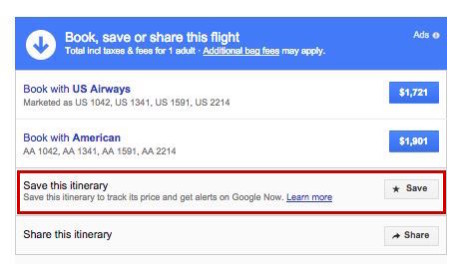
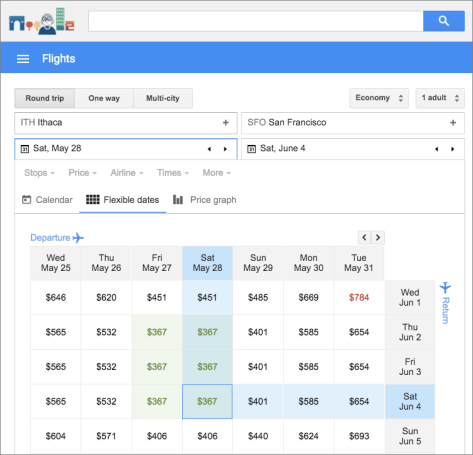
Google Flights is a travel booking service like Expedia, Kayak, etc but Google Flights has some cool features that make it convenient to use. In this video I will show you how to use Google Flights and discuss the bonus features Google Flights offers that make booking your travel more convenient with Google Flights.
Google Flights – Screenshot Samples
You can save your search for laterCool Feature – see alternate prices on different datesFlexible Dates vs Price View
Google Flights – What’s the bottom line?
Google Flights is my new go-to travel booking site. It has lots of great features, is easy to use, and offers me numerous ways to find the best price for my travel options – especially if my dates are flexible. Give Google Flights a try and let me know what you think.
It’s Fast, it’s flexible and it will supercharge your life – it’s The SMART Morning Routine!
Share this Pin-Friendly Image
Morning Routine – The Problem
Most AM Rituals require 2-4 hours to complete – most working men and women don’t have this kind of time in the morning. Do you?
Morning Routine – The Solution
The SMART Morning Routine can be completed in a little as 30 minutes and still provide the majority of benefits of longer rituals. How does that sound?
The Dilemma of The Working Class
Morning Routines are all the rage these days – Tim Ferris, Hal Elrod, Benjamin Hardy and many more profess their greatness. Quite frankly there are a LOT of great AM Rituals on the web and I’m thankful to these key opinion leaders who’ve shared their ideas.
Unfortunately what I noticed is that many of the most popular morning routines require a long time to complete – that’s a big problem for working men and women like me who still have 9–5 type jobs, families, and a host of demands on our time.
So what do you do when you still want to enjoy the benefits of a morning routine but don’t have the time?
Simple – create a “S-M-A-R-T” Morning Routine.
The SMART Morning Routine is an AM Ritual for the rest of us : one that fits our busy lives AND still provides us the key benefits of the Morning Routine exercise.
Don’t get me wrong, I would love to be in a position where I can spend 2–4 hours every morning turning myself into the Uber-Human of my dreams. Who wouldn’t want to meditate for 30–60 minutes, workout for an hour, spend another hour thinking about a bucket list item, spend another 1.5 hours being creative, and taking time to enjoy a nutritious breakfast? I’d love the luxury of being able to do all those things, and if I did, I’m 100% certain my life would improve.
But let’s face it, most of us ‘worker bees’ are not yet in a position to spend 4 hours each morning on our AM Rituals — we need routines which are both realistic and achievable for us. We need a Morning Routine that is S-M-A-R-T (specific/simple, measurable, achievable, realistic, and time-bound).
In this article I’ll share my exact plan for how to create your own SMART Morning Routine.
Morning Routine – The Video
The SMART Morning Routine – A Summary
The SMART Morning Routine involves starting the day with as little as 30 minutes of alone time designed to take your productivity to the next level and beyond.
It’s kind of like Abraham Lincoln’s advice about chopping down a tree (you remember that saying, right?)
“Give me six hours to chop down a tree and I’ll spend the first four sharpening my ax.”
In this case, the ax to be sharpened is YOU – and we’ll do it in a lot less time too!
By taking just a half hour so-so and doing these two big bucket items, the SMART Morning Routine leaves you a ‘complete’ person, eager to attack the day because you have already completed a few tasks that made you feel great AND you have a clear-eyed vision on what you want to do. Thus you can immediately move forward — already in a highly productive mindset. You feel like you are already a success and that confidence is half the battle to a winning the day.
The SMART Morning Routine
The SMART Morning Routine Put Me Back on Track
I had a big problem last year.
I let myself get uber-busy in with “busybody work” and for a time it took me off my life’s path. Thankfully I read a book called Tools of Titansby Tim Ferris and the wisdom there set me straight (Thanks, Tim!).
I was somebody who already had a morning routine, but over the years it got less and less productive because it lacked balance (it was essentially all work-focused and not ‘me’ focused). I used Tim’s ideas to reset my routine and eventually develop the “SMART AM Ritual.”
Now, by consistently completing the SMART Morning Routine, I’m supercharging my productivity (for work, play, and life) while also actively making myself a better person again.
The result: I’m back on track to My Life’s Journey.
The SMART Morning Routine
My S-M-A-R-T Morning Routine involves 6-7 steps and 30-60 minutes depending on how I feel each morning. It’s highly flexible so I encourage you to modify it to meet your own goals.
Here’s what I do…
1 — Control…Something
(Time Investment: 1–2 minutes)
One little thing — it doesn’t have to be perfect, and it doesn’t matter what it is — just get it done.
It could be making a bed, it could be organizing your desk, it could be anything.
It takes all of 1–2 minutes but…it’s one thing DONE.
This is especially helpful for Type-A personalities — when you can control what you can control, and get that 1 easy take completed first thing in the morning, it becomes a success (dare I say “S-M-A-R-T?”) building block that propels you forward into the day — and it makes you feel like “Yes, I can do this!”
And just like that Task #1 is done!
2 — Prime the Body
(Time Investment: 3–5 minutes)
First I do a round of Sun Salutations — this simple yoga routine takes just a few minutes and starts the process of connecting the body with the mind. BTW if you are new to Yoga and want some guidance, there is a great FREE app called “Track Yoga” — it will guide you through the Sun Salutations (with pointers on how to do it right). As a side note, Track Yoga is one of the recommended tools in my 2018 Essential Guide to Awesomeness.
Bonus Tip: Although I’d love to be able to go outside to do my Sun Salutations, that’s not realistic for me yet so I have a couple pics of sunrises hanging on my office wall — they are pics I took myself and they bring me joy by reminding me of special moments in my life. Here’s one…
Next, I do 10 reps of something — pushups, jumping jacks, air punches. Just 10. It’s not a workout, it’s just to get the body ready to go — kind of like priming an engine before you start it. You’ll be surprised how this gets the blood flowing in the right direction.
(OK, for you Seinfeld fans, I’d be remiss if I didn’t give a shout out to Kenny Bania who famously said on the show, “I start out with curls. That’s good for the bicep. I do 10 reps, 2 sets…” After all, everything relates back to Seinfeld, right? Apparently even the Morning Routine).
Bonus – CinnaButter Coffee is a great way to improve your Intermittent Fasting results too!
3 — Add some Caffeine
(Time Investment: 0)
One cup of black coffee (with cinnamon) does the trick for me. It allows me to keep my intermittent (read: 14–16 hour) fasting going while giving me the energy I need to move through the morning. (Why cinnamon, you wonder? Cinnamon is a natural blood sugar regulator).
This single cup of coffee gives me energy that lasts until I break my fast around 10 am (from about 6 pm the night before). Quick note — the time ‘cost’ is zero because you drink the coffee while doing the remaining tasks.
4 — Prime the Mind
(Time Investment: 10–15 minutes)
I’m all for wisdom. I try to be consciously open to acquiring wisdom from trusted sources (and that includes my own mind). Ever since reading Tony’s Awaken the Giant Within years ago, I’ve been a fan of journaling. I believe in Tony’s adage…
“If you life is worth living it’s worth recording.”
Unfortunately in recent years I let the ‘chores of life’ get in the way of my journaling — foolishly believing that “I didn’t have time to journal” (ah, big misconception — as the Buddhist would say, ‘if you don’t have time for journaling, then you need to journal right now”). Thankfully Tim’s Tools of Titans book reminded me of the benefits and now I’m back with a vengeance.
The Morning Journal is a KEY Part of the AM Ritual
My current version of AM Journal varies depending on the day.
First I write in my journal.
Sometimes I remind myself what am I grateful for (opportunities, something from yesterday, something beautiful I see, etc). Sometimes it’s thinking about specific positive-focused questions like…
“What would make today great?”
“What would set me up for success?”
Other times I write to just clear my mind of a problem or even complaina bit about something to release my frustration (it helps!). When I do this exercise I try to focus on ‘free form’ writing — don’t think, just write — let your mind release its contents (kind of like when Hooper and Chief opened up the guts of the shark on “Jaws”). You never know what you’ll find, but it’s amazing what’s in there. (And no, I haven’t found a license plate from LA yet).
Other times I don’t write in my journal, but instead, exercise what Tim calls the “Idea Muscle” — basically think of a question like…
“What Makes me Content?”
“What’s my Bucket List now?”
“How can I better focus my time to spend more of it on my life goals?”
“How can I spend money to save time?”
And then think of 10+ quick answers/ideas for these questions.
After the journal writing, I think of 3 Affirmations for the day.
These are one liners that I want to speak to myself that focus me for the day. Here are some from yesterday…
“I am vibrantly healthy in mind, body, and spirit.
I am happy — I smile a lot and am content with life.
I don’t need lots of money, possessions, or career accolades to be happy — I don’t need recognition from others to be happy — I am happy because I am alive, my family loves me, and the world is a beautiful place with lots of things to do.”
Finally, I incorporate Tim/Tony’s “3 To Thrive” productivity tool.
Click this pic to read more about the “Three to Thrive” concept
What is Three to Thrive?
Three to Thrive involves writing down 3 action items that are the most important things for me this day. 3 items that, if I accomplish these but nothing else, will still make the day a ‘win.’
It goes without saying that the sooner in the day you start working on your 3 items, the better chance you have to be successful — having this focus early on in the day, can set you up for success.
Once I have this done (and it sounds like a lot but only takes about 10–15 minutes) then I really start focusing on my breathing.
I began this a bit earlier with the sun salutations but now I take it to the next level — breathing deeply while repeating my affirmations (3+ times for each one) and then continuing the breathing exercise while I visualize the “3 to Thrive” actions as already completed.
Let’s spend a moment on this because it’s kind of important. It’s one thing to write down a few affirmations and goals for the day (and if you are not already doing this then just adding them to your morning routine can make a difference), but if you want to get to the next level, then…
Just as importantly as identifying these affirmations and goals, is taking a few minutes to visualize yourself ‘living’ them.
Here’s what I mean:
For the affirmations, use the breath to make the affirmations feel real inside you, as a part of you, nay as ALL of you. Be the affirmation.
For the goals, take some time to focus on each goal, understand why it’s important to you, and then use the breath to get your mind to focus on what it will feel like after you have achieved your goals for the day (“I’m Batman!”).
This psycho-cybernetics step is one of the keys to success because by putting yourself in the ‘already achieved’ mindset half the work is done — the first step on your journey has already been taken, the rest is just continuing the inertia in the same direction until you cross the finish line again (a finish line you’ve already crossed in your mind). You’ll be surprised how this little tweak in the process can rocket your accomplishments to success because of the consistency is adds to your productivity!
Click this pic to learn 5 “POWER-ful” tools to overcome life’s obstaclesClick this pic for 79 Affirmations you can use to change your life
5 — Prime the Soul
(Time Investment: 5–10 minutes)
While continuing the breathing routine, I’ll now complete the process of connecting the body and mind with the soul by ‘seeking wisdom’ from external sources. Here I like to read a chapter from Proverbs and one of The Gospels, and then a verse from The Tao Te Ching. All the while I am focusing on calm breathing.
It’s kind of like an active meditation experience. It’s the top of the pyramid of the ‘priming’ stage and makes me feel connected to (as Douglas Adams would say), Life, the Universe, and Everything.
6 — Pursue Your Passion NOW
(Time Investment: 10–30 minutes)
Like many of you I have a passion, one of my Legacy Life goals is writing.
It’s a passion that brings me contentment, excitement, and makes life fun.
What do I write about?
So far I’ve written a biblical ‘end of the world’ novel called The Last Temptation of John, a non-fiction book on how Minecraft teaches life lessons with my son Jax called Diary of a Minecraft Dad, and a non-fiction book about investing in options with my friend Michael Thomsett (the world’s #1 writer on options education) called The Options Alchemist.
I’m currently writing 2 more books. One is a book about the life lessons I’ve learned from my Yorkshire terrier Sassy (who passed away from the world much too soon) — her book is calledA Life Worth Living. The other is a series of fantasy novels (think JRR Tolkien meets The Bible meets conspiracy theories) called A Grim Future?
If you’d like to read any of them, I’d be happy to give you a complimentary copy — just use my contact form and let me know which one you’d like to read.
The point is that even though writing is very important to me, I kept allowing it to take second place to the typical day-to-day tasks that we worker bees face all too often.
As a result, my writing floundered.
Luckily I realized that if I add it to my morning routine, I can make sure I get a chance to do it every day. Here again, I’m borrowing wisdom from Tim Ferris..
Even if I only write 2 ‘crappy’ pages per day it’s still a win.
Why? because it gets my writing muscle exercised and gives me a chance to write a lot more too. Even if I only write for 10 minutes, I can still get 2 crappy pages in — and that’s a win because it means I’m still making progress, 2 pages at a time. Better yet, I’ve found that just getting started often leads me to continue to write beyond just 10 minutes — sometimes I write more during the AM Ritual, sometimes I write later in the day.
The point is that I get so excited by the process of writing every day that I stay ‘in the zone’ far more often than I ever did before. That’s an even bigger win!
What’s YOUR Passion?
Whatever it may be, make sure your SMART Morning Routine includes some time for it.
7 — 3 To Thrive Completed?
(Time Investment: 2–3 minutes)
This is actually a question I circle back to later in the day.
I like to come back to my AM Journal at the end of the day (or I sometimes do it as part of the AM Journal the following day) and evaluate how I did — just a quick sentence or 3 to follow-up on the day and see if I did what I set out to do or if I missed the mark (and why), so that I do better tomorrow.
This is the full circle technique that is the beginning of the Am Ritual for the next day of the journey.
And that, my friends, is the SMART Morning Routine?
What do you think?
Concerned about your time?
I can appreciate that. Here’s my advice.
First off, if you are keeping track the total time investment for the SMART Morning Routine is 31–63 minutes. Surely that is realistic and achievable for you, right?
If you do not currently have this time in your busy schedule, then I would challenge you to do what I did to make time: as cliche as it sounds, all you have to do is get up 30–60 minutes earlier.
I’ll be honest with you — for the first 47 years of my life, I hated getting up early. If I was up before 7 am I was grumpy. But, I decided to go all in on the Morning Ritual Tim suggested, and to give myself time, I started getting up at 630am.
What do you know, it worked for me. Now I am so in love with this routine (because I can SEE the results) that I usually get up at 6 am — and I usually can’t wait to get out of bed!
You’ll be surprised at how much your productivity for the entire day improves when you invest just 30–60 minutes in some morning “ME” time.
Following this process has led me to dramatic improvements in my productivity of important tasks (AKA the 3 to Thrive items), my writing (much more regular), reduction in stress, and giving me a reason to get up earlier to attack the day.
I’m grateful to have been exposed to this wisdom and I wanted to share it with you too in the hopes that it will make your life better too. Obviously, your routine won’t be the same as mine, but perhaps I’ve given you some ideas to add to your own ritual. If so, that’s a win in my book.
The SMART Morning Routine – It’s Not Rocket Science
No, but it’s simple, it’s quick, it’s incredibly easy to do AND if you follow this plan consistently, it can make a real difference for you — even if you are still a busy worker bee like me.
Summary: Save time (and money) with Google Keep’s Voice Transcription Capabilities and File Sharing
As always, my goal is to share practical wisdom you can use to make life easier. Here are a couple more tips…
Use Google Keep as your voice recorder and save time because the file can be instantly exported to a Doc/Word file with no file conversion time (ah, that’s huge).
Additionally, you can capture all these voice memos to your heart’s content and they’ll be instantly available for follow-up on all your devices.
My Dilemma: I Found Myself in Need of a Voice Recorder.
Like you, I am always on the lookout for ways to increase my productivity. I have a lot of drive time at work (often four hours per day or more) and to make the most of it I listen to lots of podcasts.
We probably listen to many of the same ones (Ferris, Robbins, Goins, etc) and that’s all well and fine, but what I found is that just passively listening to these recordings was doing myself a great disservice — there’s a lot of wisdom being shared by these thought leaders, yet I wasn’t retaining enough of it so I couldn’t take action on it later and actually benefit from the knowledge.
Taking handwritten notes while driving obviously wasn’t an option, so I looked into buying a voice recorder that would allow me to capture tidbits and ideas I could follow-up on later. Unfortunately, I didn’t like what I found…
The Problem with Voice Recorders
Minor: They are expensive: $50–100 or more depending on the features you want.
Minor: You can’t see what you recorded during the process.
Big: You take extra time to download/convert the voice file to a word/doc file.
BIG: Voice recording is all they do.
Enter Google Keep
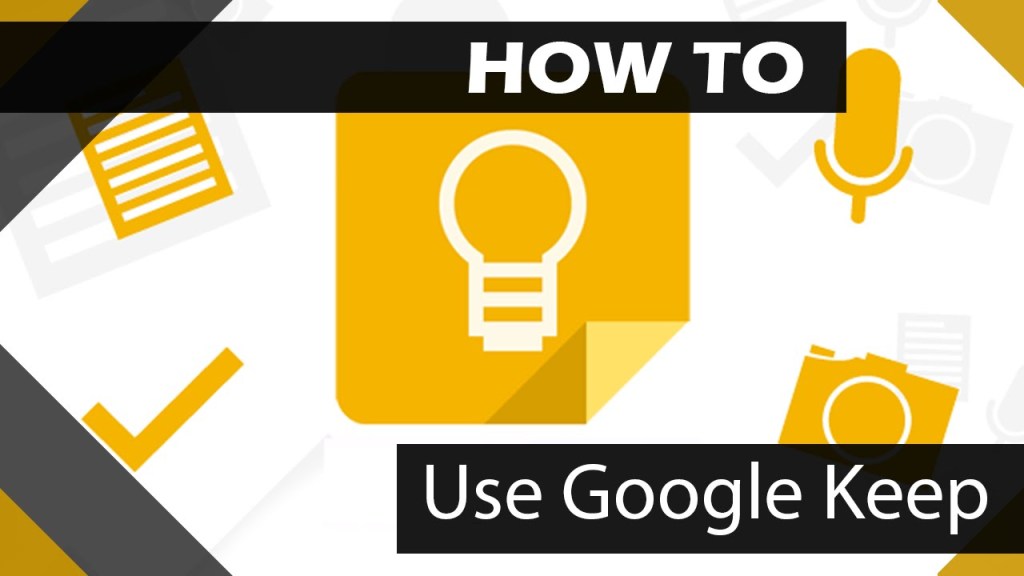
Just in case you are not familiar with Google Keep…
It’s marketed as a note taking app.
It’s not new (it was launched 2013), but not a lot of people I know use it. Sadly, Google Keep is often overlooked in favor of other more ‘robust’ apps like Wunderlist, Evernote, and others. While those other task tools may be more powerful than Google Keep, I found that I didn’t need all their extra features, didn’t want to pay for them, and didn’t want to invest the time necessary to learn them. I just wanted something that works and “G-Keep” hit the mark for me.
What’s great about Google Keep for new users is that it has an easy to understand, minimalist interface, and that means pretty much a zero learning curve.
Although it’s considered a minimalist app, G-Keep is a little beast that offers a set of powerful tools that make it a super effective for reminding you to get things done. You can use Keep to create lists, store pics/files/more, collaborate with others on action items, and much more.
Here’s what I was already doing with Google Keep
For years I’ve been using Keep to create a series of ‘to do’ lists (shocking, I know). It’s very effective for this purpose and what’s great is that my lists are automatically shared between all my mobile and home devices. As we speak I currently have 7 widgets on my phone and 10 active lists. These include work reminders, home projects, shopping lists, voice recording notes, my 3 to Thrive lists from my SMART Morning Routine, reminders on wisdom tips I want to share with my sons, blogging ideas, and more.
I use the G-Keep Android widget to SHOW my to do lists on various home pages of my phone so that I have them ‘always up’ and thus always on my mind. This lets me SEE the tasks so I can be reminded to DO them.
I use the checkbox feature on G-Keep to turn my to-do lists into action items so they are easy to remove from view once complete. You can also use G-Keep in paragraph form for standard notes — for example when you are doing the voice recording.
As shown in the pic, you can use G-Keep similar to Evernote or Dropbox and store files and share them with others. I work in the medical field and there’s a lot of complex terms, etc to remember…
But what about the Voice Recording?
This is something I only recently discovered with G-Keep as a capability. Now obviously it’s not rocket science and maybe you already knew this, but honestly it was new to me (wait, maybe I shouldn’t I admit that).
Specifically, when I found myself in need of a voice recorder, rather than buy yet another device, I tried using G-Keep as my de facto voice recorder in lieu of getting a dedicated one — it exceeded my expectations for this purpose!
G-Keep is an effective speech-to-text voice recorder.
Suddenly all that podcast wisdom had a place where I could capture it…and easily follow-up on it later. My 4+ hours of drive time was no longer a chore — dare I say I began looking forward to it? (Well, let’s not go that far).
G-Keep is easy to use as a voice recorder. If you know how to type a text, then you already know how to take a note in G-Keep. Additionally, if you know how to push the microphone button on your text keyboard, then you already know how to take a voice-to-text note in G-Keep. Like I said, there’s no learning curve!
Also G-Keep is free — you don’t have to spend money buying a dedicated voice recorder. (Send your donations to The Human Fund please — you’re welcome, George).
Key Features of Google Keep for Speech-to-Text Usage
You can use G-Keep in hands-free mode while driving. (Thanks to its integration with the “OK, Google” Assistant). Just say “OK, Google…Open Google Keep.” Then speak your note.
Using G-Keep as your voice recorder means you don’t need to carry around yet another device.
G-Keep will save you tons of time because it automatically transfers all your speech-to-text notes to your other devices. As soon as the note goes in G-Keep it’s available on all your connected devices (phones, tablets, Chromebooks, Mac, etc).
G-Keep can save you even more time because all your notes can be instantly converted to Google Docs/Word files. You don’t have to do any extra steps (for example if you used a traditional voice recorder, you’d have to possibly convert the file format, download it yourself, etc). With Keep it’s already done. Print your voice notes out, send them to someone else, etc. It’s so easy.
Was this quick tip helpful?
Hey, I realize we’re not splitting the atom here, but I’m hoping that my tips do make a difference for you — even if it saves you 15–20 minutes, that’s more time to spend with your family, right?
If this tip helped you I’d invite you to take action by doing one or more of the following:
Share this page with a friend so they can benefit too
Share your wisdom – drop me a line below so I can learn from you.
Follow my blogand let’s stay connected – we can help each other reach new heights.
Summary: in this article, I will describe an identity theft scam that happened to me and tell you how you can guard against it. The bad news is that scam is simple for thieves to execute and could be very damaging to your credit, but the good news is that it’s also fairly easy for you to stop – if you just pay attention to a few simple things.
The story:
Today I discovered I was the victim of identity theft – well actually it was my wife who discovered it so big kudos to her (Thanks, Anne!). Identity theft is nothing new – odds are it’s already happened to you at least once and will probably happen again too. What was unique about this situation was both the scam itself (quite nefarious and potentially very effective) and the unexpected manner we discovered it (part lucky, part wise).
What’s the scam?
One of the main ways identity thieves make money is to fill out credit card applications in our names, get the cards, and then max them out – sticking us with the bill. Although it’s worked for years, the ‘problem’ (at least from the thieves’ POV) with this approach is that they have to get the credit card banks to send the cards to an address that is not ours – AKA they have to convince the credit card bank that we’ve moved or else want the card sent to a different address than the one on our credit report file. Over time, some (but not all) credit card companies have gotten a bit wise to this scam and so they’ve taken various precautions to make it a little harder for identity theft scams of this nature to succeed.
So what’s an identity theft thief to do when they wanna get a credit card in your name and go on a shopping spree? The answer may surprise you — instead of trying to get the credit cards sent to an address different than your primary address on the credit report, the thief will request the credit card be sent to your home address so it looks legit.This increases the odds of credit card approval dramatically – after all, (assuming you qualify for the card), why would the credit card company not approve you in this situation?
So how does the thief get the card if it’s sent to your real home address?
Here’s the beauty of this scam (again from the thief’s POV) — once they know the card is confirmed, they call the issuing bank and find out WHEN it’s being mailed out, then…
the identify thief will put a hold on your mail at the post office (anyone can do it online – it’s simple), then before YOU realize you haven’t received any mail, they waltz into the post office, pick up your mail, get the cards, and go shop till their heart’s content.
Boom – successful scam!
Meanwhile, after a few days of not getting any mail, you finally go to the post office and discover there was a hold on your mail that you didn’t authorize, but since you have no reason to suspect anything nefarious going on (because you don’t yet know about those credit cards which the thieves now possess), you chalk it up to a simple online mixup, remove the hold, and go back to life as normal. Sure you missed some mail, but unless you were expecting some important letter or package, you’ll likely not care about a few items of missing junk mail, right? As a result, you’ll move forward never knowing there was an identity theft scam that just happened to you — until you start getting those credit card bills!
“What do you mean I owe $3000 to Wells Fargo? $10,000 to Citi? $12,000 to some bank I never heard of? What gives?!”
Share YOUR story.
If something like this happened to you, by all means, please share your story/tips so that our community can benefit from your knowledge too!
How did we discover this scam?
On the one hand we got lucky, on the other we were also on high alert. Here’s what happened.
A couple weeks ago I got some emails from Credit Karma that looked like this…
There were actually THREE emails related to three different banks! I logged on to Credit Karma, looked into the matter and realized I didn’t make any of these requests. Taking their advice I ordered a copy of my free annual credit report to check it — there I discovered that (thankfully) there didn’t appear to be any new credit cards that I didn’t recognize, but there were 3 ‘hard inquiries’ – what I didn’t realize at the time was that these hard inquiries likely meant that someone (who wasn’t me) was applying for credit in my name (since in most cases a hard inquiry is only generated when you request a potential creditor to review your file for a credit card or loan). That should have set off a red flag that caused me to take action immediately. It didn’t.
I did take Credit Karma’s advice and submit a dispute to the credit agency associated with the report (in this case Equifax) to get the items removed from my credit report. But at that point, I (foolishly) thought I was done – after all my credit score was still ‘Excellent’ and like I said I didn’t see any new credit cards or loans on my credit report that I didn’t recognize.
Little did I know there was more to the story…
Meanwhile, last week my wife was waiting for (yet another) package from Amazon. As Amazon Prime members we enjoy lots of benefits – one of these is the free 2-day shipping on most of the items we purchased through Amazon. Since we purchase 100’s of things from Amazon, we’re getting packages from them almost every day. Anne was notified by Amazon that a package was on the way but when they attempted to deliver it last Friday there was a problem. Now it just so happened that this package was sent via USPS instead of the normal UPS route and when Anne tried to reschedule the delivery with USPS online she was unable to do so (since we didn’t yet know that the identity theft thieves had put our mail on hold earlier that day). Anne figured she’d get her package in the normal USPS Saturday mail – but again no luck. So (thankfully) this week (on Monday morning) Anne decided to go to the post office because she really wanted that package — BTW here’s what she wanted so badly in that package… (#AmazonAD)
So when she visited the Post Office on Monday morning Anne discovered the mail hold. Although it was a minor annoyance, as of yet, we still didn’t realize there was an identity theft scam occurring. So Anne stopped the hold, retrieved her package and our ‘held’ mail from last Fri/Sat, and came home.
Later that day I opened the mail – that’s when I discovered 3 letters from Wells Fargo (1 of which included a new credit card that “I” ordered) and another from Citi explaining that ‘my application for their credit card was incomplete’ and inviting me to log on or call to complete it. When Anne told me about the hold and I saw this mail I immediately remembered the Credit Karma warnings from last week.
That’s when we (finally) realized we’d been scammed!
Had it not been for Anne’s Amazon package and her desire to get it vs keep waiting for the post office to deliver, it’s very likely that this scam would have worked. If she would have even waited 1 extra day to go to the post office, or even had she delayed till Monday afternoon vs the morning, the identity theft thieves could very well have gotten to the post office before her and picked up our mail (and gotten their hands on that credit card).
Here are a few specific action items you can do to protect your credit.
Use a credit monitoring service like Credit Karma (Anne and I use this), Lifelock (my dad uses this), or another firm you trust – your bank might even have one free to use.
Pay attention when you get alerts like the one I got about the hard inquiries.
Take action – upon hindsight, I should have done more than just file the dispute about the hard inquiries on my report. Since they were hard inquiries I should have realized that these signified that someone was actively applying for credit in my name – I should have reported those as ‘fraud’ on my credit reports (instead of the “I don’t recognize these” option) AND I should have contacted those banks to advise them to cancel those cards because I didn’t order them.
Keep yourself aware of what’s happening with scams. For example, here’s a recent article about Ransomware Facts and Trends.
(Anne’s tip) Order more stuff from Amazon so you have a reason to pay attention to your mail and because it’s just fun to shop on Amazon! Heck I think I’ll do that again right now with this link…but don’t worry I won’t use that scam credit card!
Was this helpful?
If so, take a quick sec and…
Share this page with a friend so they can benefit too
Share your wisdom – did you have a similar experience or great photo to share? Drop me a line below and tell us about it.
Follow my blog and let’s stay connected – we can help each other reach new heights.
The Problem: You successfully connect to public wifi, but can’t get online. The Solution: Captive.Apple.com
My Dilemma:
I can’t tell you how many times I’ve connected to a public wifi, thinking I’d be able to do some work while I’m out in the field only to be stymied by the dreaded ‘connected but no internet’ problem. For years I just gave up, until recently I heard about a simple tip that changed everything. I’d like to share that tip with you today.
Screenshots:
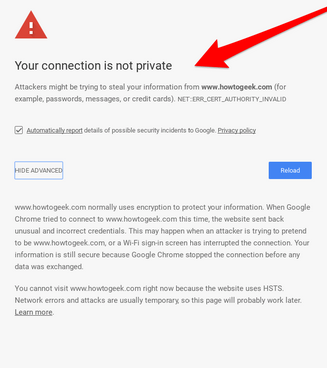
Tell me if any of these look familiar to you?
Or how about this one?
It’s frustrating, right? You can see you are connected but still you can’t use the internet, so what gives?
The problem:
Some entity (example Google) is blocking the LOGIN PORTAL that you need to access in order to accept the terms of the company (example Starbucks) that is offering you the opportunity to use their public internet. For some inexplicable reason, the ‘blocking’ involves ‘hiding’ the login portal as a popup so you can’t see it.
If you can’t get to the login portal to accept their terms then you can’t use the internet.
End of story.
The solution:
Simply go to your browser and type in ‘captive.apple.com’
This will bring up the login portal for the company offering the internet.
It will look something like this:
Once you agree, then you’ll be able to get on the internet.
Why does this work?
I have no idea. I am not a tech guru. I just know that it does work and that’s the bottom line. In fact, I have yet to be in a situation where it did not work for me.
I didn’t even know what the heck a ‘captive’ network was until I heard about this tip. A bit of research revealed more about it. Captive networks are “public networks you can only access if you are subscribed to them (with or without paying). [The captive.apple.com] feature has the main purpose of adding an extra level of protection to users who don’t always use their mobile data connection when in public.” (Source: http://vkrepair.com/captive-apple-networks/)
So why doesn’t everybody know about this?
For all I know they do. Perhaps I am the only one who doesn’t know. But just in case you are in my shoes I wanted to let YOU know too.
Try it out.
Give this a shot and let me know if it works for you too.
Was this life lesson helpful?
If you enjoyed this wisdom I’d invite you to take action by doing one or more of the following:
Share this page with a friend so they can benefit too
Share your wisdom – drop me a line below so I can learn from you.
Follow my blogand let’s stay connected – we can help each other reach new heights.
Let’s talk again soon!
Practical Wisdom YOU can use today to make a difference in YOUR Life






















 As always, my goal is to share practical wisdom you can use to make life easier. Here are a couple more tips…
 Just in case you are not familiar with Google Keep…




 Share YOUR story.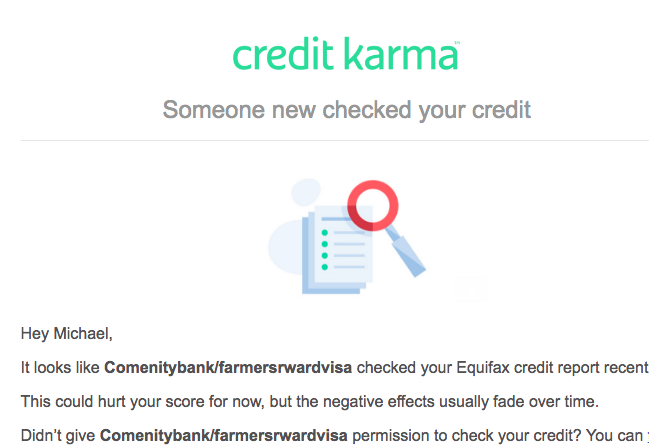






 That Helpful Dad