Tag Archives: planning

How to make your Morning Routine Successful

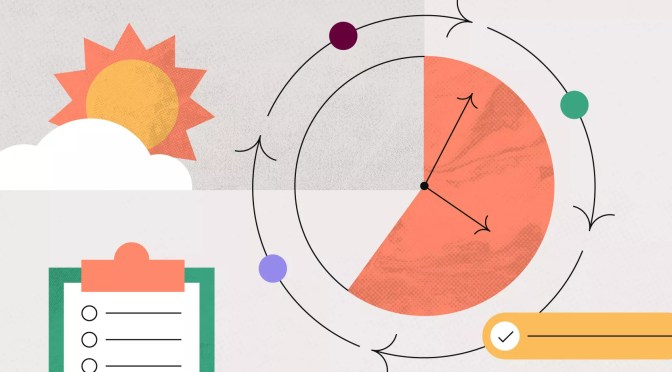
I’ve written multiple times about how creating a successful morning routine can significantly impact your productivity, mood, and overall well-being. The key to a successful morning is a combination of thoughtful planning, discipline, and positive habits that set the tone for the rest of your day. Here’s a comprehensive guide with specific ideas and examples to help you craft a morning routine that leads to a successful day.

1. The Importance of a Morning Routine

A well-structured morning routine helps you start your day on the right foot, reduces stress, and increases productivity. By establishing a set of habits that you follow every morning, you can create a sense of stability and control over your day. Moreover, a morning routine can enhance your mental and physical health, setting a positive tone that carries throughout the day.

2. The Night Before: Preparation is Key

A successful morning starts the night before. Preparing for the next day can significantly reduce morning chaos and decision fatigue.

  • Plan Your Day: Spend a few minutes each evening reviewing your schedule for the next day. Make a to-do list prioritizing the most important tasks. This helps you wake up with a clear sense of purpose.
  • Set Out Clothes: Choose and lay out your outfit for the next day. This simple step can save you time and reduce stress in the morning.
  • Prepare Your Breakfast: If you have a busy schedule, consider preparing breakfast the night before. Overnight oats or pre-made smoothies are excellent options.
  • Limit Screen Time: Avoid screens at least an hour before bed to ensure a good night’s sleep. The blue light from devices can interfere with your sleep quality.

3. Wake Up Early

Waking up early gives you a head start. It allows you to have some quiet time before the demands of the day begin. Aim to wake up at least an hour before you need to start your day.

  • Consistent Wake-Up Time: Try to wake up at the same time every day, even on weekends. This helps regulate your body’s internal clock.
  • Gradual Wake-Up: Consider using a sunrise alarm clock that gradually increases light, simulating a natural sunrise to wake you up gently.

4. Hydrate First Thing

Rehydrate your body after hours of sleep. Drinking a glass of water in the morning kickstarts your metabolism and helps your body wake up.

  • Add Lemon: Did you know? Adding a slice of lemon to your water can enhance flavor and provide a boost of vitamin C, aiding your immune system.
  • Keep Water by Your Bed: Place a glass of water on your nightstand so you can hydrate immediately upon waking up.

5. Practice Mindfulness or Meditation

Starting your day with mindfulness can reduce stress and improve focus. Meditation, deep breathing exercises, or a few minutes of quiet reflection can help you set a positive tone for the day.

  • Guided Meditation Apps: Apps like Headspace or Calm offer guided meditations tailored to different needs and time frames.
  • Deep Breathing Exercises: Practice deep breathing exercises for a few minutes. Inhale deeply through your nose, hold for a few seconds, and exhale slowly through your mouth.

6. Move Your Body

Physical activity in the morning can boost your energy levels and mood. It doesn’t have to be a full workout; even gentle stretching or a short walk can be beneficial.

  • Morning Yoga: Yoga can be a gentle way to wake up your body and mind. There are many online resources and apps with routines tailored for the morning. Track Yoga app is a great tool here.
  • Short Workouts: If time allows, a 20-30 minute workout can significantly boost your energy levels. Consider activities like jogging, cycling, or a quick HIIT session.
  • Stretching Routine: A 5-10 minute stretching routine can improve flexibility and reduce tension.

7. Healthy Breakfast

A nutritious breakfast fuels your body and brain. Aim for a balanced meal with protein, healthy fats, and whole grains.

  • Quick and Nutritious Options:
  • Greek yogurt with nuts and berries.
  • Whole grain toast with avocado and a poached egg.
  • A smoothie with spinach, banana, almond milk, and protein powder.
  • Overnight Preparations: Prepare overnight oats or chia pudding the night before for a quick grab-and-go option.
  • For those who like to practice Intermittent Fasting like myself, consider my Cinnabutter Coffee tip.

8. Personal Development

Allocate time for personal growth. This could involve reading, journaling, or learning something new.

  • Reading: Spend 10-20 minutes reading a book that inspires or educates you.
  • Journaling: Reflect on your goals, express gratitude, or simply jot down your thoughts. Journaling can clarify your mind and set a positive intention for the day.
    • My “AM Journals” are kept in an online Google Doc and I usually end up with 200+ pages a year of journal notes – when I look back and review it provides so many insights that I can actively use to improve my life.
  • Skill Development: Use this time to learn something new, like practicing a language on Duolingo or taking a short online course.

9. Plan and Review Your Day

Take a few minutes to review your day’s schedule and prioritize tasks. This helps you focus on what’s important and avoid feeling overwhelmed.

  • Top 3 Priorities: Identify your top three priorities for the day and focus on completing them first. I like using Tim Ferriss’ “Three to Thrive” method.
  • Time Blocking: Allocate specific time slots for different tasks to ensure you stay on track.

10. Positive Affirmations

Starting your day with positive affirmations can boost your confidence and mindset. Affirmations are simple, positive statements that you repeat to yourself.

  • Examples of Affirmations:
  • “I am capable and strong.”
  • “Today is going to be a productive day.”
  • “I am grateful for the opportunities this day brings.”
  • Creating Your Own: Tailor affirmations to your personal goals and needs.
  • As I’ve written about before, affirmations have changed my life many times over.

11. Limit Distractions

Minimize distractions to maintain your morning routine’s effectiveness. This can include reducing screen time and setting boundaries.

  • No Phone Zone: Avoid checking your phone immediately upon waking up. Emails and social media can wait until you’ve completed your morning routine.
  • Focus on the Present: Concentrate on each activity in your routine rather than multitasking. Mindfulness in your morning tasks can set a calm tone for the day.

12. Consistency and Flexibility

Consistency is crucial for establishing a successful morning routine. However, it’s also important to be flexible and adapt when necessary.

  • Stick to the Plan: Try to follow your routine every day, even on weekends. This helps reinforce the habits you’re building.
  • Adapt When Needed: Life is unpredictable, and sometimes you’ll need to adjust your routine. Don’t be too rigid; adapt and move forward.

Example Morning Routine

Here’s an example of a morning routine incorporating the elements discussed:

  1. 6:00 AM – Wake Up: Get out of bed and drink a glass of water with lemon.
  2. 6:05 AM – Mindfulness: Spend 10 minutes meditating using a guided app.
  3. 6:15 AM – Exercise: Do a 20-minute yoga session or a quick workout.
  4. 6:35 AM – Shower and Get Ready: Refresh and dress for the day.
  5. 6:50 AM – Breakfast: Enjoy a healthy meal, such as Greek yogurt with fruits and nuts.
  6. 7:10 AM – Personal Development: Read a book or journal for 15 minutes.
  7. 7:25 AM – Plan Your Day: Review your schedule and set your top three priorities.
  8. 7:35 AM – Positive Affirmations: Spend a few minutes reciting affirmations.
  9. 7:40 AM – Start Your Day: Begin your first task of the day with focus and clarity.

Tips for Success

  • Start Small: If creating a full morning routine feels overwhelming, start with one or two habits and gradually add more.
  • Be Patient: Building a new routine takes time. Be patient with yourself and allow for adjustments as needed.
  • Reflect and Adjust: Regularly reflect on what’s working and what isn’t. Adjust your routine to better fit your needs and lifestyle.

Give the Morning Routine a try today.

Crafting a successful morning routine involves thoughtful planning, consistent practice, and a willingness to adapt. By incorporating hydration, mindfulness, physical activity, a healthy breakfast, personal development, and planning into your morning, you set a positive tone for the rest of your day. Remember, the key to success is consistency, but also being flexible enough to adapt when life gets in the way. Start small, be patient, and enjoy the benefits of a well-structured morning routine.

What to read next?

Essential Guide to Pre-Call Planning for Sales – The Pharmaceutical Sales Edition

Are you involved in sales – either as a sales agent, rep, trainer, or manager? If so, this article can help you and your team — I’ll explain the importance of pre-call planning as relates to sales in general, talk about the method I use called PPAF Pre-Call Planning, share my tips on how to use the PPAF method to do pre-call planning quickly and effectively, and also give you access to a free printable so you can use the PPAF method yourself.

Pre-Call Planning Table of Contents

  1. Why listen to me?
  2. What is Pre-Call Planning?
  3. Benefits of Pre-Call Planning
  4. Pre-Call Planning Best Practices – The Video
  5. The PPAF Method of Pre-Call Planning
  6. PPAF – The Purpose
  7. PPAF – The Proof
  8. PPAF – The Action
  9. PPAF – The Close
  10. PPAF – Notes
  11. PPAF – Download the Handout
  12. Links to Learn More

Editor’s Notes:

  • You can access these tips in written form in this article or watch it via video below.
  • In this article, I’ll talk about pre-call planning in the pharmaceutical sales industry, but this strategy is adaptable to almost any customer-facing sales interaction that has a long-term sales cycle.
  • I don’t know everything and would welcome your feedback. I invite YOU to share your tips and feedback about pre-call planning too – I’m always looking for new ideas to improve.

I. Why Listen to Me?

First off let me say that I don’t tout myself as a sales-guru and I haven’t written any best-selling books about sales (at least not yet), instead I prefer the path of humility. All that being said, I do live and breathe sales in the real-world every day and have done so for the last 25 years as a front-line (AKA customer-interacting) salesperson. I’m not taking credit for inventing ‘pre-call’ planning, nor am I saying the PPAF method is best. I’m just here to share with you some strategies that I’ve learned during my long sales career that have made a measurable difference for me.

I use the PPAF method every day. It works. And I consider the PPAF method one of the ‘pillars’ of my sales success.

I’ve worked in a number of industries during my career (financial services, pharmaceutical sales, retail, medical device sales, etc) and regardless of the industry I’ve been blessed to consistently beat my sales quotas year after year after year — I’m currently on a 8-year run of 100%+ quota achievement with revenue and sales volume growth each year and I can tell you that the PPAF method is a big part of that success.

Did you know?

Pretty much every sales rep I’ve ever trained or manager I’ve worked with over the years has complimented me on the use of the PPAF method as a best practice and many of them have adopted it for themselves and their teams.

I’m sharing it with the PPAF method with you today because I like to give people practical solutions that help them succeed. If you enjoy this tip, be sure to check out the rest of my website for more helpful wisdom like this. 

II. What is “Pre-Call” Planning?

The concept of ‘pre-call planning’ is not new and there are a number of excellent articles that discuss pre-call planning in addition to my thoughts on the topic – I’ll list some in the references below.

For the purposes of our discussion, we’ll define pre-call planning as follows…

If the ‘call’ itself is the customer interaction, then the ‘pre-call’ is the PREPARATION BEFORE that interaction.

III. Benefits of Pre-Call Planning

Why spend time in ‘pre-call’ planning?

Because there are numerous benefits to consistently conducting a pre-call plan.

I like to think of the pre-call plan as an ‘investment’ that has a high ROI.

Consider the following benefits you will experience as a result of pre-call planning…

  1. Time is precious – we live in a fast-paced world where nobody seems to have time anymore. Pre-call planning allows you to make better use of the limited time you have with your customers. It also shows them that you respect their time and yours – by coming in with a plan your professionalism will be self-evident and this will immediately add to your credibility.
  2. Focus on your goals – surely you have a goal of what you’d like to accomplish during your customer call, right? The Pre-call plan will help you keep that goal in sight – not just for yourself, but for your customer too. That focus will give you a better chance to achieve the goal.
  3. Proper Preparation Leads to Better Results – it may be a cliche, but it’s true. Pre-call planning need not make you a robot incapable of being flexible during the call if need be, but it will make you better prepared. You’ll have your proof sources ready to help the customer be more confident in the action you are recommending, you’ll anticipate customer objections and be ready to work through them, you’ll know where you want to take the call, etc. All that preparation, combined with your focus on a specific goal, will increase your goal achievement.
  4. Consistency of Method: if you find a strategy that works, you want to repeat it, right? That’s the point of pre-call planning – it’s a proven strategy that works and if you use it consistently over time, your results will improve too.
  5. Bring Value – There’s a saying in the pharmaceutical industry “Be Brief, Be Brilliant, and Be Gone” – your customers don’t have time to spend all day with you, they are busy, but if they agree to meet with you then their doing so with the expectation that you will provide them something of value they can use to make their jobs easier. Using a pre-call plan allows you to provide that value to them in a streamlined manner and earns you their respect in the long run. This will result in the customer wanting to see you because they’ll have confidence you can help them.
  6. More Sales – the bottom line in sales is more sales, right? Pre-call planning gives you the roadmap to make every customer interaction have a higher chance of resulting in a sales because the prize is always in sight AND both you and the customer know the purpose of the call. The result is a higher close rate.

IV. Pre-Call Planning Best Practices – The Video

Now that we know WHY we want to pre-call plan, let’s talk about the HOW. If you are a visual learner, check out this video on Pre-Call Planning, otherwise, keep reading to see the text version of the PPAF Method. 

V. The PPAF Method of Pre-Call Planning

I mentioned above that I believe in practical solutions. During my long sales career, I’ve been exposed to tons of various pre-call planning methods. In the case of pre-call planning, there are a lot of ways to skin the cat. The PPAF Method is simply my boiled-down-to-the-basics, practical solution version of pre-call planning.

The PPAF Method is not rocket science and when you read it you’ll probably say “duh, that’s obvious.” While that may be true, the fact is that that 90% of salespeople I’ve met during my tenure do not do any pre-call planning, and/or don’t have a consistent method they follow, and/or don’t use a method focused on a specific sales goal. As a result, 90% of salespeople struggle to make their sales quotas consistently. This lack of consistency has long been lamented to me by countless managers of said reps who’ve repeatedly asked me to share the PPAF method as a best-practice.

Without further ado then, here is the PPAF Method of Pre-Call Planning…

Purpose, Proof, Action, Follow-up.

Ah, that’s it?

Yup, pretty much.

As I said, PPAF is simple. It’s easy to use. And it works.

Here’s a visual cue-card I use daily to plan for each call – you can print this or scroll down to download a free copy for yourself. 


Now that we know what PPAF is, let’s unpack this a bit more to really understand the components so you can be the most effective with this method.

If you haven’t already, I recommend you watch the video above so you can see me discuss this live and get all my tips. Don’t worry. I’ll wait…

VI. PPAF – the Purpose

PURPOSE – this is your reason for the visit.

I recommend you state it upfront as one of the first things you say to the customer after you exchange pleasantries, etc.

For example, “Hey Doc, the reason I’m here today is to discuss how you can use Product X to help Patient Y with Condition Z, is this something you’re interested in discussing?”

Why take time explaining your purpose?

The Purpose is a critical step because not only does it cut to the chase immediately but it helps both you AND the customer focus on a clear goal for this interaction.

In this case, we’re asking the doctor to use Product X for a specific patient profile (i.e. one with condition Z). This focus lets everybody know the ‘roadmap’ for the call that is occurring.

Mike’s Pro Tip:

To take this to the next level, I like to gain agreement on the purpose PRIOR to the actual visit – I do this during the ‘follow-up’ stage of the previous call and/or by sending an email to the customer that defines the purpose of my upcoming visit prior to the meeting. This allows you to say something like “as we agreed on the last call…” or “like I said in my email…”

Note the question about ‘Are you interested in…?’

This is another critical part. Not only does it get you into the closing mindset but it also gets the customer into the ‘yes’ mindset — assuming they say ‘yes’ to your initial proposal.

But what if they say ‘NO’ to your purpose?

Great question.

Over the years I’ve found that many sales reps are so afraid of getting a ‘no’ that they fear to ask even the most basic question such as this one.

However you NEED to know the answer to this question before you can move forward.

If the customer says they are not interested in your discussion, then this is a signal you have more work to do before you can proceed down the sales path related to this goal (i.e. getting the doctor to prescribe Product X for this patient profile).

If you don’t get buy-in on the purpose of your visit and instead proceed forward with the sales call, you’ll never know that your customer isn’t ready to ‘buy’ your recommendation.

As a result, you’ll waste their time and yours AND worse yet, you’ll be putting a dent in your credibility with this customer. All that can be avoided by asking the ‘are you interested’ question.

Now assuming they do say ‘yes,’ and assuming your proposal is reasonable and backed by credible evidence, then asking the ‘are you interested’ question is a form of trial closing that helps the customer put themselves in the buying mindset.

Why does this matter?

If you gain agreement on your Purpose, then when you get to the Action close later, your customer will be more inclined to agree with your recommendation.

It’s pure gold and it works.

VII. PPAF – The Proof

PROOF – this is the ‘evidence’ you have to support your recommendation.

In our pharmaceutical example, it could be a clinical reprint that shows the efficacy of using Product X for a patient with condition Z, or maybe it’s your detail piece or another visual aid on your mobile device.

Whatever the documentation is, it must be relevant and compelling.

Most importantly you have to be prepared to present the evidence succinctly and clearly show WHY/HOW it’s relevant – remember that “Be Brief, Be Brilliant, Be Gone” part above – this is where the rubber meets the road for that mindset.

For example, “Did you see the article by Bob Evans in the March issue of the New England Journal of Medicine? Dr. Evans conducted a trial about patients with Condition Z and he found that patients who used Product X were able to reduce Condition Z by 35%. What’s your opinion on this research?”

Obviously, it goes without saying that this is a watered-down example. In the pharmaceutical world there are additional best practices for presenting clinicals (I prefer the SOAP method) and it’s important to present an unbiased review of the paper which includes a discussion on safety as well. But hopefully you get the idea…

In the example, the Proof I’m using is clearly related to the Purpose, I’m verbalizing that and confirming the customer agrees, and I’m setting up my Action close to follow — that’s the key takeaway here.

Note: in the example, “Bob Evans” is a respected ‘Key Opinion Leader” in the same field of practice as our customer – that’s important because if we know our customer thinks highly of Dr. Evans as a thought leader, then we are able to effectively use our Proof to validate the action we’re about to recommend to our customer. It becomes a case of “Don’t take my word for it, remember, this is what Dr. Evans does for his patients too…”

The Proof Step is probably the part that most sales reps struggle with and I did early on in my sales career too.

With lots of responsibilities it’s tempting to not put in the time to really know your proof sources – unfortunately, that leads to problems when you want to use them with customers because you end up struggling through this critical step in the PPAF process (or worse yet you try to skip this step altogether). Please don’t do that.

When you fail to provide Proof and/or you are unable to explain it confidently (and concisely) you’ll lose credibility with your customer – and you will both FEEL it.

I know. I’ve been there. It’s no fun. It’s a sales killer.

Instead, do the preparation you need to know your proof source — it’s an investment that will pay off 10-fold.

Your Objection: But I’m not a doctor/expert?

I hear you. I get it. I’m not a doctor or expert either. But I still provide Proof and you should too. 

I’m not saying you have to be an expert in every aspect of the customer’s business (for example, if you are a pharmaceutical rep presenting to doctors, nobody expects you to be the doctor and no every disease he treats), but it is reasonable for you to be an expert about your product and it is reasonable for you to be confident with your proof source such that you can answer questions about it (or know where/how to get answers if they are beyond your expertise).

Mike’s Pro Tip:

The Proof step should involve a DIALOGUE, not just a monologue from you. During the Proof presentation, it’s important to use check-in questions to ensure your customer is following along and understanding the proof.

 Examples include “What do you think about how this research was set up?” or “Are the patients in this trial similar to yours? Why/Why not?” or “What are you doing similar/different to Dr. Evans?” or “What kind of results are you getting when you use Product X with Patients who have Condition Z?”

The Q&A during the Proof Step is critical because it will uncover any hidden objections you need to work through prior to presenting your recommendation.

Now YOU teach me – how do YOU handle the ‘Proof’ stage? Drop a comment below so I can learn from you too.

VIII. PPAF – The Action

ACTION – this is your close.

Your close is the action you want the customer to take and the more specific you can be about it, the easier it will be for your customer to understand, the more reasonable you will appear, and the greater chance you will have to gain agreement on your recommended action.

A word about specificity – keep in mind we’re not asking for the moon here…

We’re NOT asking our customer to use Product X willy-nilly for ALL his patients with every condition under the sun.

That doesn’t work and it will ruin your long-term credibility.

Instead, we’re simply asking for him to use Product X for patients who have Condition Z and this recommendation is back by research from a key opinion leader whom our customer respects and who uses Product X in the exact same manner we are proposing.

It’s not rocket science.

It’s a reasonable action that’s proven to work (just like the PPAF method!)

Are you ready to close for action?

Here’s where we are in our sales call…

  1. By now you will have had a healthy dialogue;
  2. You’ll have presented proof that backs up the action you’re about to recommend;
  3. You’ll have worked through any objections your customer might have had;
  4. And to be honest, the action close is essentially a foregone conclusion because you AND the customer have been focused on this goal the entire call. It’s now time to close the deal.

Continuing our example, here’s what it looks like…

“So Doc, you’ve seen how Dr. Evans is using Product X to treat his patients with Condition Z and you said you’d love to get similar results for your patients too. If that’s true, then is it reasonable to ask you to use Product X with your patients who have Condition Z?”

This this is a really watered down version and I’d customize it more but for the purposes of our discussion, it gets the point across…

The Action tracks back to the Proof which tracks back to the Purpose.

It all flows in a straight line. It makes sense. And it makes it EASY for the customer to say “Yes.”

Additional customizations include:

  • “Do you have any patients who have condition Z now? Can we try Product X on them and monitor the results?”
  • “When’s the next time you expect to see a patient with Condition Z? Would you be willing to try Product X to help them?”
  • “Let’s do this – how about the next time you get a patient with Condition Z, you try Product X? Then on my next visit, we can discuss your results and see if you’re getting the same great outcomes as Dr. Evans.”

Mike’s Pro Tip:

Try this ‘Next Level’ Version of the Action Close…”Hey, Doc, what do you think about this? How about you trial Product X on your next few patients with Condition Z and we’ll monitor the results. Meanwhile, I also reach out to Dr. Evans and see if he has any availability to meet live with us – I can then work with your group admin to set up an interactive forum discussion on the topic using one of my company’s on-label case study presentations. Would that be of value to you and your team?”

Why is this next level?

Because this type of action close allows you to continue the ‘key opinion leader’ sales tactic and provides further encouragement and support for your customer to proceed down the path you are recommending – it’s a great value-add proposal).

Follow that up with this verbiage tidbit too…

“Rest assured, Doc,  I’m here to set you up for success so if you have any questions about the use of Product X, both myself and my medical team are available to help you so you’re never alone in the process.”

Now YOU Teach me – what closing best practices do YOU use?

I’m always looking to add to my repertoire so please share!

Don’t forget – as with the Proof step, the pharmaceutical industry has additional requirements to that may be required to include. Your industry may be the same. Modify the discussion as necessary to fit your needs.

IX. PPAF – The Follow-Up

FOLLOW-UP – This is how you set up your NEXT call with the customer and follow-up with the support staff. 

Any salesperson who’s had long-term success will tell you that consistent follow-up with customers is one of the basic pillars of their success. Lots of people can close a sale…and never see that customer again. It’s the ones who follow-up with their customers who get that customer to buy more AND get that customer to tell other customers about you too (which results in more sales).

In our example we would set up our follow-up for our next call during the current call with something like this…

“Ok, Doc, so you said you’d give Product X a trial with your next few patients who have Condition Z and you said you think you’ll have 3-5 patients you can try this approach within the next couple weeks, right? So how about I stop by in two weeks and we see how it’s going? What’s a good time for our next meeting? Would the 14th at 7 am before you see your first patient of the day work? If not, how about the 16th at 4 pm after you finish your hospital rounds?”

Be sure you actually do the follow-up!

You’ve invested all this time and effort to produce the sale. The customer has bought into your proposal. The sale is closed. Life is good.

It’s easy to drop the ball here and focus on getting more sales from other customers, but that would be a mistake.

You’ve got a great customer here. Follow-up with them. Ensure they have success. Ensure they are a repeat buyer. Then get them to tell their friends too – that’s a much easier path to more sales than always trying to develop new customers from scratch.

Mike’s Pro Tip:

If you build a great relationship with this customer and they become an expert user with your product, a whole new world of new options open up…

  • Perhaps this customer will become a local key opinion leader for you?
  • Maybe they will be interested in doing research that will help the product’s market grow?
  • Maybe they’ll become a personal friend to enrich your life?

That’s the power of effective follow-up and I can tell you it works because I’ve done all of these things with follow-up and more. Try it!

Now YOU teach me – what are YOUR favorite ways to follow-up? I’d love to know your ideas on this important step.

X. PPAF – Notes

Additional Tips:

Use a Notepad – during my sales calls, I always carry a notepad. I use it for two reasons…

    • First, because I write out my entire PPAF on the notepad and use that notepad with me during the customer interaction — this ensures I have my roadmap always in front of me and helps keep me on the path towards my goal.
    • Two, because I take notes during the call to capture key items for follow-up.
      • If it’s the first time I’m working with a customer I will ask “Do you mind if I take notes?” In 25+ years I have never had a customer say ‘no.’
      • I believe taking notes adds an aura of professionalism to the process – it shows the customer I care about what they have to say and I think it gives them confidence that I will actually do what I say I will do because I’m writing it down to remember it.

Why the name PPAF?

    • Obviously, the first letters of each word (Purpose, Proof, Action, Follow-up) spell the acronym “PPAF.”
    • I could have changed it to something else and added more steps to make a better word, but honestly, that would just be marketing fluff.
    • PPAF is a unique and admittedly stupid word, but it’s so off the wall that it makes it memorable – at least for me. I’m hoping you will feel the same.
    • PPAF – it’s simple. It’s catchy. It’s easy to remember. Give it a shot.

XI. PPAF – Download the Handout.

Click here to download a pdf version of the PPAF method that you can use in your own sales calls…

PPAF PreCall Planning

XII. Links to Learn More…

More Video Tips

Don’t Miss These Helpful Tips too…

Boost your productivity with these tips too…


Tony Robbins Three to Thrive


5 POWER-ful Tools to Overcome Life’s Challenges

Public Speaking… Losing Weight… Closing a sale… Hitting a Curveball… The list goes on…

All of us face difficult challenges in our lives and that’s not likely to change anytime soon. Unfortunately, all too often we allow the illusion of difficulty to discourage us — which in turn leads to feelings of frustration, causes us to complain, lose focus, and makes us just want to give up.

But what if there was a set of powerful tools that would allow us to consistently overcome our challenges?

The good news is that five such tools exist, and more importantly, YOU already possess them! In this article, we’ll discuss each of these skills and how you can apply them to make your life better.


Want to Watch This as a Video?


5 POWER-ful Tools to Overcome
Life’s Challenges

Tool #1: The Power of Your Mind

It all starts here. If you believe something is too difficult, then you’re setting yourself up for failure before you even begin. You know the old adage from Confucius, “the man who thinks he can, and the man who thinks he can’t, are both right.” Which one do you want to be?

OK, so you have a task that seems difficult, maybe even impossible at first glance. Sure you could allow that thinking to control you — sending you careening down the path of disappointment. But why not change your mindset? Why not take control of the situation with your mind. Here’s how…

  • Step 1: Recognize that Difficulty is just an illusion because…

Everything is difficult… until it becomes easy ~ Dan Millman, Body Mind Mastery

  • Step 2: Take action. Stop thinking about how hard the task it and just get started. The sooner you DO something, and focus your attention on the task, the sooner you can stop letting fear of the task control you. This action could be as simple as putting together a game plan, writing that first line of your story, or trying your first pushup — it doesn’t matter what you do, it just matters that you DO.
  • Step 3: Keep taking consistent, focused action on the task until after you cross the finish line. Maintain your mental focus on action and two things will happen. First off, there won’t be any room in your mind for the Illusion of Difficulty to take root. Secondly, your actions will move your closer to your goal. As you begin to recognize that you’re actually ‘doing it’ (whatever ‘it’ may be), you’ll gain the confidence you need to conquer your mental dragons and complete your quest.

Good news – you already possess the power of your mind!

Remember, when you were a baby, you couldn’t walk; there was a time as a kid when you didn’t know how to tie your shoes or add 2+2, and once upon a time you didn’t even know how to read. But you found a way to overcome each of those obstacles, didn’t you? That’s because when you were a kid you didn’t let your mind discourage you because you didn’t know any better — you simply kept trying and believing.

Maybe it’s time to rediscover that belief in yourself?


Tool #2: The Power of Preparation

When you invest the time to build a solid foundation, you provide yourself with the building blocks needed to overcome both simple and complex challenges.

  • Wait, isn’t taking time to plan just delaying action? Actually no. I would submit to you that the process of planning is very action oriented. Planning is itself a task — a very important one because it provides us with a roadmap to reach our goals.
  • Furthermore, when you focus your mind on building a good plan, you’re actively seeing yourself overcome difficulties and ultimately achieving your goal —this is because the very nature of planning requires that the final step is the successful execution of your goal. Seeing this on paper can be a powerful catalyst, propelling you forward with confidence to take further action. Armed with your plan, that action will be focused on the right tasks needed to overcome any obstacles that stand in your way.

  • So you wanna hit that curveball? Then learn (and practice!) the basics of hitting: having a balanced stance, how to swing the bat correctly, and of course watching the ball all the way to the bat. These simple things are easy to overlook but critical to success. Sadly one of the biggest fundamentals of hitting that is rarely even taught nowadays (at any level) is how to ‘bunt’ a baseball — a skill that absolutely requires you to learn how to focus and watch the ball hit the bat in order to succeed. Unfortunately, with less time devoted to practice because of the pressures of immediate competition, coaches tend to take shortcuts on fundamentals like bunting, proper base running, and even using two hands to catch. That’s a shame because the loss of these basic skills in a player’s talent foundation (i.e. a lack of proper preparation!) leads to problems later.

Don’t let this happen to you. Whether you’re trying to hit a ball or land a new job, always invest the time to build a good plan. It’s often the difference between success and failure.


Tool #3: The Power of Simplifying Things

ANY challenge that appears complicated CAN be simplified. The key is to break it down into smaller “bite-sized” chunks so you can take a step-by-step approach.

Wanna lose weight? Starving yourself (i.e. trying to do it all at once) rarely works. Instead, come up with a plan that simplifies the process. Recognize that you can’t climb the mountain overnight, but you can take the first step, and the next, and the next. Rather than focus on the giant, seemingly out of reach, I’ll-never-get-there goal, instead focus on the little things you can do.

  • Build a SMART (1) plan whose blueprint is a series of small steps, that if done correctly, will by definition, lead to the achievement of your goal. Your steps may include portion control, reducing some of your junk food, adding in some physical activity, working with a partner or coach for motivation, etc. By following a gradual, methodical, building block process based on smaller Oh-I-can-do-that steps, you will reach your weight loss goal over time. (1: SMART stands for ‘specific, measurable, achievable, realistic, and time-bound’).
  • Better still is this — by using a series of smaller steps, you’ll be creating a series of habits that will, in turn, result in a lifestyle change. Why is this important? Because that lifestyle change will ensure that your bad eating habits don’t rebound later, so you can continue to live in your success zone.

Source: Pixabay/RyanMcGuire CCO Creative Commons

  • Also, more steps give you more opportunities to celebrate success, which in turn makes you feel better about yourself and inspires you to keep going. Before you know it, you’ll reach your goals.

Tool #4: The Power of Advice

There is no need to try to solve every problem by yourself. If someone else has already invented the wheel, then use their wisdom and move on. Don’t waste time because your pride won’t allow you to ask for help.

Ask and it will be given to you; seek and you will find; knock and the door will be opened ~ Jesus, The Gospel of Matthew (7: 7–9)

  • Need to solve the Pythagorean Theorem for your geometry class? If you don’t understand the math text, seek guidance from your teacher, tutor, fellow students or even sources like The Khan Academy or YouTube — the answers are out there, all you have to do is ask.
  • Need to close more sales at work? Stop doing the same old thing if it’s not working. Instead, try reading a book (Zig Ziglar’s Secrets of Closing the Sale would be a good start), investing in a sales training course, and/or finding a mentor (and then mimic what they do). Arm yourself with wisdom and then practice, practice, practice. You’ll gain the skills and confidence you need to succeed — and in sales, the mental game is 90% of the battle.

Tool #5: The Power of Action

Although we’ve already talked about Action, it’s such a powerful tool (perhaps the most powerful!), it really needs its own section.

  • President Teddy Roosevelt said, “Do what you can, with what you have, wherever you are.”
  • Success guru Tony Robbins often talks about the importance of ‘taking massive, determined action’ as the key to achievement.
  • The message is clear — you can’t get anything done unless you “Just Do It.”
  • Whatever your goal, don’t wait, get started by taking action (any action) today — you’ll be one step closer to your goal.

Source: Pixabay/Robinsonk26 CCO Creative Commons

Afraid of public speaking? Here’s your first step: stand in front of a mirror and just read a book. (Surely you can do that, right?) Next time, casually talk to yourself in that same mirror. (Also doable). Then write a few notes on a card and use that to speak to Mr. Mirror again. Then try it live with your pet. Then one friend. Then two. And so on. In no time at all, you’ll be delivering a keynote address to a group of 500!


Is life difficult?

Yes. And it will continue to be because that’s just how it goes.

BUT — can you overcome any challenge?

Yes, yes, and double-plus-yes!

I believe you can do it. Now it’s time for YOU to believe in yourself as well.

BONUS — A Competitive Edge?

I’ll leave you with one final thought — sadly most people won’t take the time to overcome their difficulties. That’s a shame, but it’s also an opportunity… for you.

Once you start using these 5 POWER-ful tools to consistently overcome life’s difficulties, you’ll be giving yourself a competitive advantage — once you can hit that curveball, or deliver a good speech, or get your weight under control, or close more sales, you’ll make yourself more valuable to your team, your company, and yourself. Success begets more success and before you know it you’ll be living your best life now. That’s pretty freakin’ awesome!

As Albert Einstein said, “In the middle of difficulty, lies OPPORTUNITY.”

My question to you is this – what current challenge are YOU facing and can you use these POWER-ful tools to turn it into an opportunity?


Did This Wisdom Help You?

If so, take a quick sec and…

  1. Share this page with a friend so they can benefit too
  2. Share your wisdom – did you have a similar experience? Drop me a line below and tell us about it.
  3. Follow my blog and let’s stay connected – we can help each other reach new heights.

Let’s talk again soon!

Chapter 10 of A Life Worth Living – Always Have a Plan

Chapter 10 of “A Life Worth Living – The Story of Sassy”

Click here to read the earlier chapters and learn more about this serial novel

Chapter 10 – Always Have a Plan

(Mid-2003)

Anne, Sassy, and I had been playing house for over a year and a half and things were so great that the months just flew by. I was deeply in love with Anne and wanted to marry her. At the same time, Sassy had continued to capture my heart and I wanted to be more than just her step-father. Since I couldn’t stand the thought of ever losing either of them, I knew it was high time I made things “official.”

This then is the story of how I asked Anne (and Sassy) to marry me…


Picture this — Anne and I were walking along the beautifully serene, white sandy beach of St. Petersburg, Florida (consistently rated by travelers as one of the Top Ten Beaches in the US — and rightly so, it’s gorgeous). It wasn’t quite dusk and the sun was still tickling the horizon, giving us the promise of another romantic sunset. As we walked, we saw our friends up ahead, still gathered in a circle at the spot we’d all been relaxing at throughout the day. As we arrived back to the group, I looked down and spotted something half-buried in the sand.

“What’s this?” I pulled Anne over to the area and pretended to dig up what I knew was already there. “Why it’s a stepping stone — and look, it has some writing on it.” Anne bent down to look, but I stopped her while our friends gathered round, “Just stand there, I’ll read it. It says On this spot, Anne Marie and Michael Cory were engaged. And it’s dated Aug 6, 2003.”

“Hey, that’s today.” The Boz stated the obvious as Anne nearly fainted from the surprise.

Meanwhile I pulled up the stone to reveal a jewelry box buried in the sand beneath (thankfully The Boz had done his job and ensured the ring hadn’t been washed away by the waves!). Opening the box I pulled out a custom engagement ring that Liz had recently helped me design — a one carat brilliant cut diamond in a lovely antique setting of white gold, surrounded tiny pink sapphires on each side. After placing the stepping stone back down and pulling Anne forward to stand on it, I got down on one knee and held the ring up, “Anne, you’re the love of my life, will you marry me?”

Breathless she replied, “Yes. Oh, YES!” And she pulled me up to kiss me as all our friends joined in for a big group hug just as the setting sun licked the horizon and dazzled us with a display of pastels that even Monet would have been jealous of.

That’s the story of how Anne and I got engaged.

Well, at least that was how I envisioned it would happen — unfortunately that is NOT how it actually turned out.

*****

Oh, I did get the whole crew down to St. Pete for a beach weekend — and everybody except Anne herself knew the reason we were there — Anne simply thought it was a mini-vacay to celebrate her birthday weekend. And I did have the stepping stone (carved it earlier that week), the plan for the walk along the beach, and of course the ring (which I actually did plan to entrust to The Boz’s possession (crazy, huh?) so that he could bury it at the proper time when Anne and I went away for our walk). It was indeed all planned as per my vision. However there was one thing I did not plan on, one thing I could not control — the weather!

As you probably know, Florida is famous for rain during the summer. Usually it’s just an afternoon shower to cool things off and then it’s back to 90+ degrees and full sun. Unfortunately that was not the case on this weekend — there was some minor tropical storm activity in the Gulf and as a result it had rained all day since the time we arrived. After two days went by like this it became apparent there would be no way to pull off the Beach Engagement.

Luckily I am a man who always has a backup plan, and given the importance of this event, I realized that if the weather wasn’t going to change, then it was time to switch to Plan B.

Enter The Don Cesar — a true landmark on St. Pete Beach and the perfect setting for my backup plans. (What’s The Don? Well if you’ve ever been to the area, you’ve probably seen a massive Mediterranean looking castle that sits right on the beach and looks like something out of the Great Gatsby — you really can’t miss it because the entire structure is PINK — thus the reason locals have dubbed it “The Pink Palace.” Seeing this on paper, I realize it may sound kind of corny, but trust me the Don Cesar is all class, and when it comes to luxury on St. Pete Beach there is no finer hotel than this pink mecca).

Now at the time we were in St. Pete, staying at The Don was too rich for the blood of anyone in our group, so we stayed at the nearby Sirata Beach Club. The Sirata was a great place to party for families and friends — but it didn’t have the glitz and glamour of The Don. As a result, my Plan B involved utilizing the romance of the Pink Palace for Operation Engagement – Part Deux. (Since Anne’s favorite color was pink perhaps this was just the way Destiny had planned it all along?).

The story my friends and I came up with was that we were all going to go out for a fancy dinner at the Salt Rock Grille (another local landmark) for Anne’s official birthday celebration — and since this was part of the plan the entire time Anne had no reason to suspect anything different. Since rain continued to pummel the beach, everybody retreated to their rooms early that afternoon and took extra time to get dressed up in their finest ‘beach cocktail’ wear (AKA men in Tommy Bahama Hawaiian shirts and women in silky beach wraps, etc). Now I should probably also tell you that this was a period when fashionistas required that you wore some form of chic sunglasses even indoors — so we all had on imitation Gucci glasses with grey tinted lenses — and as I recall the girls took this to the extreme with on some pretty flamboyant specs. Between the loud shirts and the crazy glasses, our group was certainly a sight, but it was all in good fun and it really put us in the mood to live it up — a la the famous slow motion (homage to Reservoir Dogs) walking scene from the classic Vince Vaughan-Jon Favreau movie Swingers (you remember that movie, right, Money?)
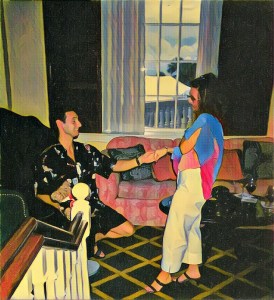
In any event, before heading over to the Salt Rock, Kris casually suggested we go to The Don for a pre-dinner cocktail (all part of the plan). Everybody agreed. The lobby of the Don (at least back in 2003) was both awe-inspiring and romantic — a mix of velvet, gold, and wood (if it was up to me I’d outfit my entire house in that ‘trifecta’ of style). As soon as we arrived, The Boz scoped out a group of chairs in a corner of the room and we parked ourselves there and ordered up some drinks.

After we finished the first round Liz got up from Kris’s lap, “Anne, dear, care to join me in the ladies’ room before we head over to the Salt Rock?”

“Sure thing, love.” Anne gave me as kiss as walked out.

“I’m coming too.” Cindy hurried after them.

Now what everybody knew except Anne was that Liz’s little bathroom trip was also part of the plan — since it gave me and the boys time to set up the scene. Kris hurried over to the bar and ordered a round of champagne and strawberries, The Boz pulled the stepping stone out of a backpack he’d smuggled in for us and also handed me a custom made teddy bear. Meanwhile Kris got the video camera ready.

I tried to calm my nerves as I looked at the bear and realized this was a moment of destiny. The teddy was from Build-a-Bear, a chain-store that was relatively new at the time but which has since spread into malls throughout the country (if you’re not familiar with it, the basic premise was that you got to build your own teddy bear, thus the name). A couple months back, on the same day that Liz went with me to design Anne’s engagement ring, we also stopped at the mall to get a few more odds and ends in preparation for this beach weekend party. One of the stores we went into was Build-a-Bear and that’s where I created a bear dressed in a top hat and tux who carried a little red velvet pillow on his palm — it was inside the little pillow that I now placed the ring. I also tested out the voice box I had installed in the bear as well, “Anne, you’re the love of my life, will you marry me?” My voice came loud and clear out of the bear’s recorder — just as I had hoped.

“You’re sure you want to do this?” Kris joked.

“Yeah, I mean, this is kind of cra-” The Boz stopped short as he spied the girls coming back from the bathroom; he and Kris quickly stood up to block the girls from seeing me.

Meanwhile, Liz smiled slyly as she led the way back to the group, and when the girls reached our area, The Boz and Kris parted to reveal me standing there with the bear holding out a hand to Anne. At first she didn’t realize what was happening… until I got down on one knee.

“Oh my gosh,” She gasped, shaking as she held my hand.

Suddenly nervous, I didn’t trust my own voice to speak without cracking — luckily I had the bear (yet another backup plan!) — so holding it up, I pressed its palm and heard my voice speak “Anne, you’re the love of my life, will you marry me?” And I raised the engagement ring which sparkled in all directions.

Anne pulled me up to her, and with tears streaming out from behind her massive sunglasses, she said, “YES!” And again to the group, “YES!”

Everybody in the lobby cheered and our friends brought us the champagne and strawberries to toast. “Here’s to 100 years of happiness.” Liz raised her glass.

“100 years? That’s a rather long time.” Anne joked. “I didn’t know I was signing up for all that!”

“I told you to be careful, Mike.” The Boz winked at me.

As the celebration continued, Anne whispered to me with a smile, “I can’t believe you did this! I had no idea.”

“It certainly wasn’t easy.” I kissed her and then told her the story of the original beach idea.

“That’s my Michael — always has a backup plan. Good job, honey!”

****


I wish I could tell you that the rest of our engagement weekend was a blast — but unfortunately that was not the case.

In fact, our dinner at the Salt Rock Grille marked the beginning of the end in our relationship… with Liz and Kris. Oh nothing specifically bad happened between us and them, but looking back now I can see this as the first milestone on the path to misfortune.

It’s a tale as old as time — one couple fights, they expect you to pick sides to support their individual causes, and if you don’t then they get mad at you. That’s exactly what happened at dinner that night.

There were some rumblings between Liz and Kris during the appetizers and by the time the entrees were served it had escalated into a full blown argument. Cindy was sitting at Liz’s left  and whispering support into her ear (and fuel for her fire too), while The Boz was at Kris’s right and awkwardly trying to lighten the mood with some jokes. Anne and I were on the other side, trying to enjoy our engagement dinner and just hoping the blowup would die down.

It didn’t.

Instead Liz eventually got up and stormed out.

Cindy shot Kris a look of ice and hurried after her.

“Do you need to go to?” I asked Anne.

“Hell no.” She replied. “I’m here to enjoy my dinner, not let her steal the scene. Besides, I’m not picking sides. You know that never ends well.”

Little did we know when she said that that Anne would be foretelling the future — only with a twist. And while Liz’s scene stealing was nothing new, what we didn’t know back then was that fights like this between Liz and Kris were about to become all too common — as they moved into the next phase of their stormy relationship.

As it turned out, Liz and Cindy never did come back to the dinner. Kris got quite a few texts on his phone and each time he received one he ordered another screwdriver cocktail – which left him pretty hammered by the end of the meal. Eventually he said, “It’s a good thing we took two cars over here.”

“Why?” I asked, fearing the answer.

“Liz said that she and Cindy just drove back to the room. Oh well. I know she wanted me to go after her but I wasn’t playing that game. Especially with Cindy around — you guys know how she eggs her on.”

“You’re better off here.” Anne patted him on the hand. “She’s had a few cocktails and you know how she gets when she’s tipsy.”

“Liz is a mean drunk.” Kris didn’t mince words. “You know it and I know it. She’s had a lot to drink today — I should have seen that coming.”

“Just let her sleep it off and all will be well.” Anne soothed. “Maybe we’ll get some sun tomorrow.”

“Hey, for now, let’s enjoy the rest of the meal.” I suggested as the entrees were arriving. “Boz, this dinner suddenly has YOU written all over it. Look at all this food!”

Indeed, The Boz was in hog heaven — literally. For you see, The Boz was well known in our group as  a ‘human trash compactor’ — whenever someone didn’t finish a meal, he’d happily do it for them. Rarely did he ever order an entree himself — but he always encouraged the rest of us to order heavily — so that when the meals came and we inevitably didn’t finish, he’d scrape all the plates onto his own. There was an additional side benefit to this little strategy of his — when the bill came, The Boz rarely had to put any of his own money in since he’d usually only had a couple beers to account for on the tally. This had been going on for years and the Salt Rock dinner was no different — The Boz ate Liz’s lobster, Cindy’s salmon, parts of Kris’s t-bone, and most of Anne’s sea bass.

“We need to come here more often!” The Boz licked his fork. “I’m loving this!”

“I’ll bet.” I laughed to see him in such good spirits.

Meanwhile Anne turned to Kris again, “Don’t worry. It will work itself out.”

By now Kris was totally plastered, “I’m not worried. She’s a big girl but she’s acting like a baby. This was supposed to be a dinner to celebrate the two of you and she had to go and make it about herself — again.”

Anne overlooked the truth of Kris’s words. “It’s been an amazing weekend. I couldn’t be happier and I am so glad you are here with us. Both of you.”

The Boz pulled his head away from the lobster, “Sing it, sister. Cheers!”

“Cheers!” We all raised our glasses back.

After we arrived back to The Sirata, the storms continued — Liz and Kris continued their argument inside their room, while a tropical storm outside raged full force all night. The winds of that storm were so powerful that at one point the sliding glass door of Anne and I’s room shattered inwards — blowing shards of deadly glass all over our room! Luckily we were in a suite (hey, big spender) and the blown-out sliders were in the living room portion so we didn’t get hit by the glass, but even still it scared the you-know-what out of Anne and I.

“That sounded like a sonic boom!” I jumped out of bed to the sound of howling winds raging through our room.

“Oh my God,” Anne gasped as she surveyed the damage. “Thank heavens we were in the other room. Look at this mess!”

It was the middle of the night and the winds continued to rip through our room; obviously we had to ask management for help and they readily agreed to give us a new room. But the next day when I took Kris’s advice and went to ask them to comp us for our troubles, they were not so amenable to my request. Given that this was the place we chose to hold our engagement party — which brought them business both now and the promise of it in the future — I expected that they would do the right thing and take care of our room expenses since we were so put out by the storm. They argued that it was an act of God and not their fault; while that may well be true, I pointed out that our room was on an upper floor, regularly exposed to hurricane force winds, and thus should be expected to be able to withstand a storm like last night’s without shattering inward. “After all,” I asked, “what if my fiance and I had been in the living room at the time your faulty glass shattered?” In the end, they comped us only for that night — and we haven’t been back since.

Nonetheless, in spite of these little pitfalls, the bottom line is that Anne and I did get engaged and that allowed us to continue further down the path of a future together. Since that future promised me a life with both Anne and Sassy, I was all too happy to hurry forward.

As for the little queen be, Sassy had spent the weekend with Nana Rose – being spoiled with food, calm, and love — and when we went to pick her up, I’m not sure she was ready to leave! After all, Anne and I still lived in an apartment that Sassy was none too fond of. As a result, besides planning a wedding, Anne and I realized it was time to look for our first house — one that would provide Sassy with the creature comforts she deserved. When I explained this too her, Sassy gave me a kiss — I took that as a sign that, like Anne, Sassy was saying ‘Yes’ to my proposal. Whew! (Score another one for Mike!)

But before we moved, there was one final visit that occurred while we were still at our apartment — my grandmother came to visit. That’s right, my Italian, Catholic grandmother (who everybody in the family called “Sister Pauline” because of her devout faith), came to visit me (her firstborn male grandchild and former altar boy), who was now living with his girlfriend out of wedlock. Can you spell N-E-R-V-O-U-S?


Sassy’s Life Lesson #10 – The Power of Planning

“A goal without a plan is just a wish.”
Antoine de Saint-Exupery (author of a The Little Prince):

This is one of my favorite topics and I’ve given countless presentations on it over the years. I truly believe the old adage that ‘if something is worth doing, it’s worth doing right” and if you believe that too then I’m sure you will agree that the first step towards doing something right is to come up with a plan. When you take the time to develop a well thought out plan not only are you giving yourself options but you’re also setting yourself up for success. Without a plan you are likely just winging it and increasing your odds of making mistakes or failing all together. You are too good for that. Take the time to make a plan and start turning your dreams into realities.

Points to Ponder

What do all of the following have in common?

Your children’s (and your own) long-term/continuing education

Saving for retirement

Becoming more physically fit

Growing into the best person you can be

The answer is that all of these are critically important AND because of that, all of them would benefit from having a proper plan. So the question is, do you have a plan for them? If not, do yourself a favor and start making your plans today. It doesn’t have to be overly detailed to start, just begin the process and see where it leads to. You’ll be surprised how empowered you begin to feel when you start having plans to guide you.


Small Changes Lead to BIG Results

One of my meditation mentors today wrote about this topic and I wanted to share his wisdom with you…

“Far too many people stress out when given a goal that challenges them to be more than they think they are right now. Their stress blocks the flow of their energy and leads to poor performance.”

Instead of stressing out and fearing that you’ll never be able to climb the mountain of your larger goal, why not give yourself a chance by focusing on a series of small, achievable steps along the way to your larger goal. In addition, if you use simple, clear, open-ended goals focused on constant improvement (“kaizen”), then you’ll find yourself climbing up that mountain towards  your goal without tension.

Remember

BIG steps forward are really many small improvements compiled over time.


smallgoalsWhy not try this?

Make your objective in life to be improving a little bit every single day.

Become a better YOU today than you were yesterday and your future will be brighter indeed!