Try It, You Might Like It

Life Lesson #12: Don’t be afraid to try new foods.

Today’s life lesson was inspired by Paul Prudhomme (world-class chef) who said “You don’t need a silver fork to eat good food.”

picky-eater

A Cautionary Tale…
When I grew up, I didn’t like to try new foods. My grandmother made homemade Italian food and I feasted whenever I wanted. My mom and dad cooked a bit too – mostly American and Italian fare. I ate good, but I mostly ate the same things, and because I didn’t try different foods as a kid, I know I missed out on a lot of new experiences. The aversion to trying new foods carried over into my late 20’s – and it almost cost me my marriage! Let me explain – on the first date I ever had with the woman who would become my wife, we went to have SUSHI at her request. Now coming from land-locked upstate Pennsylvania and the small town of Williamsport, I’d never even heard of sushi growing up — so when my new girlfriend suggested we go eat it, I said “ah, ok” even though the thought of eating raw fish turned my stomach. As it turned out, I did not eat sushi on that date (I ordered ‘beef with broccoli’ stir-fry instead). Granted it wasn’t a very manly choice to not try something new, but I just couldn’t bring myself to do it. Luckily my girlfriend didn’t break up with me for being such a spoilsport. In fact, not only did she eventually convince me to try sushi, but we later got married too. And, I’ll have you know that sushi is actually now one of my favorite foods! Who knew? Alas if only I would have tried it sooner.


What This Means to YOU…

Look, I’m not gonna lie to you — the truth is that you will probably not like every food that you try. But it’s also true that you will most definitely find new foods you DO like if you keep an open mind (and open mouth!). In addition, I’m here to tell you that sampling new foods is really fun so I encourage you to try new things – you’ll be surprised at what you discover you like to eat.

On top of that, if you want to become a better cook, trying new foods like this will add to your inspiration and also your skill set – it did for me. I’ve always loved to cook – even as a kid. But now that I have changed my views and am eager to try new foods, my cooking is even better – I have more food ideas to get ideas from and more cooking techniques to draw upon. It’s also helped me to make new friends as well and when that happens the entire process snowballs into even more food, even better cooking, and even more friends.


Give This a Try…

If you are having a bit of trouble getting over the hump, try using the technique my family uses: we have a rule – it’s from a book called “The Two-Bite Club” by Adrienne Durrett — and the gist is simple – whenever you have a new food on your plate at dinner, you don’t have to eat it all if you don’t like it, but you do at least have to try it by eating two bites of it. If you like it, awesome – you get the enjoy the rest of it on your plate. If not, that’s cool too — thanks for trying it and you don’t have to eat anymore. It works great for my son Jax and he has discovered a number of new foods that I would never have even tried as a kid. Some of his current favs are: hummus, guacamole, ginger dressing on his salad, and even salmon skin (yes I said fish skin!) And you should see this boy eat sushi!


Don’t Wait, Use This Wisdom Today…

Do yourself a favor – try something new today — you’ll be amazed at what you find you like.


Did You Know…

Today’s lesson was adapted from a book Jax and I wrote called Diary of a Minecraft Dad

Slow and Steady Wins the Race

Life Lesson #11: Do Not Be Hasty and Miss The Way

Today’s life lesson was inspired by Tony Robbins (author and motivational speaker) who once said, “If your life is worth living, it is worth recording.”


Remember Your Nursery Rhythms…

I’m sure you’ve heard the nursery tale about the race between the “Tortoise and the Hare,” right? You know the one where the rabbit races off as fast as his legs will carry him, while the turtle just plods along as slow as a snail. What happens? The rabbit gets tired and has to rest in the middle of the race, while the turtle keeps going at his own pace and eventually passes the rabbit and wins. This is the epitome of our lesson – slow and steady wins the race – and it applies to all areas of your life.

The-Tortoise-and-the-Hare-Dont-Slack-Off-from-Starling-Fitness


Ideas for YOU to Use This Wisdom…

  1. Want to invest your money in stocks? Sure you can choose to put it all in risky stocks that may give you the highest returns, but odds are that you will only end up losing it all. You’d be better off finding investments with less risk – even those these might not offer the highest return potential, over the long run, you’ll likely end up with more money.
  2. Going to Vegas to gamble? Well if you must, at least choose the games that give you some decent odds. Vegas is built on all the losers at high-risk, low-return games like Keno, Slots, and The Wheel of Fortune. Instead educate yourself a bit and play games like Blackjack, Craps, and Roulette – certain methods of playing these games will at least give you a fighting chance.
  3. Have to complete a term paper? Don’t do a rush job at the last minute or do some half-baked paper as soon as you get the assignment. Instead, spend a little time in research, get a plan, and do it little by little over time.

In all of these cases, slow and steady is the best method. Can you think of other examples?


But Wait, There’s More…

That quote from Tony Robbins requires a bit of follow-up. If you’ve read any of his books you’ll know that Tony often recommends you keep a journal to record your life. I’d definitely encourage you to do that. After all, you’ve heard the old adage “if we don’t learn from the past, we are doomed to repeat it.” If you keep a journal you’ll be able to learn from your mistakes and also take advantage of your successes. So do yourself a favor and keep a journal. Some ideas for things you might write:

  1. Ask yourself – Did I do my best today?
  2. The top 3 things you enjoyed/learned/are thankful for/etc. about the day
  3. Your hopes, dreams, and goals
  4. Little things that you noticed that made you smile
  5. What you learned from the day
  6. What you plan to do tomorrow/next week/month/etc.
  7. Whatever makes you happy!

It doesn’t really matter what you write as far as someone else is concerned, it only matters that you write what YOU care about. It’s doesn’t necessarily have to be a “dear diary” situation (although that’s ok too), instead it’s more of a journal of learning – so that you can discover what’s causing you to miss your goals (so you can stop doing it) and also what’s going well (so you can keep doing it). That’s how you live your best life possible via the slow and steady wins the race method. So good luck and start writing!


Did You Know…

Today’s lesson was adapted from a book Jax and I wrote called Diary of a Minecraft Dad

Use the Right Tool for the Job

Life Lesson #10: The Right Tool Makes All The Difference

Today’s life lesson was inspired by President Abraham Lincoln who once said, “Give me six hours to chop down a tree and I will spend the first four sharpening the axe.”

woodcutter-sharpening-axe-300x300

Don’t Make the Same Mistakes I Did…

Using the right tool was a lesson that took me a while to learn. As I was growing up I tended to be one of those ‘just jump in and see what happens’ type of guys. So if I had something to build, I’d rarely read the directions and I tended to just use whatever tool was in my hand to see how it went. Most of the time it didn’t go very well and I got frustrated and gave up. Thankfully, as I got older and wiser, I learned the value of having the right tool – sure you can prune a tree with a hand saw, but a chainsaw (used safely) does the job much easier. Have to spray for weeds? A hand sprayer will do the trick, but your hands will be like claws by the time you’re done from squeezing that pumper so much so try an automatic sprayer instead. Need to put together a piece of furniture from IKEA – good luck using that alan wrench they give you or a simple screwdriver – I’ll take my electric screwdriver instead. I could go on and on, but I think you get the idea. Don’t be like I was before I knew better – instead read the directions and use the right tools.


Ideas for YOU to Use This Wisdom…

I’m sure you’ve already realized that this lesson goes beyond just simple construction examples; the truth is that this wisdom can help you in pretty much all areas of your life. Consider these examples…

>Have to give a presentation at school or work? Equip yourself with notecards and arm yourself with confidence by practicing in front of a mirror and with friends.

>Trying to master a new trick on your skateboard? Get advice from your friends, watch how the pros do it, and again practice, practice, practice.

>Going to a job interview? Find out what the interviewer’s hobbies are and show up with a small gift related to it – you’ll set yourself apart – and when you combine that with intense preparation, good body language, and confident speech filled with well-thought out answers, you’re sure to get the job.

The bottom line here is that whatever the situation, if you can choose the right tool, you’re going to be much better off. Understand this early in life and you’ll be setting yourself up for success.


Did You Know…

Today’s lesson was adapted from a book Jax and I wrote called Diary of a Minecraft Dad

Don’t Be In Such a Rush to Leave Home

Life Lesson #9: Think Before You Move Away From Home

Today’s life lesson was inspired by John Ed Pearce (a Pulitzer prize winning journalist and author) who said, “Home is a place you grow up wanting to leave, and grow old wanting to get back to.”

Think About This…

The more our world becomes a global society the more opportunities you will have to travel and even live elsewhere. I would encourage you to see the world as much as possible, especially when you are younger and don’t have the ‘responsibilities’ of life (family, job, bills, etc). The world is an amazing place and there are adventures of all kinds just waiting for you. That said, I would also encourage you to think before you make a permanent move — whether that be with a job transfer, going off to a distant college, or moving away with a friend or girlfriend. All of those things sound great at first (more money, new friends, making a way on your own, etc), and in fact they can be great in the long run for you too. But just keep in mind what I’ve already told you many times before — with every decision comes consequences.

movingrtruck

Everything Has a Price…

I grew up as part of a large, close-knit Italian family back in Pennsylvania. My entire childhood was spent around grandparents, cousins, aunt & uncles, etc, etc. Every holiday we celebrated together. It was a fun, happy childhood. I thought everybody had that. And I just assumed my family would be there forever. But soon enough I went off to college and allowed the trails of life to take me away to Florida after school. I never did move back home and I ended up missing out on the lives of all my relatives back in PA. Although I made a great life for myself in Florida, my biggest regret in life is losing touch with my family back home — sure I spoke to them often and visited many times, but I was never part of their lives again once I moved away. It was never the same. And now many of them are gone until the next life.

Did I make the right decision by moving away? Well, I am incredibly happy with my life now (wonderful wife and kids, great job, nice house, etc, etc) so in that sense things have worked out good for me. But it was at the expense of my family ties back home. And even though things did work out for me, the process of making the decision of leaving home is what I want to focus on here. The fact is that I did not really think about it before I left — I just assumed that’s what everybody does – go off to college and then move away. Obviously that is not correct.

What This Means for YOU…

What I hope you take away from today’s life lesson is this — moving away from home may be good for some people, but it’s not for everybody.  I hope you think before you move. Understand what you’re giving up when you leave. Have a plan if things don’t work out. Have an idea of whether your move is temporary or permanent. Tons of people take job transfers when they are young because they want to climb the company ladder — only to move from city to city and never put down roots — they chase after money, but lose their family ties, friendships made along the way, and more. Before you give your best years to a company that requires you to keep moving, know what you’re leaving behind — and know the risks: for example the risk of being laid off by that company which suddenly leaves you in a place you may not want to stay but without the money to move again on your own. Same goes for moving away with friends or significant others – it’s great when it works, but what happens if things don’t work out, then what? I’m all for you traveling and exploring the world. I think there’s also something to be said for studying abroad or even working overseas for a year or two. But we already talked about Frost’s “Road Not Taken” poem and how “way leads on to way” — just understand that when you move you may never come back. Understand that you too may lose your family ties. Understand what you are giving up. I can tell you 100% that I did not think of these things before I moved away. I didn’t know what I gave up before it was gone. I don’t want you to make the same mistake I did. Think before you make a permanent move and know if that this truly is the right decision for you.

Did You Know?

Today’s lesson came from a book Jax and I wrote called Diary of a Minecraft Dad

Fail Your Way to Success

Life Lesson #7: Do Not Be Afraid to Fail

 This life lesson was inspired by Thomas Edison, who said, “I failed my way to success.”

 What this means to YOU…

There may not be a more important life lesson than this one. Accept that fact that you will fail in life – many, many times — but so long as you do not let failure stop you from continuing to try to achieve your goal, then failure does not have to be something you fear. In fact, if you change your perspective (another tip we’ll talk about soon), you might realize that failure can actually be a good thing. Huh? It’s true – failure can indeed be a good thing IF you recognize the fact that failure can bring you one step closer to your goal.

Fear-of-Failure

Let’s look at some examples…

I’m guessing you’ve heard of people like Thomas Edison, Henry Ford, Ben Franklin, and Donald Trump. And I’m pretty sure if you paid any attention in school that your teachers have told you that these famous people and many other likes them have one thing in common — they all failed — many times over — before they achieved their goals. It’s said that Thomas Edison failed over 1,000 time before he invented the light bulb. Henry Ford and Donald Trump (some of the richest men in the world) both went bankrupt numerous times – yet still continued to build their wealth. Ben Franklin had one of the best perspectives about failure when he said, “I didn’t fail the test, I just found 100 ways to NOT do it right.” And there are more examples of famous people who failed again and again than I could ever list for you.

But there is one thing you need to understand — none of them achieved their goals on the first try. For most it took many, many attempts to realize their dreams. Luckily for them (and the world), these people did not let a fear of failure stop them. Instead they learned from their failures and kept trying. And that’s what you should do too. Never let fear of failure stop you from trying. But don’t take my word for it, consider the words of a few other over-achievers…

More Quotes…

There are just too many good quotes to overlook here and they tell the story much better than I ever could. Consider the following..

“You miss 100% of the shots you don’t take.” Wayne Gretzy

“It’s hard to fail, but it worse never to have tried.” Teddy Roosevelt

“Our greatest glory is not in never failing, it is rising every time we fall.” Confucius

“Take risks – if you win you will be happy, if you lose you will be wise.” Anonymous

“Never let fear of striking out get in your way.” Babe Ruth

There’s probably a million more great quotes you can find about this subject, but hopefully you get the idea. If you are an athlete, take note of the following:

1. Babe Ruth is a home run king — but he is also a strike out king too. Failure didn’t stop him. And the fact is that in baseball, if you only hit the ball 30% of the time and you consistently averaged that 70% failure rate, you’d still likely end of in the Hall of Fame as one of the game’s best hitters ever.

2. Everyone knows Michael Jordon is famous for being Mr. Clutch because he loved to take the last second shot to win the game. But MJ himself will tell you that he’s missed more game winning shots than he’s ever made. Even still, fear of missing didn’t stop him from continuing to try to win. Same goes for LeBron, Kobe, Reggie Miller, Byrd, Magic, and the other great ones.

3. Deion Sanders is perhaps the greatest cornerback in NFL history – but he didn’t stop every pass thrown his way. He just had a poor memory of his failures and instead focused on his successes. Same for the QB who throws a bad interception or the linebacker who misses the tackle and gives up a touchdown. You learn from it and move on.

And that’s what you should do too. Never let fear of failure stop you. Accept the fact that you will fail and vow to learn from it. If you do that consistently in life you will achieve your dreams!


Don’t Wait, Use This Wisdom Today…

Ask yourself – what is one thing that I am letting Fear of Failure stop me from doing today? Once you realize what it is, then understand that you’ll NEVER accomplish that goal unless you try again so stop reading and TAKE ACTION on your goal NOW.


Did You Know?

Today’s lesson came from a book Jax and I wrote called Diary of a Minecraft Dad

Price Does Not Equal Value

Life Lesson #6: The Most Expensive is NOT always The Best

Today’s life lesson was partially inspired by Albert Einstein who said “Try not to become a man of success. Rather become a man of value.”

What This Means to YOU…

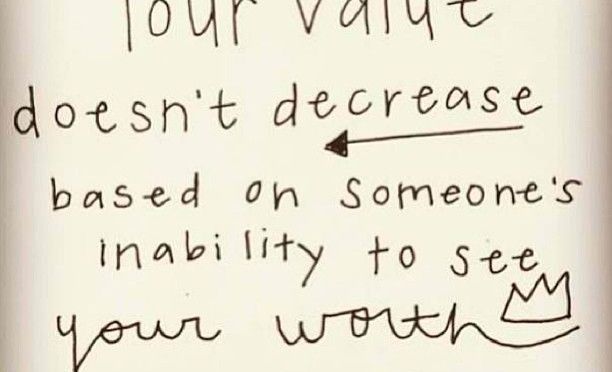
Unless you are made of money, then you’re monetary supply is limited so it’s important to understand that just because something costs a lot does not always mean it’s the best product. The same goes for your time – unless you are immortal, then your time on earth is limited, therefore you should find a way to use your time wisely by making the world a better place for yourself and others – when you do that, you’ll create real value for your life.

yourvalue

Let’s Look at an Example…

Let’s say you’re thinking about buying a new computer, or a new car, or whatever else you desire. Do you believe the most expensive option is guaranteed to be the best? I’d wager that it might be, but then again it might not.  Think about it — the items with the biggest price tag are usually the ones that you see advertised the most. Somebody has to pay for all those ads — that somebody is you — when you buy a name-brand item, you’re not only paying the company for having made the product, but you’re also paying them back for all the ads they placed to find you. And you’re also paying their corporate salaries, their investors’ dividends, etc. etc. All those extra expenses are bundled into the price of the item. That’s part of why it’s so expensive.

Does that mean that you should just buy the least expensive product then? No. That would be a mistake too. Buying the least expensive item is generally even worse. The old saying ‘you get what you pay for’ is not always true when it comes to expensive items (sometimes they are good, sometimes not), but I have found that saying to be true more often than not when it comes to low cost items — unfortunately. These no name, off-brand items that cost the least are generally of such poor quality that in the end they don’t last very long and you end up having to go back and buy something else to replace it that costs more.

In the end, your best bet is to do a little research about the product you are interested in. Talk to friends and family to get their opinion. Research the product online. Try out a few different ones of various prices in the story before you buy if possible. Make sure that the product you are considering has a good reputation for quality. And make sure that it will meet your needs. Don’t fall for specials that include a bunch of things you don’t need (a laptop preloaded with tons of extra software you will never use, a TV with outdated ‘smart technology’ that costs twice as much as the same TV without that unnecessary add-on, a pair of sneakers that feature a logo from a player before you were born, etc). Unless you’re uber-rich, your money supply is limited. And if that is the case then it’s up to you to spend it wisely. So remember the most expensive is not always the best.

This concept applies to you own life as well – don’t fall victim to thinking that you ‘have to’ go to the most expensive college, wear the most expensive close, or allow yourself to be defined by someone else’s measure of success. At the end of the road, when you look back at your life, you’ll realize that none of those things really mattered. BUT I don’t want you to wait till the end of your life to understand this, I want you to see this truth NOW – once you do, you’ll understand that YOU have much more power of your life than you might imagine and as a result, you’ll be able to use your life to do good now. When you invest in yourself in this way, that will create REAL value.

Don’t Wait, Use this Wisdom Today…

Wanna buy a new stereo system? Buy the one that will meet your needs, not just the most expensive.

Wanna decide what to do with your life? First answer the question “How can I add value to others?”

Did You Know?

Today’s lesson came from a book Jax and I wrote called Diary of a Minecraft Dad

Nothing in Life is Free

Life Lesson #5: Know the true cost of something BEFORE you buy. 

Today’s lesson is inspired by Robert Heinlein (author of Stranger in a Strange Land) who said, “Nothing of value is free. Even the breath of life is purchased at birth only through gasping effort and pain.”

What does this mean to you?

All too often consumers (myself included) get duped into thinking we’re getting something for nothing when in fact this is rarely, if ever, true. Don’t let this happen to you. Instead understand what something is going to cost you before you buy it, eat it, drink it, or do it, because everything, and I mean everything, in life has a price. Don’t believe me – look closely at this pic – and if you can’t see the problem ask a fan of the movie Alien. 🙂

FreeLove

Let’s Look at an Example:

This sounds like a simple lesson, but the sooner you learn this is life the better. Consider the following…you’re playing on your iPad and you see a new game which looks really cool. Best of all, it’s advertised as ‘Free.’

What would you do?

  1. Check out the reviews and details on the game to see if there are any in-app purchases that you’ll need to make in order to play the game.
  2. Jump on that deal because you don’t want to miss out.
  3. Download the trial version and see if you like it.
  4. Do something else

Rarely will you find an iPad game nowadays that is truly free. Many of the popular games are billed as ‘free downloads’ but once you start playing you’ll soon discover that to play the game past a few levels you’ll need to buy the full app or else you’ll need to spend money on in-app purchases in order to get much-needed items to complete specific tasks. Even many of the games that do let you play for free, you’ll discover aren’t really free because they bombard you with unwanted pop-up ads that steal your time and try to trick you into visiting other websites. But that’s how it goes nowadays – nothing in life is free.

Same goes for many of the great deals you see on TV – in most cases you’ll be offered something ‘for free’ in addition to your product. How about a second gizmo just like the first, totally free? Or another great whatchamacallit that you don’t really want or need, but hey it’s free, right? Wrong! You have to read the fine print my friends – oh, apparently you overlooked that you need to pay separate ‘processing and handling’ for that second gizmo. What is ‘processing and handling’ anyway? It’s how they get you to end up paying more for things you don’t need or want, that’s what it is. And that whatchamacallit – besides the fact that it wasn’t that good to begin with, that too will cost you an arm and a leg. In the end, you’ll find that you’re paying $50 for what you thought was only $19.99. Ouch. But as we both know, nothing in life is free.

Does this mean you can’t ever get something for nothing? No. There are occasions (rare) in which you can get something for free. Perhaps it’s from a trusted friend or family member. Or maybe somebody from your church or volunteer group will help you out. There are actually good people in the world who will do you a favor and ask nothing in return. But these the exception, not the rule. And even in those cases you could make the argument that if someone does something nice for you, then you should do something nice for them too. And if that is the case, then you’ll have to spend your time or money to help them too. And while I think it’s great to pay back kindness with kindness and that you should totally do that, it only further proves my point — because once more you see – nothing in life is free.

Don’t Wait, Use This Wisdom Today

The next time you consider doing something, be sure you know the cost of it first.

Did You Know?

Today’s lesson came from a book Jax and I wrote called Diary of a Minecraft Dad

The Power of Planning

Lesson 4: If you don’t have a plan, you are planning to fail.

Today’s lesson was inspired by Antoine de Saint-Exupery (author of a great book called The Little Prince): “A goal without a plan is just a wish.”

What This Means to You
This is one of my favorite topics and I’ve given countless presentations on it over the years. I truly believe the old adage that ‘if something is worth doing it’s worth doing right” and if you believe that too then I’m sure you will agree that the first step towards doing something right is to come up with a plan. When you take the time to develop a well thought out plan not only are you giving yourself options but you’re also setting yourself up for success. Without a plan you are likely just winging it and increasing your odds of making mistakes or failing all together. You are too good for that. Take the time to make a plan and start turning your dreams into realities.

Let’s Look at an Example…
Consider this light-hearted scenario: let’s say you and your friends play flag football and you’re signing up for another tournament. You know your team is good because you’ve one some championships in the past so you’re pumped about having a chance to compete again and perhaps bring home some more hardware. However there are a few wrinkles this time — for starters there are a couple new guys on your team and you’re not sure if everybody knows all the plays. Plus when you went to the signup, you saw some new teams on the charts that you didn’t recognize before and that always makes you a bit nervous.

The tourney is still a couple weeks away, what do you do?
A. Don’t panic — you’re confident you have the best team so just show up and play
B. Meet with your new guys the night before and go over the plays
C. Schedule multiple practices, make wristband play cards, and go early to the tourney to scout the other teams
D. Withdraw from the tourney and play golf instead because your wife said ‘you’re too old for football!’

The fact is that your team could be the best athletes on the field but if you don’t practice and play as a cohesive unit, you’re asking to lose. This scenario comes from my own life — I’ve often played on teams in which neither I nor anyone else on my team was the best athlete, but we regularly beat teams that had more talent and took home way more championships than we ever had a right to win. In fact, we actually won the 2003-2004 National Championship in the Let It Fly Flag Football League (admittedly it was in the ‘Recreational’ division, but hey a title is a title, right? Check out this pic…)

lif-natl-championship

So how did a bunch of old, short, white guys who didn’t even play high school football consistently beat bigger, taller frankly much more athletic and usually much younger teams? We followed Plan “C” – we practiced more than most other teams, we scouted the competition to know what they would do, we all knew the plays inside and out, and we always had a plan on how to attack/defend each team we played because we took the time to know our opponents. It wasn’t complicated. And it worked again and again and again — in fact during a 5 year stretch we won the championship in 75% of the tournaments we entered! Now you might say, “Mike, who cares, it was flag football?” To which I would simply say, “If you’re gonna do something, do it to the best of your abilities or don’t do it at all – whether it’s flag football, a big sales presentation, or even asking someone to marry you – go all out!”

The fact is that Plan C will get you to your goal more often than any other. In our example, if you are the best athletes you could probably just roll the dice and show up (Path A), but aren’t you just short-changing yourselves if you do that? How many times have you seen a NFL team which all the talent but doesn’t use their weapons properly and just seem totally inept? It’s often because of poor planning. Don’t be like that. Put in the time, have a plan, and make the most of your talent.

As for Plan B, that plus your talent is certainly better than Path A but clearly not as good as Plan C. That said, at least B gives you a chance to come up with a better plan and that plan could very well give you the little extra you need to win it all. Any plan is better than no plan, right? Then again, you could always just choose D – give up on the football and go play golf instead. However if your golf game is like mine, this could be the scariest choice of all!

The point here is really a simple one – if you don’t have a plan, you’re asking to fail. But if you take just a little bit of time and come up with a plan AND you follow-through with your plan, then you will more often than not find success. So give it a try and let me know how it goes.

Don’t Wait, Use This Wisdom Today
What’s on your agenda for today? If it’s important, take the time to make a plan and do it right. Even a simple plan is better than no plan at all.

Did You Know?
Today’s lesson came from a book Jax and I wrote called Diary of a Minecraft Dad

Beats vs Bose – Which Noise Cancelling Headphones are Right for YOU?

If you’re in the market for a pair of noise cancelling headphones and you’ve narrowed it down to a pair of Beats Studio or Bose Quiet Comfort headphones then this article is for you. I own both and am an actual (and active) user of each. In this article I’ll give you some practical wisdom to help you decide which one is best for YOU.

First some housekeeping:

  1. I don’t profess to be an audiophile or a tech genius so I’m not going to review highly technical information or in-depth specs. I’m just an average joe who likes to listen to music and wants to enjoy more of the music and less of the external noise. I also travel a lot and find that a good pair of noise-cancelling headphones can make all the difference on long plane rides. If that sounds like you, then this article should be helpful.
  2. As I mentioned, I actually do own a pair of each of the cans I’ll be reviewing – the over the ear Beats Studio 2.0 and Bose Quiet Comfort 25 (and the new Bose QC 35’s). I point this out to let you know that I did NOT get a pair of either for free from the manufacturer in exchange for giving a good (aka fake) review like you find on so many other sites. I have no dog in the race. I’m just here to give you my honest feedback to help you make the best decision possible. Given how expensive these are, I hope you find it helpful.

What’s the Quick and Dirty?

Where I prefer the Beats:
1) Bass – nobody can reasonably argue that the Beats are superior to the Bose in this category of music and if that’s all you care about then get the Beats
2) Comfort – the Beats are slightly more comfortable on the ear than the Bose but it’s minor. I’ve worn my Bose for multiple 10-14 hour flights and not had any trouble but since I’m trying to be objective I will say Beats are just a bit better here, but I wouldn’t let this influence your buying choice because both are comfortable.

Where I prefer the Bose:
1) Noise Cancelling – it’s really not close here. The Bose are far superior for active noise cancelling
2) Non-Bass tones – what the Bose lack in bass they make up for in the other ranges. You’ll hear more overall with the Bose, especially if you listen to more ‘non-Pop’ music
3) Travel/Battery – this is the BIGGEST difference for me – you can read more detailed info in the Beats Review section but with Beats once the charge is gone so is your music!  With the Bose, if the battery runs out, not only can you switch to a new one, but as a last resort, they Bose WILL still work as non-noise cancelling headphones without ANY battery.

My Quick Take: get the Beats if you wanna look cool because of the name, get the Bose if you want the better pair of active noise cancelling headphones that you can really rely on.


The Reviews

Beats Studio 2.0 Headphones (both wire and wireless)

BeatsStudio-COlors

Beat Studio over the ear headphones are very comfortable, provide a great listening experience (especially if you like music which has lots of bass), and when fully charged last a reasonably long time (up to 20 hours). Like Bose QC headphones they feature “adaptive” noise cancelling (ANC) technology which (as of the time of this article’s writing) is the best available technology for consistent noise cancelling on the market today. The Beats do very good job of noise cancelling (but not quite as good as the Bose do in my opinion) and I think most people will be happy with the Beats noise cancelling feature. People around you will also appreciate the fact that Beats Studio cans are closed so your music won’t spill out to others (especially useful when traveling) – but note that the Bose are the same too.

The primary problem with the Beats Studio phones is there battery life – while you get up to 20 hours with the internal rechargeable battery but once that rechargeable battery dies (say if you are traveling and can’t recharge easily), then your listening experience is dead too. There is no option to continue listening without ANC (which those Bose does provide) and you also can’t just replace the battery. That’s a major flaw. This very thing happened to my wife and I while on a long international flight and it was very frustrating. Sure there is a ‘fuel’ gauge (a series of white dots on the side of phones) so show you how much battery BeatsStudio-Accessoriesis left but it’s not always convenient of possible to recharge and that’s a concern.

Another pain is that the carrying case is a bit cramped – even though the phones collapse its not easy to fit all the cords and phones into the case which is frustrating too.

That being said, the Beats Studio 2.0 (whether wire or wireless) are still a nice pair of ANC headphones and if the Bose are not an option I think most would be happy with these.


Bose Quiet Comfort (QC25 and QC35)

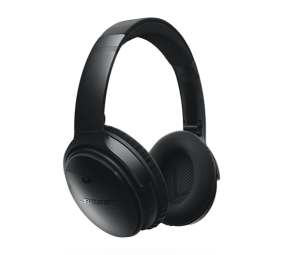
BoseQC25colorsThe QC25 and QC35 are essentially the same headphone except that the latter is wireless. They are lightweight (0.43 lbs compared to the .57 lbs of the Beats), comfortable (although some have complained of ‘pinching’ after extended use), and do an EXCELLENT job of “acoustic noise cancelling” (ANC) which is basically the same as the Beats in terms of technology (in my non-professional opinion) but better than the Beats in terms of performance (aka the Bose are slightly superior in their ability to consistently cancel more outside noise).

>Side Note: Does this mean the Bose (or Beats) will cancel ALL external noise? Definitely not. In fact, if the noise is random (best example here would be 1 or 2 people intermittently talking on the TV) then the noise cancelling is not very good. Basically for BoseQC35bANC to work well the noise has to be somewhat constant (like traffic, a jet engine, or lots of people talking all together) – then the noise cancelling is great. (FYI, when you go to Best Buy or a store that has a noise cancelling demo, they’ll pipe in a constant noise and that makes the ANC work great). This is true for any noise cancelling phones available today. The Bose are the best at noise cancelling in my opinion but they won’t cancel everything so I don’t want you to be disappointed. This is just the current limits of technology.

The Bose may not be as good as the Beats in terms of powerful bass, however the mid-range and high end range is better with the Bose so if you listen to jazz, classical, or anything in which you want to hear more than just a dominant bass, the Bose are the way to go.

. As we said, the Beats have a built-in rechargeable battery lasts up to 20 hours (which is the same for the Bose QC35), whereas the Bose QC25’s use a regular (disposable or rechargeable) AAA and if it dies then you have options. With the QC35, you can just plug the phones into your media device and listen without ANC. With the QC25’s you can either replace your AAA battery with a new one and happily carry on or (if you don’t have another battery) then you can just listen without ANC. Is the sound quality degraded? Obviously. However it’s clearly better than having no music at all (as would be the case with the Beats). I think that’s a big deal, don’t you? As an added bonus the Bose QC25 case gives you space for an extra battery too.

BoseCaseOther tidbits: like the Beats, the Bose are a closed loop design so you won’t bother people beside you with noise spillage. Like the Beats, the Bose phones are collapsable. Unlike the Beats, the Bose case IS convenient and allows enough space for the phones and your cords, etc. The Bose also come with an extra ‘airline’ 2-prong adapter which comes in handy on some airplanes with this old style technology.

The Bottom line is if you have the money, the Bose QC 25 or QC35 would be your best bet if you want the best noise cancelling headphones available today. 


DON’T JUST TAKE MY WORD FOR IT…

For another opinion, check out our friends at Reviews.com. They have an excellent article on this topic. Read it here: Reviews.Com Best Noise Cancelling Headphones

What’s YOUR take? 

If you have a comment to share, spotted an error, or have new info we’d love to hear from you.


Which Masterbuilt Electric Smoker is Right for You? Helpful Tips from Actual User!

Today’s wisdom is again on the practical level – it may not change your life on a grand scale, but it may well make you a better cook and could win you some kudos from your neighbors when you get together. Today we’ll be looking into the Masterbuilt Electric Smokers — since there are A LOT of different models, it can get confusing, but fear not because I’ll give you some tips that may help you determine which model could be right for YOU!

First some housekeeping notes:

  1. This article assumes you have already made the decision to choose an ELECTRIC smoker over the alternatives (for example the more ‘traditional’ charcoal smokers like the Weber Smokey Mountain, an old school barrel smoker, or even a macked out Komodo or BGE). The skinny on that is simple: if you are just starting out and want to begin to learn the craft of smoking and/or you don’t want to be tied to managing the pit all day (aka you want to essentially ‘set it and forget it’), then you choose an Electric smoker. After doing my research and considering all my options I found myself in this category and thus I chose Electric.
  2. This article also assumes that you have decided to buy a MASTERBUILT electric smoker. I researched a LOT of brands prior to deciding on Masterbuilt. Eventually I boiled it down to Masterbuilt, Bradley, Smoking Tex, and Big Chief. Ultimately I decided to go with the Masterbuilt brand (hereafter referred to as “MES”). To be brief my reasons for choosing MES were: overall consistent quality of positive reviews on consumer sites and smoking meat forums, reputation of the brand, variety of options, positive price to value ratio, and availability of the product. Assuming you have decided on an MES as well, then keep reading.
  3. Please understand that I don’t profess to be some sort of pitmaster, nor am I claiming to be an expert on the subject of smoking. I am just an average dad who likes to cookout with friends and family. I was in the market for a smoker, did a lot of research, and feel like I learned quite a bit, but during my search I found all the different MES models to be a bit confusing. If you are also confused by the many different models then this article will help you. Perhaps some of the other ‘quick tips’ I share will help you as well.
  4. I’ve learned quite a bit after my purchase, so sure to read to the end of the article and see a bunch of accessories I’ve found to be useful – these tools can help you  get the most out of your smoker.
  5. And finally, if you’re curious, you’ll see the model I purchased at the end of the article.


The Basic Differences to Be Aware of:

Before look at the different model types, let me give you a few basic features to keep in mind so you can better compare the models and determine what will meet YOUR needs best.

  1. SIZE: for the most part you are looking at either a 30-inch model or a 40-inch one (there is a 24-inch too but it’s non-digital and doesn’t include near the same features as the bigger ones). In terms of the cooking area, you’re looking at about 720 inches for a 30-inch model vs 975 for a 40-inch. BOTH models come with 4 racks to cook on, but obviously the 40-inch model has wider racks.
    1. Quick Tip: if you tend to cook for a group of 4-8, then the 30-inch should do just fine. If you cook for larger groups, want to cook giant cuts (for example a full rack of ribs without cutting them in two), or you just want to show off, then go for the 40-incher.
  2. COST: realistically you’re looking at $150-400 for the 30-inchers and $300-500 for the 40-inchers. As you can probably imagine, a lot depends on which model, what features you want, and where you buy from. Obviously only you can decide what you want to spend, however I would just point out that you may be very satisfied with one of the lower cost models (especially if you are just starting out) because even the $150 models offer MOST of the key features of their higher priced brethren.
    1. Quick Tip – be sure to consider big box stores like Sam’s and Costco which sometimes feature the 40-inch model with lots of extras (including a stand) for a discount price!
  3. HEATING ELEMENTS (HE): most of the models will offer from 650-1200 watts, but you may occasionally see up to 1800watts on special models. The HE is not only want causes your wood chips to smoke but also controls the temperature range of the food (as well as how fast it can reach that temp). For the most part, higher would be better.
    1. Quick Tip: in my opinion most people would likely benefit from choosing a model with 800-1200watts. In addition, some models provide easy access to the HE in the event you need to clean it (or change it if something goes wrong), while others (especially older models) make it a bit difficult to access the HE – you may want to verify this on the models you are looking at.
  4. DOOR TYPE: do you want stainless steel or black for your door color, do you want a window, etc? Regarding the window – some people believe it causes a loss of heat – that may well be true but I haven’t found it to be an issue on my unit (which does have a window).
    1. Quick Tip: personally I like the window it offers you the chance to look in on the food without having to open the  door — of course this assumes that you that you remember to CLEAN the window! And dt worry, it’s not hard to clean.
  5. ELECTRONIC CONTROL PANEL: other than a remote (if your unit comes with one), the control panel is where you set the temp, time, etc. Generally you can find it on the top of the door (aka ‘integrated’ into the door) or sticking up on the top rear of the smoker (opposite from the door).
    1. Quick Tip: Does this matter much? Overall probably not, the newer models seem to feature the ‘integrated’ panels now and they do appear to be less exposed than the older ones that stick up higher, but I wouldn’t let this make or break your deal.
  6. REMOTE: some models have a remote and some don’t. For me this wasn’t a make or break deal, and instead I consider it more of a ‘nice to have.’ The one I purchased did come with a remote but I don’t find myself using it all that much.
    1. Quick Tip: The newest ones also feature ‘bluetooth’ remote options as well so you can control it from your phone or tablet.
  7. MEAT THERMOMETER: Personally I think this is a nice feature since it allows you to see what’s going on with your meat without having to open the door to check the temp. Granted you could purchase a third-party probe on your own but why go to the extra expense if it’s already built in?
    1. Quick Tip: remember that every time you open the door you will lose smoke and temp – having a built in temp probe lets you avoid this problem.
  8. DRIP TRAY LOCATION: newer models tend to have easier access to this by putting it in the bottom center of the unit, while older models make it a bit tricker by having it in the back.
    1. Quick Tip: Look closely at the pics of the models you are researching and you’ll see the differences right away.
  9. AIR DAMPER LOCATION: (aka where the smoke comes out) – some feature the damper on the top, others on the side.
    1. Quick Tip: does this really matter? Some may argue a certain position of the damper could help with airflow (and this could be something to consider if you are using an A-Mazen pellet smoker inside your MES as a smoke source because those can be finicky if your airflow isn’t just right – but that is another topic beyond this discussion). Overall, I wouldn’t let the location of the air damper determine your purchase.
  10. WHEELS/HANDLES: The handle could be on the door (for the obvious purpose of open/closing the door) and/or it could be attached to the top/back of the smoker (for the purpose of moving it around). Most of the MES models do not offer a handle on the door and it’s really not an essential (more for aesthetics really because you have to open the side latch either way). Most of the MES models also do not offer wheels and a transportation handle but this could be a big deal if you need/want to be able to move your smoker around – otherwise you’ll be stuck keeping it in one place or going through a lot of hassle to move it. In my opinion wheels and a transportation handle was an important consideration for me so be sure to look for it if you need it too.
    1. Quick Tip: if you don’t need to be able to move it around, consider buying a stand – it looks nice and will save you the hassle of bending down so much (your back will thank you!). Here’s one example: Masterbuilt Smoker Stand
    2. Quick Tip #2: You’ll probably also need a cover as well. Here’s the nice-looking and low-cost Cover for your MES Smoker I purchased on Amazon (this cover is made for a 40-incher but it fits my 30-inch model with the handle and wheels attached perfectly!): 
  11. MISCELLANEOUS: BOTH the 30-inch and 40-inch models feature the following: insulated walls, easy to read exterior digital thermostats, temperatures that go up to 275-degrees (however if you can find a 1800-watt unit you may reach even higher temps and at a faster rate).


The Top Selling MES Model Types You’re Likely to See:

  1. 30 inch model WITHOUT window. You will mostly see these offered in all black or with  a stainless steel door. Be sure to examine the pics of the models you are considering because there are LOTS of models/options here. Older models will usually have the control panel on the top rear and the drip pan will be harder to find (it’s not on the bottom front like the newer models as you can see in the pics below). The older models will likely be priced in the $150-185 range while the newer ones will be in the $180-250 range — shop around and you can find good deals because there are TONS of these out there. Keep in mind all of these models should still offer 4 racks and 720 inches to smoke on, 650-800 watt HE’s (which reach temps of 250-275 degrees), and more. However you may or may not get a remote, meat probe, wheels/handle, or certain other higher-end (possibly non-essential) features.

Here are some pics of the older models.
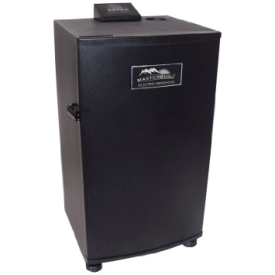
MES-30-older-Blk-nowindow


MES-30-older-SS-nowindow

Here are some pic of newer models in black without a window: (I couldn’t find a pic of a newer model SS since most of those now have a window as you’ll see below).

MES-30-new-Blk-nowindow

MES-30-new-Blk-Bluetooth

2) 30 inch model WITH window. You can find both older and newer models in this category (aka older ones with the rear top control panel and hidden drip pan or newer ones with the control panel integrated into the door and the drip pan on the bottom front). Once again, these models will all still offer 4 racks and 720 inches to smoke on, 650-800 watt HE’s, and more. In addition, most of these smokers (both old and new) DO come with remotes, meat probes, and wheels/transportation handle so that is a nice bonus, but be sure to read the specs on the actual models you are considering to make sure. Prices here can range quite a bit – from around $180 to well over $300 so definitely shop around!

Here are some pics of older models with windows (with black or SS doors):

MES-30-older-blk-window

MES-30-older-SS-window

Here are some pics of the newer models with windows (almost all seem to feature SS doors like these – as an FYI the one on the bottom has the bluetooth remote option).

MES-30-new-SS-window

MES-30-new-SS-window-bluetooth


3) 40 inch models WITH or WITHOUT Windows: let’s be honest, most people have probably not read this far in this article – if you actually have then you must be really committed to buying an MES smoker (or just really bored) – either way I appreciate your interest (and I’m sure Masterbuilt appreciates it even more!). That being said, the fact of the matter is that while you’ll find both older and newer models in this smoker class, and most of the 40-inch models you’re going to see out there are going to come with a window and a stainless steel door. The 40-inchers (both old and new) will likely have almost every feature available (with the exception of the bluetooth remote option on only the newest models) – so that means you should expect to get at least a basic remote, a meat probe, and wheels/transportation handle. Here you’ll find HE’s in the 1200 watt range (with all newer models at 1200). Expect to pay from about $350-500 (but be sure to look for the package deals that offer you a stand or other options too).

From a visual perspective here the pics don’t really look much different than the 30-inch models (but obviously in real life they do because they’ll be taller!). Nonetheless, in the interest of being thorough, let me show you a few pics of the 40-inch models available today (old vs new):

MES-40-older-SS-window

MES-40-new-SS-window-bluetooth


4) OTHER Models? There are a few other models in the MES electric lineup and they’re called “analog” smokers. They are in the 24 and 30 inch category. The basic appeal of analog smokers seems to be that they have thicker “dual-wall” insulation that may offer an advantage in harsh weather conditions and they are often lower in price (sometimes below $150 depending on the model). The 24 inch models only has a 650 watt HE and less than 540 inches of smoking space on 3 racks. The 30 inch models range in features with 1500-1800 watt HE’s and you may also see these models under the ‘Cookmaster’ brand as well so just FYI. The 1500 watt model can actually reach temps of up to 400 degrees and would be better than the 1800 watt model because even though the latter has a higher HE it doesn’t actually don’t have insulated doors. That being said, unless you live in the tundra and/or must have the higher temps, I’d skip the analog option. If you wanna see what they look like, here you go…

MES-30-Analog


5) More about Model Numbers:

Hopefully my review of the model types has helped you to narrow down what you’re looking for. Once you know the model TYPE, you may also want to check the specs on the actual model NUMBER. You’ll quickly find that there are so many MES model numbers it’s hard to keep track of them all. For a nice overview check out these links: http://www.smokingmeatforums.com/a/masterbuilt-electric-smokehouse-models and http://www.smokingmeatforums.com/t/99348/all-mes-model-numbers


But wait, there’s more…TOTALLY OPTIONAL (but possibly really helpful) ACCESSORIES

a) STAND: we already talked about the stand. Here’s a reminder of one option to consider: http://amzn.to/20S67nB .

b) COVER: again we mentioned this too. Here’s the one I have: http://amzn.to/1XdKfFp You can get this in either a 30 or 40inch model – remember I bought the 40inch one even though I have a 30inch model because the bigger one allows me to keep my handle on, if you don’t have a handle and want a really snug fit then get the 30inch cover for your 30inch smoker.

c) COLD Smoker attachment: http://amzn.to/1VugoXC (one option for cheese, fish, etc – you could also use the A-Mazen pellet smokers for cold smoking as well – in which case you won’t need this attachment).

d) Smoking MATS: http://amzn.to/281MHC5 (so your smaller food doesn’t fall thru the grates!)

e) PELLET Smoker accessory: A-Mazen Maze: http://amzn.to/1XNUb74 The A-Mazen 6-inch tube: http://amzn.to/1TWtLif The A-Mazen 12-inch tube: http://amzn.to/1Vuhjr0. You could use any of these instead of the normal wood chips and they may offer you more options (for example cold smoking without using the HE of the smoker even turned on) and/or longer smoker times (versus having to keep refilling the wood chips each 1-3 hours as required with normal MES smoking). As an FYI, I have both the maze and the 12-inch tube. I find myself using the 12-inch tube the most. In addition, there are tons and tons of wood pellet options and a wide variety of flavors. Here are a couple flavor ideas: http://amzn.to/1O3H9k6 and http://amzn.to/1O3HvHi and http://amzn.to/20S9Q4x and http://amzn.to/1r2ds7J

f) Smoking Meat TIME Guide: this is a handy little tool: http://amzn.to/1O3HDXr

g) Shredder Claws: these are useful for shredding meat and also picking it up as well: http://amzn.to/1TWuZdk (there are lots of options for these so shop around).

h) Heat Resistant Gloves: so many options and price variations but here are two options to consider: http://amzn.to/22wF3f2 and http://amzn.to/22wF3fc (mine are like this one).

i) Meat Thermometor: if your unit doesn’t have one or it breaks or you want a longer range consider this popular one: http://amzn.to/1TWvjZy

j) Racks and more: self-explanatory. Here’s a rib rack: http://amzn.to/1XNWTcJ Here’s a sausage hanger: http://amzn.to/1TPm5QA Here’s a chicken stand: http://amzn.to/281P08f And here’s a really cool chicken wing rack: http://amzn.to/1t08uKx

k) Guide Book: here’s a nice book for beginners: http://amzn.to/1Vukkrb The author also has a helpful blog: http://www.smokingmeatforums.com/


BTW, do you want to know which model I chose?

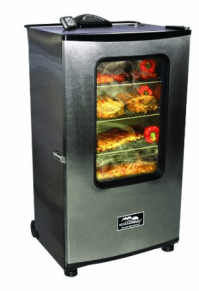
MES-30-MY-smokerI bought a newer 30-inch model with SS door and window. Model #20077915. It was around $225 at Lowe’s and it has pretty much everything I wanted including an 800watt HE, remote, meat probe, wheels/handle, front drip tray, integrated control panel, etc, etc.  

I couldn’t be happier. 

Well, that about does it. So did you make a decision yet?

Let us know what you decided and how it all worked out for you. And BTW, if you have any comments, spotted an error on this page, and/or just want to say hello, we’d love to hear from you. Cheers!